1918 Bastion Heritage Trench Knife - Brass
4 sold in last 24 hours
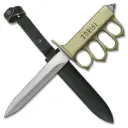
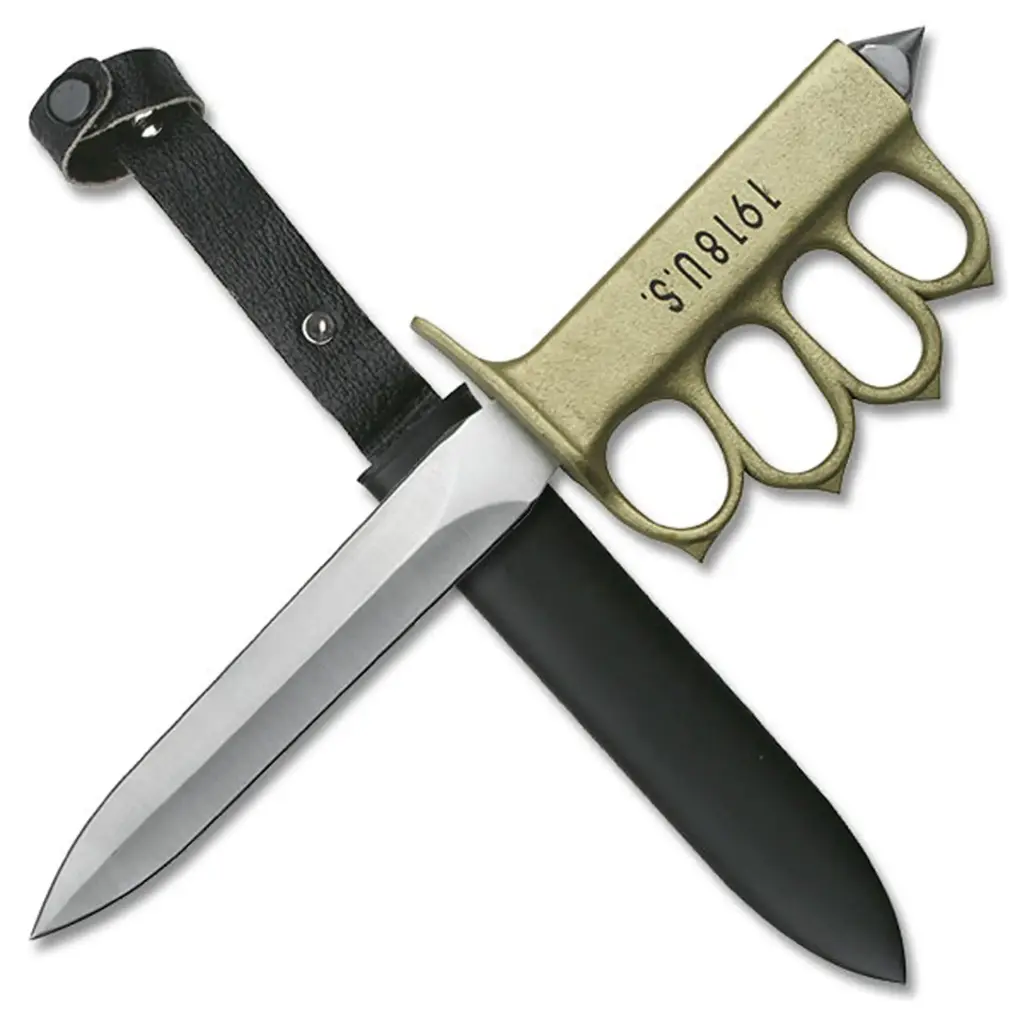
This is a 1918 trench knife you don’t just look at—you feel. A full-tang, double-edged dagger rides behind a solid brass knuckle guard stamped “1918 U.S.” with a skull-crusher pommel that means business. The satin spear-point blade balances the weight of the brass so it sits secure in hand, not like a wall-hanger. Belt-ready leather sheath included, because a heritage trench knife deserves to be carried, drawn, and appreciated—not left in a box.
Automatic Knives for Sale vs. a True 1918 Trench Knife
If you’re here to buy an automatic knife, you already know the difference a good mechanism makes. But sometimes the right tool isn’t a button or a slider. Sometimes it’s cold brass, full tang, and a design born in the mud of 1918. This Skull-Guard Heritage Trench Knife - Brass isn’t an automatic knife for sale in the modern sense—it’s a fixed blade combat classic that predates springs, OTF tracks, and coil-fired switchblades. And that’s exactly why collectors stop and pay attention.
In hand, the 1918 trench knife stops being a photograph in a history book and becomes weight, reach, and intent: a 6.75" double-edged dagger backed by a brass knuckle guard stamped “1918 U.S.” and finished with a skull-crusher pommel. You don’t flick this open. You draw it. Different era, different problem set, same obsession with purpose-built steel.
Why This Trench Knife Belongs Next to Your Automatic Knife for Sale Shelf
Serious knife buyers build collections around mechanisms, eras, and use cases. You might have your double action automatic knife for sale row, your OTFs, your coil-spring side-openers—but the 1918 trench knife is the missing historical anchor that explains how we got here.
This design is pure WWI American trench logic: brass knuckles for close quarters, a double-edged dagger for penetration in heavy gear, and a pointed pommel for impact—the original multi-role combat tool. If you’re curating a collection of modern automatic knives for sale, adding a historically correct trench knife gives context to every modern switchblade in your case. It shows where the mindset came from: one tool, no nonsense, built to solve ugly problems up close.
Full-Tang Dagger Geometry That Still Makes Sense Today
The 6.75" blade runs a full tang into the brass handle—no hidden joints, no folders, no springs. The dagger profile is clean and functional: symmetrical double edges with a central spine for rigidity and a satin finish that highlights the grind lines instead of hiding them. It’s not decorative; it’s purposeful geometry. Point-first penetration, lateral strength, and enough edge length on both sides to work effectively in tight spaces.
Brass Knuckle Guard: Not a Gimmick, a System
The knuckle duster handle isn’t cosplay hardware—it’s the defining feature of the trench knife platform. The boxed brass guard protects the fingers, enforces proper alignment behind the blade, and turns the knife into a dual-role impact tool. The “1918 U.S.” stamp isn’t just cosmetic; it locks this piece to a particular pattern that WWI collectors immediately recognize.
Mechanics, Steel, and Construction: What an Enthusiast Actually Cares About
Unlike an automatic knife, where action quality is coil tension and pivot tuning, the mechanical story here is about continuity of force from knuckles to tip. Full tang into solid brass means impact and thrust don’t disappear into liners or cheap pot metal. Everything you put behind the grip translates into the blade.
Blade Steel and Real-World Use
Configured as a double-edged fighting dagger, this trench knife uses a functional stainless steel suited for display, occasional cutting, and heritage training or reenactment roles. You’re not batoning firewood with this; you’re keeping a historically faithful combat-style knife ready, sharp, and intact. The satin finish is the right choice here—it exposes the grind, shows off the central spine, and makes maintenance straightforward. Wipe, oil, sheath. No coatings to chip, no drama.
Balance, Grip, and Carry
The 4.65" brass handle gives you a locked “punch-dagger” style grip with full knuckle coverage. Brass shifts the balance rearward compared to a skeletonized modern fighting knife, which is exactly what you want on a trench pattern—fist-first orientation, blade as an extension. The skull-crusher pommel does more than look mean; it anchors the hand. That taper at the end keeps your grip indexed even when you’re not looking at the knife.
Vertical belt carry on the included leather sheath keeps this from living as a safe queen. The sheath is built for draw and re-sheath, not just for display. It puts the trench knife where it belongs: reachable, not theoretical.
Legal Context: Where a Trench Knife Sits in a World of Automatic Knives for Sale
Most legal questions in this space revolve around automatic knives, OTFs, and switchblades—mechanically activated blades that open by button, lever, or spring. This trench knife is a fixed blade dagger with an integrated knuckle guard. That places it in a different legal bucket than an automatic knife for sale, even though it shares the same combat heritage.
In many jurisdictions, the factors that matter are: double-edged blade, knuckle-duster style handle, and overall length—not whether it’s automatic. Some states are stricter about brass knuckles and knuckle knives than they are about switchblades. Others care more about concealed carry of fixed blades over a certain length. You are not debating coil springs with this piece; you’re dealing with fixed blade and knuckle weapon statutes.
The bottom line: check your local and state laws before carrying this outside the home. It’s a fantastic display, training, and collection piece almost everywhere; on-body carry is where the laws really start to diverge.
What Buyers Ask Before Purchasing an Automatic Knife
Are automatic knives legal?
Under U.S. federal law, automatic knives (switchblades) are primarily regulated in terms of interstate commerce—the Switchblade Knife Act controls how they move across state lines, especially by mail. Federal law does not outright ban owning an automatic knife, but certain federal properties and agencies prohibit them outright. The real complexity lives at the state and local level. Some states now allow automatic knives for everyday carry with blade length limits; others still restrict possession, sale, or carry of switchblades, OTF knives, and some daggers.
This 1918-style trench knife is not an automatic knife—it’s a fixed blade dagger with brass knuckles—but it can fall under similar or even stricter rules than a modern automatic knife for sale in some regions. Always confirm your state and local statutes on fixed blades, double edges, and knuckle weapons before carrying.
What’s the difference between an automatic knife, OTF, and a switchblade?
Mechanically, a switchblade is any knife where the blade opens automatically by pressing a button, lever, or similar control in the handle. In common usage in the U.S., “automatic knife” and “switchblade” usually mean the same thing: a spring-driven, self-opening knife.
An automatic knife is typically a side-opener: the blade pivots out from the side like a traditional folder but is driven by an internal spring when you hit the release. A double action automatic knife for salesingle action OTF automatically deploys but must be manually reset.
This trench knife is neither automatic nor OTF. It’s a fixed blade: no pivot, no torsion bar, no button—just full tang steel, a brass knuckle guard, and a sheath. Understanding that distinction is exactly what separates a serious buyer from someone who calls every aggressive-looking knife a switchblade.
What makes this automatic knife worth buying?
Strictly speaking, this isn’t an automatic knife—it’s a historically driven trench knife. What makes it worth adding to a collection built around automatic knives for sale is the story it completes. You get:
- A faithful 1918-style pattern with “1918 U.S.” brass knuckle guard and skull-crusher pommel.
- A full-tang, double-edged dagger blade that does exactly what this geometry was designed to do.
- A belt-ready leather sheath so it can be drawn and handled, not just stored.
- A visually dominant brass-and-steel profile that anchors a combat or military display.
In a case full of side-opening automatics, OTFs, and modern switchblades, this trench knife is the piece that makes people stop and ask questions. That alone earns it a slot.
For the Enthusiast Who Knows a Combat Classic When They See One
If your collection only covers modern mechanisms—every flavor of automatic knife for sale, OTF slider, and coil-driven switchblade—you’re documenting the current chapter, not the full story. The Skull-Guard Heritage Trench Knife - Brass is one of those knives that explains why combat blades look the way they do now: purpose-built, unapologetically aggressive, engineered around the human hand in ugly conditions.
Own it for what it is: a brass-and-steel relic design that still feels relevant in hand. Put it on the belt when the law allows. Give it space next to your double action automatic and your favorite OTF. It doesn’t need a button to earn respect—just someone who understands why this pattern still matters.
| Blade Length (inches) | 6.75 |
| Overall Length (inches) | 11.4 |
| Blade Color | Silver |
| Blade Finish | Satin |
| Blade Style | Dagger |
| Blade Edge | Plain |
| Blade Material | Steel |
| Handle Finish | Matte |
| Handle Material | Brass |
| Theme | Trench Knife |
| Handle Length (inches) | 4.65 |
| Tang Type | Full Tang |
| Pommel/Butt Cap | Skull-crusher |
| Carry Method | Belt Carry |
| Sheath/Holster | Leather Sheath |