
Beacon Wall Emergency Survival Blanket - High-Visibility Orange
11 sold in last 24 hours
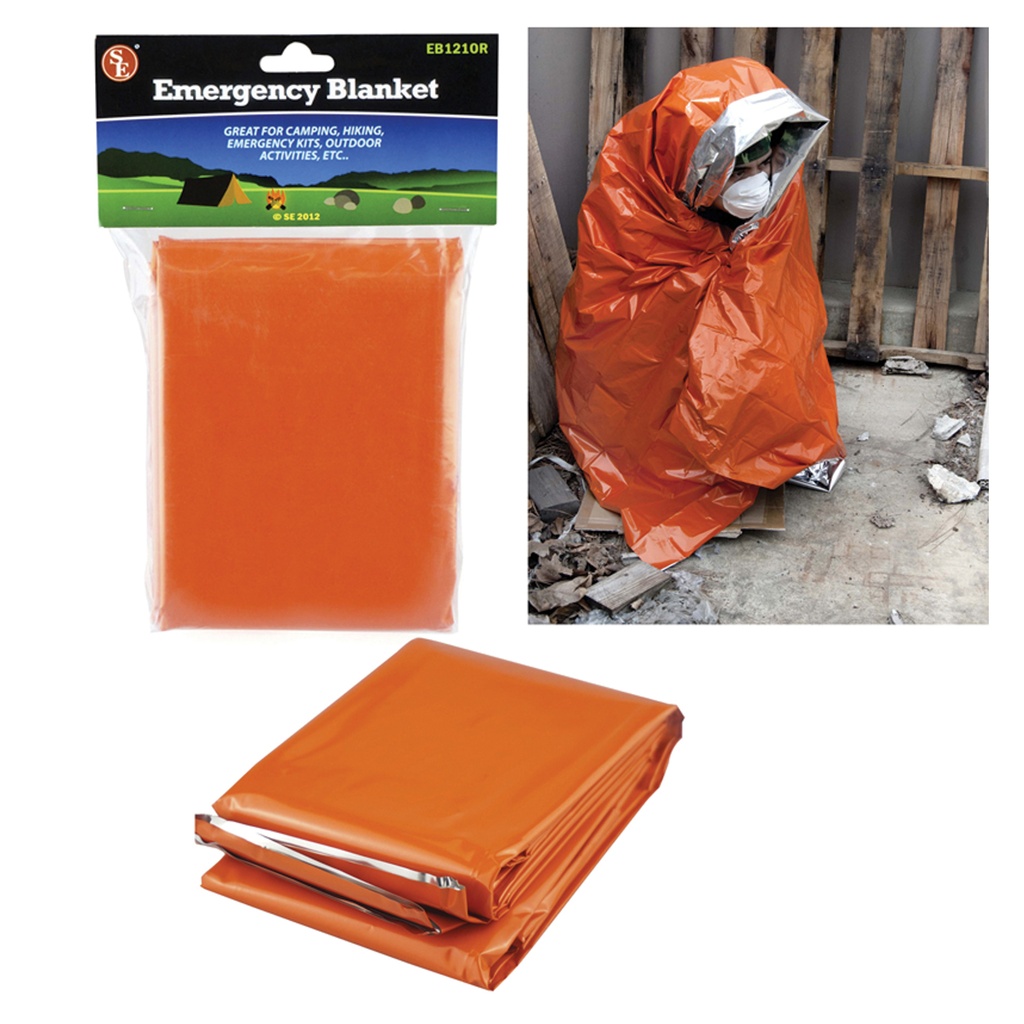
This isn’t a throwaway space blanket; it’s a Signal Shelter heavy-duty emergency mylar blanket built to work when conditions go sideways. The high-visibility orange exterior grabs attention for rescue, while the aluminized interior reflects body heat to keep you in the fight. Oversized at 83 x 51 inches, tear-resistant, reusable, and compact in the pack, it doubles as quick shelter or ground cover. From glove box to go-bag, this is the thermal barrier you actually trust.
Heavy-Duty Emergency Blanket Built to Signal, Shelter, and Last
The Signal Shelter Heavy-Duty Emergency Mylar Blanket - Orange is what you pack when you’ve outgrown the flimsy, single-use space blankets. High-visibility orange on the outside for signaling, aluminized mylar on the inside for heat retention, and oversized coverage that actually functions as shelter—not just a noisy wrapper you regret trusting.
Emergency Blanket Design That Treats Survival Like a System
This isn’t camping-fad gear. It’s emergency equipment built around two simple priorities: get seen and stay warm. The bright orange exterior is tuned for visibility against snow, tree line, rock, or asphalt. The interior is metallic silver mylar, engineered to reflect a high percentage of your radiant body heat back toward your core. That pairing—signal plus thermal—is what moves this from "token kit item" to real emergency tool.
At 83 x 51 inches, this heavy-duty thermal blanket gives genuine full-body coverage. You can wrap it cape-style, burrito-style, or pitch it as an improvised lean-to. Lay it orange-side up as a panel for air recognition, or orange-side out while wrapped so rescuers don’t have to look hard to find you.
Why This Heavy-Duty Emergency Blanket Belongs in Every Kit
Most emergency blankets are sized and built for packaging, not people. The Signal Shelter flips that. Oversized dimensions let you cover a full-grown adult with enough overhang to trap air and reduce drafts—key when wind is doing its best to strip heat from you. The heavy-duty mylar resists tearing far better than the ultra-thin, one-and-done sheets that shred on the first gust or rock edge.
Folded down, it still rides flat and compact in a glove box, hydration sleeve, daypack lid, or emergency bin. That means it’s realistic to carry: hiking, hunting, roadside breakdowns, or as standard loadout in go-bags and vehicle kits.
Thermal Performance: How Mylar Buys You Time
Aluminized mylar doesn’t "make" heat; it traps what you’re already producing. That matters in real-world cold because wind and wet steal body heat aggressively. This blanket reflects radiant heat back inward while creating a wind-blocking barrier. Used correctly—wrapped snug, minimizing exposed gaps—you slow heat loss and buy yourself time for rescue, self-rescue, or regrouping.
Laid silver-side up under you as ground cover, it interrupts conduction into cold soil, rock, or concrete. Combine wrap plus ground sheet, and this simple sheet of engineered plastic and aluminum becomes a meaningful part of a hypothermia management plan.
Signal Discipline: Orange That Reads From a Distance
The high-vis orange isn’t a cosmetic choice; it’s a signal decision. Rescue teams, hunters, and backcountry crews read orange as "pay attention" from instinct and training. Spread the blanket flat on snow, drape it across brush, or hang it off a vehicle or structure—the color pops in daylight, low light, and against most natural backgrounds.
That means aircraft, ground searchers, or a passing motorist scanning a roadside shoulder are more likely to see you on the first pass instead of the third.
Built for Real Use: Tear-Resistant, Reusable, Oversized
Heavy-duty mylar matters because emergencies are rarely clean environments. Concrete chunks, jagged rock, twisted metal, broken glass—standard thin blankets fail fast in that world. This blanket is thicker, tougher, and designed to endure deployment, repacking, and redeployment without disintegrating into strips.
Oversized coverage also opens up shelter options. Rig it as a lean-to with cordage and two anchor points, or as a short ridge-line A-frame over a bivy or sleeping bag. Use it as a ground sheet under a casualty for insulation and a barrier to moisture. In each case, the extra material is what makes those configurations actually viable.
Slim Footprint, Serious Function
Despite the heavier material and larger footprint, the Signal Shelter still folds into a compact brick. That slim profile is the difference between "in the kit" and "left at home." It drops into glove boxes, seat-back organizers, range bags, and small daypacks without eating usable volume.
The retail header card and hanging poly bag make it easy to stage multiples: one in each vehicle, one with the camp gear, one in every family member’s go-bag. Redundancy is how you avoid choosing which location gets protection.
What Buyers Ask Before Purchasing an Automatic Knife
Are automatic knives legal?
Federal law in the United States regulates interstate commerce of automatic knives (often called switchblades) but does not outright ban personal ownership. The real deciding factor is state and sometimes local law. Some states allow automatic knives with few restrictions, others limit blade length, opening mechanism, or carry method, and a few largely prohibit them. Before you buy or carry an automatic knife, check current statutes in your state and any state you travel through—state codes and sometimes city ordinances control what is legal to carry, conceal, or possess.
What's the difference between an automatic knife, OTF, and a switchblade?
Mechanically, an automatic knife opens its blade via a spring when you press a dedicated button, lever, or slide—the blade is under spring tension and deploys on command. A switchblade is a legal and cultural term usually referring to that same family of automatic knives, especially side-openers, and is the word used in many statutes.
An OTF (out-the-front) automatic knife is a specific subtype where the blade travels linearly out of the front of the handle rather than pivoting from the side. Double-action OTF knives deploy and retract using the same control, while single-action OTF designs typically auto-deploy but require manual retraction. All OTFs in this sense are automatic knives, but not all automatic knives are OTF.
What makes this automatic knife worth buying?
A serious automatic knife earns its place with a reliable deployment mechanism, consistent lockup, quality steel with honest heat treatment, and ergonomics that don’t fight the hand under load. When an automatic’s action fires cleanly every time—no hesitation, no weak lock—it becomes a trustworthy EDC or duty tool instead of a novelty. Add blade steel that holds an edge, hardware that can survive thousands of cycles, and a design that carries comfortably without printing or snagging, and you have an automatic that justifies its space in a collection and in your rotation.
Pack Like You Mean It: Add a True Emergency Blanket to Your Loadout
Collectors obsess over action quality and steel for a reason: when it matters, you want tools that perform. The same logic applies to your emergency gear. A heavy-duty emergency mylar blanket like the Signal Shelter earns its weight by combining high-visibility signaling, real thermal performance, and enough durability to handle actual field conditions.
Whether it lives in the glove box next to your favorite automatic knife, in a dedicated go-bag, or in the bottom of a daypack you never leave home without, this is the kind of quiet insurance that turns a bad situation into a survivable one.