Blackout Loadout Survival Paracord - Tactical Black
14 sold in last 24 hours
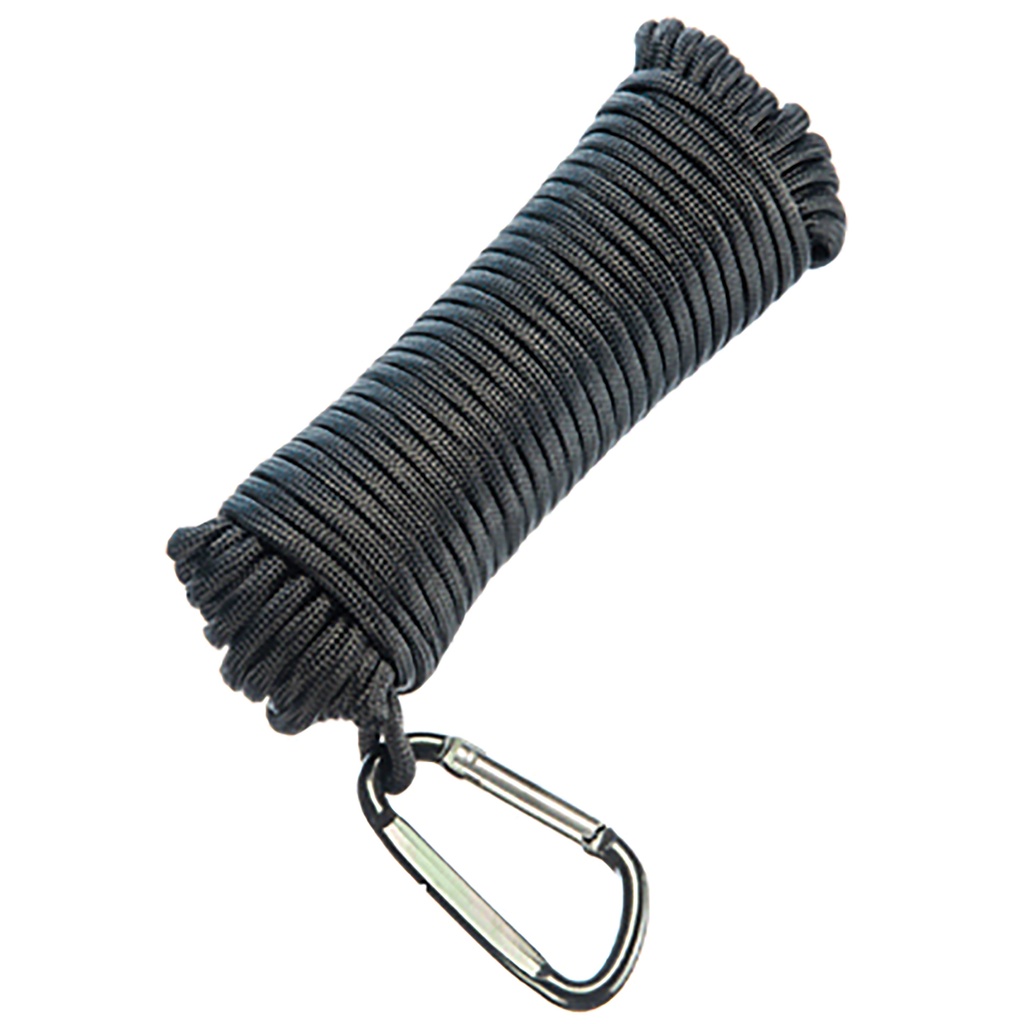
If you’re the kind of buyer who carries an automatic knife and actually uses it, you already know cordage is non‑negotiable. This Blackout Loadout Survival Paracord delivers a true 14‑strand core, 13/64" diameter, and 1100 lb breaking strength in a tight 50 ft hank with a carabiner ready to clip to your pack. It’s the cord you reach for when gear failure isn’t an option—clean sheath, consistent diameter, and enough working load to handle real field jobs instead of just tying up tarps.
Automatic Knife Buyers Notice the Details – Your Cordage Should Match
Anyone who obsesses over the action on an automatic knife for sale also notices the supporting gear. Steel matters. Springs matter. Tolerances matter. Cordage is no different. This Blackout Loadout Survival Paracord isn’t throwaway craft line; it’s 50 feet of 14-strand, 13/64" synthetic cord with an 1100 lb breaking strength and a working load rated at 360 lbs. It’s built to sit next to your EDC automatic, OTF, or switchblade without feeling like the weak link in your kit.
Why Serious Gear Buyers Care About Paracord Construction
Knife people understand construction. You don’t just buy an automatic knife; you look at lockup, side play, spring tuning, and how clean the grind is. Apply that same eye here. This cord uses a tightly woven outer sheath over a 14-strand core. More internal strands, properly packed, translate into smoother knots, better load distribution, and less tendency to flatten or deform under tension.
The 13/64" (roughly 0.203") thickness hits a sweet spot: stout enough for shelter rigging, gear lashing, and emergency use, but still compact enough to coil tight and ride on MOLLE, a belt, or inside a pack lid without bulk. The synthetic fiber behaves predictably when wet and dries without going mushy or fuzzy—exactly what you want in a survival or range bag.
Strand Count: Why 14 Matters in Real Use
Standard commercial paracord often lives in the 7–9 strand world. Fourteen internal strands mean you get redundancy and real utility when you strip the cord. Each internal line can be pulled for sewing, emergency repairs, improvised fishing line, or fine lashing while the outer sheath still works as a light wrap. It’s like carrying multiple gauges of line, nested in one compact hank.
Working Load vs. Breaking Strength – Read the Numbers Like a Pro
Automatic knife enthusiasts already know the difference between marketing claims and test data. Same discipline applies here. This cord is rated with a 1100 lb breaking strength and a 360 lb working load. Breaking strength is the catastrophic failure point in controlled conditions; working load is the realistic, repeatable weight you can actually put on the line with a margin of safety. If you’re hanging a bear bag, tensioning a ridgeline, or securing gear in the back of a rig, that 360 lb working load is what you can trust.
Field-Ready Utility to Match a Hard-Use Automatic Knife for Sale
The buyers who pick up an automatic knife for sale and look past the flash to the mechanism are the same people who don’t tolerate flimsy cord. This 50 ft length is intentional: long enough for legitimate field tasks, short enough not to turn into a tangled mess. The bundle is tightly hanked, so it feeds out cleanly instead of exploding into knots the first time you deploy it under stress.
Color isn’t just aesthetics. Tactical black paracord does what you expect: disappears against packs, webbing, and darker gear. It won’t glow in camp photos and it doesn’t turn your loadout into a fashion project. It’s there to work.
Carabiner Carry: Small Detail, Real Utility
The included carabiner isn’t climbing hardware, but it does solve a problem you only notice in the field: how to keep cordage accessible without burying it in the bottom of a pack. Clip it to a grab handle, belt loop, or the outside of a range bag and you’ve got instant access to 50 feet of cord without digging.
How This Cord Fits Into an Automatic Knife Owner’s Kit
If you’re buying an automatic knife for EDC or field use, you’re not just collecting mechanisms; you’re building a system. Steel cuts, cord holds, and together they solve almost anything you run into outdoors or on the job. This paracord is the backbone for shelter building, improvised slings, lashing, and gear repair—the jobs your blade makes possible but can’t finish alone.
Automatic, OTF, and traditional switchblade buyers tend to appreciate overbuilt gear that still carries light. This paracord bundle lines up with that mindset: more internal strands than basic cordage, a serious breaking strength, and a compact, no-nonsense presentation. It looks like it belongs next to quality hardware, because it does.
Legal Context: Knives Get Complicated, Cordage Stays Simple
Automatic knife legal to carry? That’s a state-by-state maze. Cordage, on the other hand, is blissfully straightforward. There are no federal or state restrictions on owning, carrying, or using this paracord in normal outdoor, work, or emergency contexts in the U.S. It ships and carries without the legal headaches that come with certain automatic knife or switchblade laws.
That’s the quiet advantage here: you can stash a hank of this in your vehicle, workplace bag, range bag, or travel kit without worrying about compliance. It’s one of the few pieces of kit that’s universally welcome and always useful.
What Buyers Ask Before Purchasing an Automatic Knife
Are automatic knives legal?
Under U.S. federal law, automatic knives (often called switchblades) are restricted mainly in interstate commerce, import, and certain federal jurisdictions, but federal law doesn’t outright ban simple possession for most civilians. The real complexity lives at the state and local levels: some states allow automatic knives and OTF models freely, some limit blade length, some restrict carry (especially concealed carry), and a few still prohibit them outright. Before you buy automatic knife models for carry, you need to verify your specific state and municipal laws—what’s legal to own, what’s legal to carry, and where. Cordage like this paracord is not affected by those knife statutes.
What’s the difference between an automatic knife, OTF, and a switchblade?
In enthusiast terms, “automatic knife” is the broad category: a blade that deploys under spring power when you deliberately actuate a button, lever, or switch. A side-opening automatic swings out from the handle like a conventional folder, but the spring does the work once you trigger it. OTF (out-the-front) knives are a specific type of automatic where the blade drives straight out the front of the handle on internal rails. Many OTFs are double-action, meaning the same control both deploys and retracts the blade. “Switchblade” is largely a legal term used in statutes to describe automatic knives in general; enthusiasts tend to use more precise language—automatic, OTF, single-action, double-action—because those distinctions matter.
What makes this automatic knife worth buying?
When you ask that about a blade, you’re looking at steel selection, heat treat, action tuning, and real-world ergonomics. Translate that mindset to this paracord. It’s worth buying because you get a 14-strand core for serious versatility, a 13/64" diameter that balances strength and packability, an 1100 lb breaking strength with a realistic 360 lb working load, and a ready-to-clip carabiner that keeps it in reach. It’s not decorative filler; it’s utility gear that earns space next to a well-chosen automatic knife for EDC or field carry.
For the Enthusiast Who Chooses Gear on Purpose
If you’re hunting for an automatic knife for sale and care enough to learn the difference between a side-opening automatic, an OTF, and a legally defined switchblade, you’re the kind of buyer who notices every supporting detail. This Blackout Loadout Survival Paracord is built for that mentality: honest specs, no nonsense, and strength that holds up when the steel in your pocket isn’t the only thing that has to perform.