Blue‑Shift Channel‑Balance Butterfly Knife - Iridescent Blue
12 sold in last 24 hours
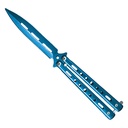
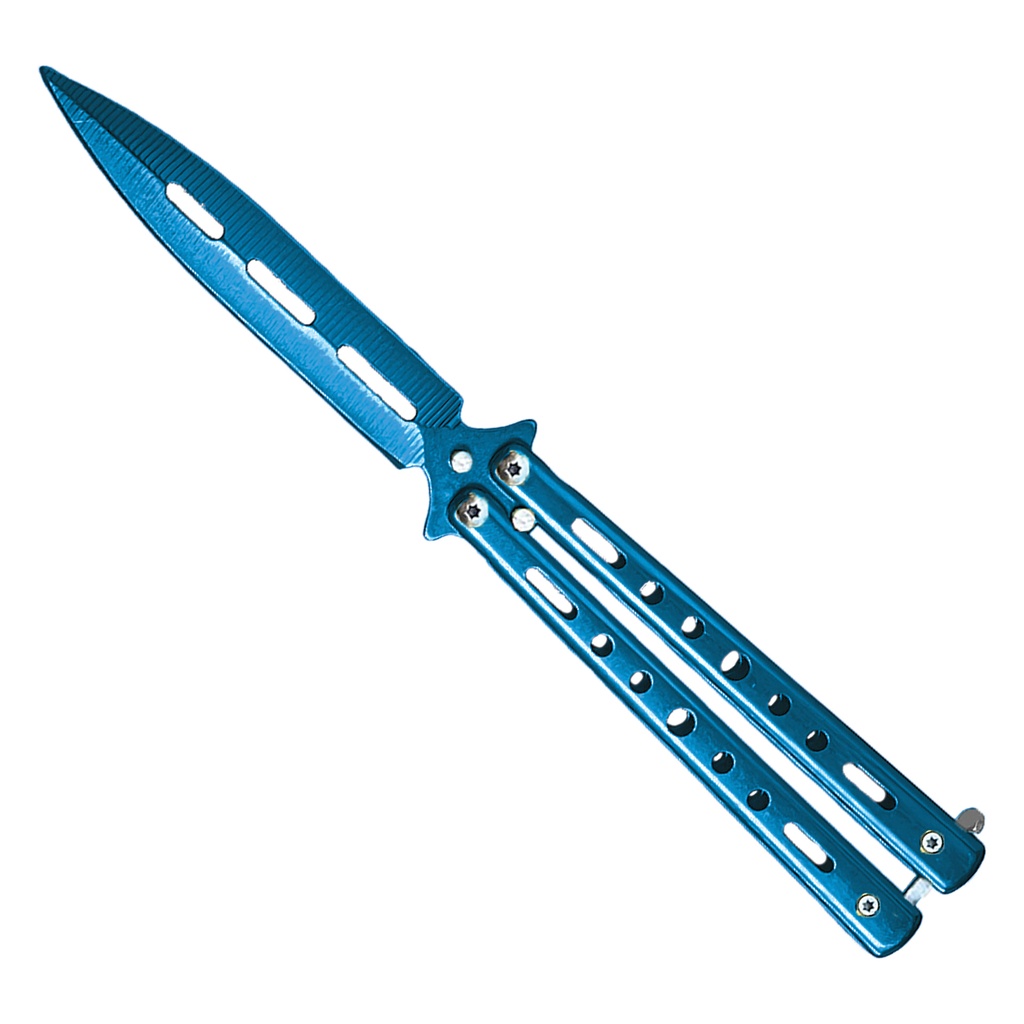
This is not an automatic knife—it’s a purpose‑built butterfly knife for enthusiasts who care about balance and feel. The Blue‑Shift pairs an iridescent blue spear‑point blade with matching stainless handles, all skeletonized to tune the flip. Channel‑style construction, a T‑latch, and Torx hardware keep things tight, while the 3.75" stainless blade and 5" closed length sit right in the EDC sweet spot. For collectors and flippers, it’s a visually loud, mechanically honest balisong that earns its pocket time.
Blue‑Shift Channel‑Balance Butterfly Knife - Iridescent Blue
If you’re looking for an automatic knife for sale and ended up here, let’s be precise about terms first: this is a true butterfly knife, not an automatic, not an OTF, and not a spring‑driven switchblade. The Blue‑Shift Channel‑Balance Butterfly Knife is a modern balisong built for flipping, with an iridescent blue finish that looks like motion frozen mid‑arc.
Not an Automatic Knife for Sale – A Purpose‑Built Butterfly
Automatic knives deploy with a button, lever, or similar actuator and a coiled or leaf spring doing the work. A butterfly knife like the Blue‑Shift deploys because you are the mechanism. Two rotating handles swing around a central pivot to reveal the blade. No stored spring energy, no button, no accidental deployment because it got bumped in your pocket.
For serious knife buyers, that distinction matters. When you buy an automatic knife, you’re paying for tuned springs and sear geometry. When you buy a butterfly knife, you’re buying balance, pivot quality, and the way the weight carries through a flip. The Blue‑Shift leans into that with stainless steel channel‑style handles and matched cutouts along blade and handles to fine‑tune the distribution.
Iridescent Blue Mechanics: How the Blue‑Shift Finds Its Balance
The first thing you see is the iridescent blue spear‑point blade. The first thing you feel is the weight distribution.
Channel Handles and Cutouts That Actually Do Something
The handles are stainless steel with a channel‑style construction, which means each side is one solid piece, not sandwich slabs. For balisong enthusiasts, that’s not a cosmetic choice. Channel handles are typically stronger and more resistant to flex long term, which keeps your alignment and reduces slop as the knife breaks in.
Both the blade and handles are skeletonized with a run of oval cutouts. This isn’t random styling. Removing material along the length of the knife shifts the balance point closer to the pivots, which affects rollovers, chaplins, and general flipping control. On a heavy, solid stainless build, those cutouts help keep the Blue‑Shift lively instead of sluggish.
Spear‑Point Blade Geometry That Tracks Straight
The 3.75-inch spear‑point blade gives you symmetry along the spine and tip bias without being a double edge. In flipping, that symmetry matters; the knife tracks predictably through spins and aerials because the mass is distributed evenly along the center line. As an EDC cutter, the plain edge spear‑point handles packages, light utility, and general daily tasks without drama.
EDC Reality: Carrying a Butterfly Instead of an Automatic Knife
At 5 inches closed and 8.875 inches open, the Blue‑Shift hits a familiar balisong footprint. It’s big enough to flip with authority, small enough to live in a pocket or bag without being a brick.
You get a pocket clip and a nylon pouch out of the box. The clip means you don’t have to baby it in a dedicated case if you want this to be a working knife, and the pouch covers the collector angle if you’re rotating it on and off a display.
The stainless steel build gives you durability and a bit of heft, while the iridescent finish turns it into instant display material. This isn’t a safe queen by design, but it will catch eyes in a collection that’s mostly stonewash and blackwash autos.
Legal Context: Where a Butterfly Knife Fits Beside an Automatic Knife
Automatic knife laws and balisong laws often get thrown into the same bucket, and that’s where buyers get burned. At the federal level in the United States, automatic knives and switchblades are regulated primarily in terms of interstate commerce under the Federal Switchblade Act. That law technically focuses on spring‑driven, button‑activated blades—what collectors usually call automatics or switchblades.
Butterfly knives like the Blue‑Shift aren’t explicitly named in that federal act, but many states and local jurisdictions treat balisongs as either gravity knives, switchblades, or prohibited knives by category. Others allow them with few restrictions. The bottom line: you cannot assume that because an automatic knife is legal or illegal where you live, a butterfly knife follows the same rules.
Before you buy a butterfly knife, an OTF, or any automatic knife for EDC, check your state and local statutes. Look for terms like “switchblade,” “automatic knife,” “gravity knife,” and “balisong.” Laws change, enforcement varies, and the responsibility to carry legally sits with you, not the dealer.
Collector Value: Why This Balisong Stands Out in a Sea of Autos
Automatic knives for sale dominate a lot of online listings, but serious buyers know that a good balisong scratches a different itch. The Blue‑Shift brings a few collector‑grade details to the table despite its accessible build:
- Unified Finish: Blade and handles share the same iridescent blue tone, so open or closed, it presents as one continuous design, not a parts bin mashup.
- Torx Hardware: Multiple Torx fasteners along the handles and at the pivots mean you can tune, Loctite, and maintain it with standard enthusiast tools.
- T‑Latch Design: A familiar T‑latch at the base keeps the knife secure closed or open. If you’re a serious flipper, you already know you can mod, remove, or tape it as your style demands.
Is this a custom shop balisong? No. But it’s a visually bold, mechanically honest knife that invites you to flip it hard, adjust it, and learn the platform without feeling like you’re risking a four‑figure collectible.
What Buyers Ask Before Purchasing an Automatic Knife
Are automatic knives legal?
In the U.S., automatic knives and switchblades are governed at two levels. Federally, the Federal Switchblade Act restricts manufacturing, sale, and transport of automatic knives across state lines under certain conditions, mainly targeting button‑ or switch‑activated blades that open by spring pressure. That law doesn’t outright ban ownership for most individuals, but it limits how automatic knives move in interstate commerce.
State and local laws are where things really change. Some states broadly allow automatic knives and OTFs for everyday carry, others restrict blade length, opening method, or who can carry (for example, law enforcement and military exceptions), and some prohibit them outright. Balisongs often get rolled into these rules as switchblades, gravity knives, or a separate prohibited category.
Before you buy an automatic knife, a switchblade, an OTF, or a butterfly knife like the Blue‑Shift, you need to check your specific state and municipal code. Online summaries are a starting point, not legal advice. When in doubt, talk to an attorney or rely on your state’s official publications.
What’s the difference between an automatic knife, OTF, and a switchblade?
Automatic knife: In enthusiast terms, this is any knife that opens by pressing a button, lever, or similar control that releases a spring‑loaded blade from the closed position. Side‑opening automatics swing the blade out from the side like a conventional folder, powered by an internal spring.
OTF (out‑the‑front): A specific type of automatic where the blade travels linearly out of the front of the handle. Double‑action OTFs use the same slider to deploy and retract the blade with spring assistance in both directions. Single‑action OTFs fire out under spring tension but must be reset manually.
Switchblade: In legal language, this is usually the umbrella term covering automatic knives—button or switch‑activated, spring‑driven blades that open instantly from a closed position. Many statutes don’t bother to distinguish OTF from side‑opening autos; they’re all switchblades by definition.
The Blue‑Shift isn’t any of those. It’s a manual butterfly knife: two handles rotating around a fixed pivot, with no springs or buttons. The only thing driving it open is your hand and your technique.
What makes this butterfly knife worth buying?
For the price of a forgettable import, you get a balisong that at least respects the basics enthusiasts care about: channel‑style stainless handles for rigidity, a 3.75-inch spear‑point blade that flips and cuts well, a fully matched iridescent blue finish that looks intentional on display, and skeletonization that actually affects balance instead of just cluttering the blade.
If you’re deep into automatics and want to understand why flippers obsess over balisongs, the Blue‑Shift is a low‑risk way to get that language in your hands. If you’re already a butterfly knife enthusiast, it’s a loud, visually distinctive piece you won’t mind tuning, beating up, or modding to suit your style.
For the Enthusiast Who Knows the Difference
Anyone can type “automatic knives for sale” and buy the first spring‑fired folder that pops up. Choosing a butterfly knife like the Blue‑Shift shows you’ve done the work—you understand mechanisms, balance, and why not every fast‑opening blade needs a button. Whether it lives in your EDC rotation or on the balisong shelf, it earns its space by being exactly what it claims to be: a modern, iridescent, channel‑balance butterfly built for flipping and for the collector who actually uses their knives.
| Blade Length (inches) | 3.75 |
| Overall Length (inches) | 8.875 |
| Closed Length (inches) | 5 |
| Blade Color | Blue |
| Blade Finish | Iridescent |
| Blade Style | Spear Point |
| Blade Edge | Plain |
| Blade Material | Stainless Steel |
| Handle Finish | Iridescent |
| Handle Material | Stainless Steel |
| Theme | Iridescent |
| Latch Type | T-latch |
| Is Trainer | No |