Butcher Line Full-Tang Kitchen Cleaver - Wood Handle
4 sold in last 24 hours
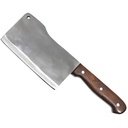
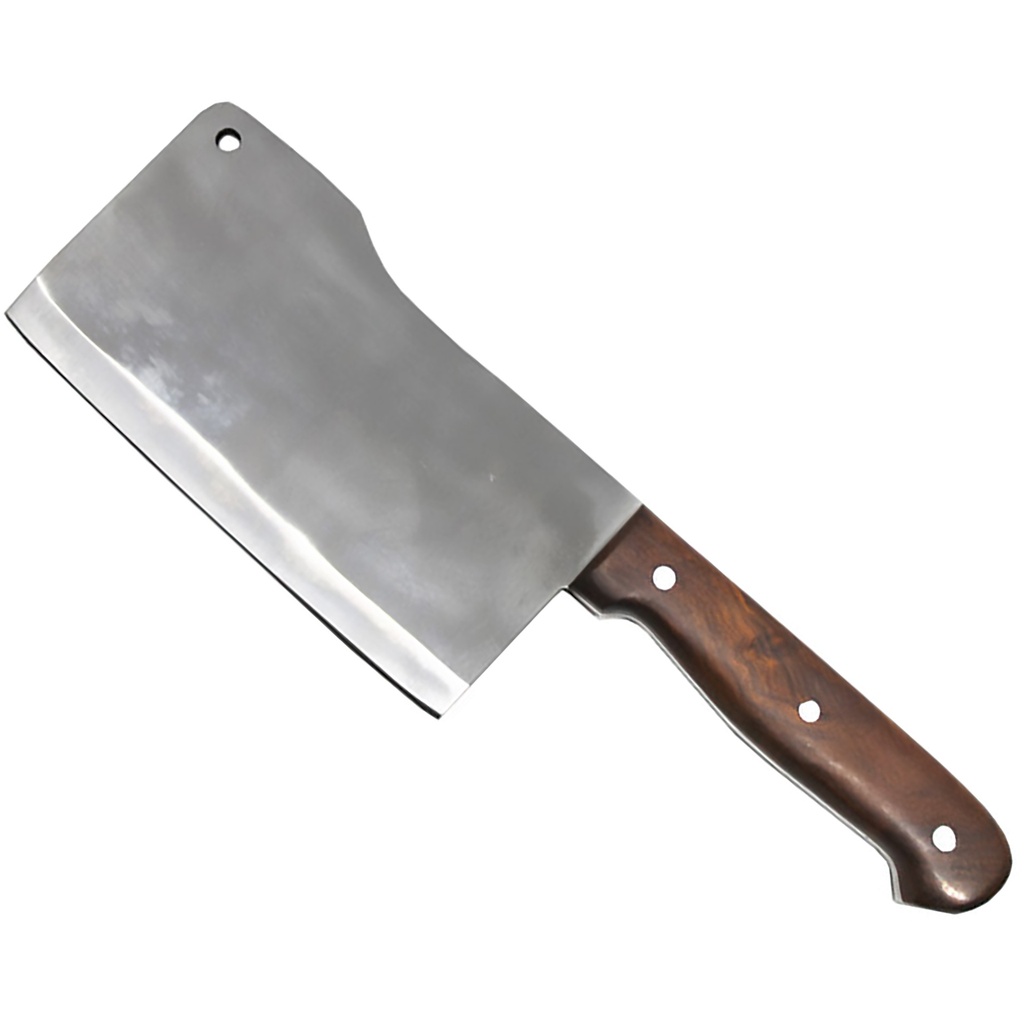
This Butcher Line Full-Tang Kitchen Cleaver - Wood Handle is a classic, no-nonsense chopper built for real work on the cutting board. A 6" steel blade with a traditional cleaver profile pairs with a 5" contoured wood handle and full-tang construction for stability and control when you’re breaking down meat or tackling dense veg. The hanging hole keeps it ready above the station, while the balanced weight and simple, plain edge make it a reliable workhorse in any serious kitchen.
Butcher Line Full-Tang Kitchen Cleaver - Wood Handle
This isn’t a pocket toy, it’s a bench tool. The Butcher Line Full-Tang Kitchen Cleaver - Wood Handle is a classic, Western-style meat cleaver built for the cutting board, not the belt. Full tang, simple steel, wood scales, and a broad rectangular blade: everything about this design says old-school butcher block, not automatic knife deployment.
If you spend your time thinking about lock geometry and action timing, you’ll recognize the same respect for fundamentals here — only translated into kitchen steel. No assisted opening, no OTF gimmicks, just a fixed blade meant to take hits and keep cutting.
Fixed-Blade Workhorse, Not an Automatic Knife for Sale
Let’s be precise about mechanism. This cleaver is a fixed blade, full-tang tool. There’s no spring, no button, no switchblade-style deployment hiding in the handle. What you see is exactly what you get: 6 inches of straightforward steel and a 5-inch wood handle pinned around a visible tang.
That matters, because a lot of retailers will lump anything sharp into the same bucket and start throwing around “automatic knife for sale” language where it doesn’t belong. This is not an automatic knife. It doesn’t deploy; it’s already deployed the moment you pick it up. Where an automatic or OTF knife is about rapid, one-handed presentation, a meat cleaver is about power transfer, edge stability, and control in heavy chopping.
Blade Geometry: Why This Cleaver Chops the Way It Does
Instead of talking about action quality, we talk about mass, geometry, and contact surface. The blade has a tall, rectangular profile with a slight curve on the spine near the tip and a clean, straight edge. That high blade face gives you two real advantages:
- Weight-driven penetration: Extra blade height means more steel and more mass behind each cut, so gravity helps you through cartilage, small bones, and thick cuts.
- Stable tracking: A long, straight edge tracks predictably through meat and veg. Unlike a narrow chef’s knife, the cleaver doesn’t twist easily under load.
The polished finish on the blade isn’t about flash; it helps reduce drag and makes it easier to clean down between tasks. The hanging hole at the front top corner is another honest, functional detail — it lives above the board on a hook, ready to go, just like you’d see in a working butcher shop.
Full Tang: The Fixed-Blade Equivalent of Rock-Solid Lockup
In the automatic knife world, we obsess over lock engagement and side play. In a cleaver, the analog is full tang construction. Here, the tang runs the full length and outline of the handle, visible around the wood scales and forming the exposed butt. That gives you:
- Impact tolerance: When you drop the blade into a joint or on a thick board, the force travels straight through steel from edge to butt.
- Handle integrity: Three rivets pin the wood securely to the tang, so you’re not relying on glue or partial hidden steel when you really lean into a cut.
Handle Ergonomics for Real Chopping Work
The 5-inch wood handle is contoured with subtle finger grooves, giving you a secure grip without going overboard on sculpting. Wood brings a bit of natural traction once your hands warm up, and it fits the traditional butcher aesthetic. The exposed tang at the pommel gives you a solid stop at the back of your hand — the fixed-blade kitchen version of a reliable guard.
Legal Context: Why a Cleaver Isn’t Treated Like an Automatic Knife
Buyers who collect OTFs and automatic knives already know that legality can get complicated fast. This cleaver sits on the opposite end of that spectrum. It’s a kitchen tool, a fixed-blade meat cleaver intended for food prep, not a concealed carry automatic knife or switchblade.
In most jurisdictions, the legal scrutiny and restrictions fall on automatic opening mechanisms, OTF deployment, and concealed carry of spring-driven blades. A full-size kitchen cleaver with no automatic action is generally treated the same as a chef’s knife. The usual rules still apply — how and where you carry any knife can be regulated — but it’s not in the same legal category as an automatic knife for sale or a switchblade-style folder with a button or slide.
What Buyers Ask Before Purchasing an Automatic Knife
Most of our customers are automatic knife enthusiasts, so let’s address the questions you usually bring to the table and how they relate here.
Are automatic knives legal?
Under U.S. federal law, automatic knives and traditional switchblades are regulated, especially in interstate commerce, but not outright banned. The key is the mechanism: a blade that opens automatically by button, switch, or gravity is treated differently than a manual folder or fixed blade. Many states now allow ownership and carry of an automatic knife, but some still limit blade length, carry method, or who can possess one. You have to check your specific state and local laws before you buy or carry an automatic knife.
This cleaver doesn’t fall into the automatic or switchblade category at all. It’s a fixed-blade kitchen tool, so the typical automatic knife legal questions don’t apply in the same way — you’re buying a butcher-style cleaver for food prep, not a spring-driven EDC.
What’s the difference between an automatic knife, OTF, and a switchblade?
Mechanically, here’s the breakdown:
- Automatic knife: A knife that opens by spring when you actuate a button, lever, or similar control. Most side-opening autos fall here.
- OTF (out-the-front): A subset of automatic knives where the blade travels linearly out of the front of the handle. Double-action OTFs open and close via the same slide; single-action OTFs fire out under spring tension and must be manually reset.
- Switchblade: Traditionally, U.S. law and common language for automatic knives that open by a button or switch. In many statutes, “switchblade” and “automatic knife” are functionally the same term.
This cleaver is none of those. It’s a static, fixed-blade kitchen cleaver: the blade is permanently exposed when in use and doesn’t deploy at all. Think of it as the culinary equivalent of a full-tang field knife, not anything you’d compare to a double-action automatic knife for sale.
What makes this cleaver worth buying?
If you already own your share of precision autos, you know good tools share a few non-negotiables: honest materials, solid construction, and purpose-built design. This cleaver brings that same attitude to the cutting board:
- Full tang with triple-riveted wood scales for durability under real chopping impact.
- 6-inch, tall cleaver blade that carries enough mass to do the work instead of your wrist.
- Plain edge that’s easy to maintain on your existing stones or systems.
- Hanging hole so it lives at arm’s reach over your prep area.
You’re not buying a display queen here. You’re picking up a straightforward meat cleaver that feels as honest in the kitchen as a well-tuned auto feels in your pocket.
For Enthusiasts Who Respect the Right Tool for the Job
If you’re the kind of buyer who can tell the difference between a side-opening automatic and a double-action OTF just by sound and feel, you already understand why this Butcher Line Full-Tang Kitchen Cleaver - Wood Handle earns a slot in your toolkit. It’s the fixed-blade kitchen counterpart to the serious gear you carry — clean design, full-tang integrity, and a blade profile meant to do exactly one thing extremely well: chop with confidence.
You come here to buy automatic knives from someone who speaks your language. When it comes to this cleaver, the language is the same: get the right tool, understand the mechanics, and put it to work.
| Blade Length (inches) | 6 |
| Overall Length (inches) | 1 |
| Blade Color | Silver |
| Blade Finish | Polished |
| Blade Style | Normal Straight |
| Blade Edge | Plain |
| Blade Material | Steel |
| Handle Finish | Glossy |
| Handle Material | Wood |
| Theme | None |
| Handle Length (inches) | 5 |
| Tang Type | Full Tang |
| Pommel/Butt Cap | Exposed tang |