Collector’s Gallery Twin-Dowel Sword Cane Stand - Natural Wood
3 sold in last 24 hours
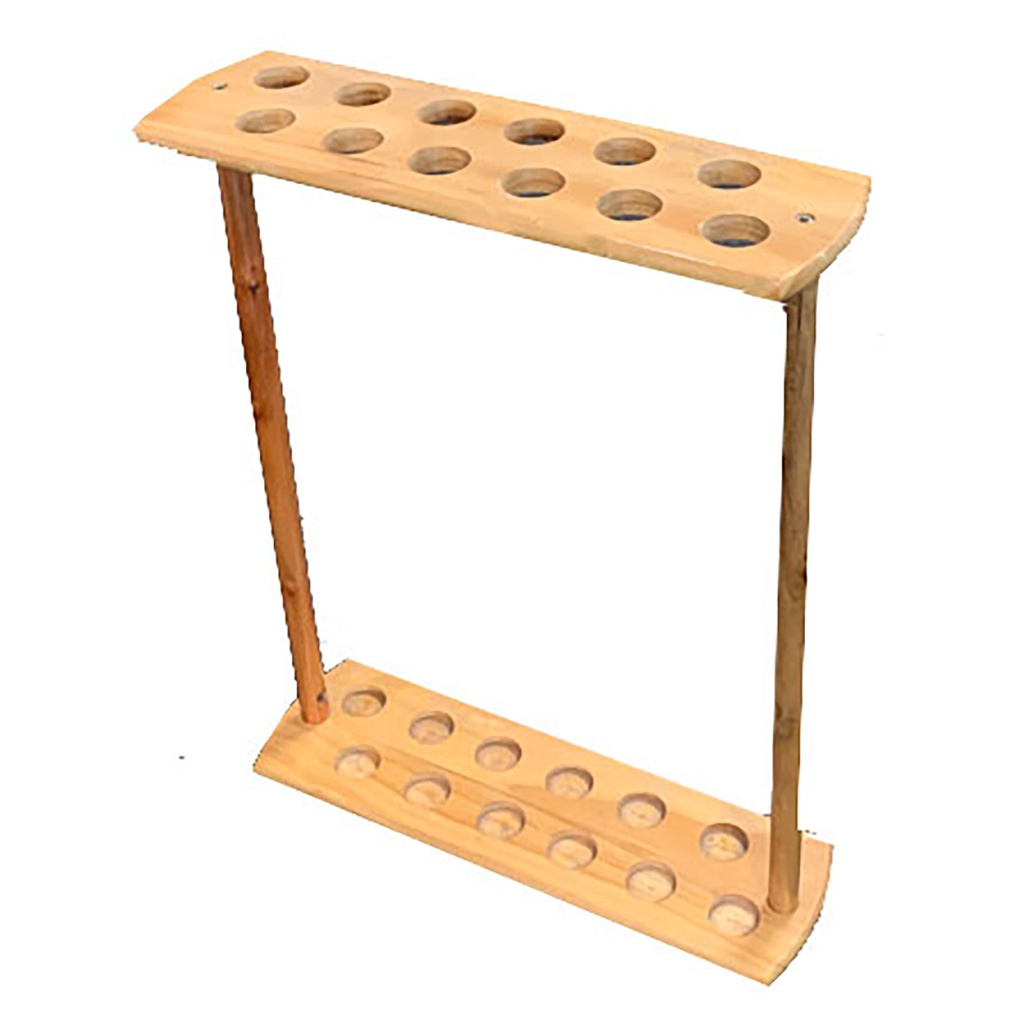
Your best sword cane deserves better than a corner and a wall. This gallery-frame twin-dowel stand organizes twelve canes in a clean, upright grid that reads like a curated collection, not clutter. Precision-drilled top holes and matching base cups keep each cane perfectly vertical while the natural wood finish disappears into the background, pushing the detail and engraving forward. For collectors and retailers alike, it’s the simplest way to make every draw feel deliberate instead of random.
Collector’s Gallery Twin-Dowel Sword Cane Stand - Natural Wood
Gear people understand this: presentation matters. You can have the rarest sword cane on the floor, but if it’s leaning in a corner or buried in a crowded rack, most buyers will walk right past it. This twin-dowel sword cane display stand is built for the serious collector or retailer who wants their canes to stand like a line-up, not a pile.
Why This Sword Cane Display Stand Works So Well
The design is deceptively simple: a gallery-style rectangular frame, two vertical dowels, and matched top and bottom rails. The top rail carries twelve precision-drilled circular holes for cane shafts; the bottom rail mirrors them with twelve recessed cups for cane tips. That pairing is the whole story. Shafts track cleanly through the top, tips seat into the cups, and each sword cane stands perfectly upright with no wandering bases or crossed sticks.
For collectors, this means a stable, repeatable grid of twelve positions. For dealers, it means no wobble when a customer draws or re-inserts a cane. You’re not babysitting your display between touches. The stand quietly does the work.
Open-Frame Display That Puts the Sword Canes First
Most cheap racks try to be seen. They add ornament, heavy uprights, or dark finishes that compete with the canes themselves. This twin-dowel stand goes the other way. The open gallery-frame silhouette creates clean sightlines so the buyer’s eye moves across blades, guards, handles, and inlays instead of getting snagged on the hardware.
The light natural wood tone is deliberate. It’s warm enough to feel crafted but neutral enough to disappear behind darker, higher-contrast canes. In a retail environment, it blends into nearly any flooring or counter; in a collection room, it reads as part of the background, not a centerpiece. The centerpiece is your twelve sword canes, in a straight, disciplined column and row layout.
Mechanics of a Proper Upright Sword Cane Stand
If you’ve ever used a generic cane bucket, you know the problems: tips sliding out, handles clashing, and customers pulling the wrong item because everything overlaps. This twin-dowel rack fixes that with mechanical clarity.
- Top rail control: Each circular hole isolates a single shaft, preventing handles from twisting into each other.
- Bottom cup indexing: Recessed cups give every cane tip a precise landing point, so height and spacing stay consistent.
- Twin-dowel rigidity: Two vertical dowels tie top and bottom rails into a single, rigid frame, resisting racking when canes are removed quickly.
The result is a stand you can actually work from. Pull a cane from any position, re-seat it with one hand, and the rest of the lineup stays disciplined. That’s how a proper display should behave.
Built for Retail Floors, Showrooms, and Home Collections
This is not a decorative novelty; it’s a working tool for anyone serious about sword canes. On a retail floor, the twelve-position layout does three things: it keeps inventory visible, it separates models clearly for comparison, and it lets customers move from one cane to the next without visually getting lost. In a home collection, that same layout turns your floor or office corner into a miniature gallery wall—only vertical and freestanding.
The freestanding footprint means you’re not locked to a wall or display case. Set it at the end of a counter for a front-facing feature, stage it at an angle to a doorway to catch the eye, or drop it in a corner and let the grid of canes create its own visual anchor.
Natural Wood, Honest Finish
The natural wood construction is exactly what it looks like—no loud stains, no faux distress, no fake "antique" nonsense. The light grain and subtle color variation give each stand a bit of character while staying visually quiet. That matters if you’re displaying ornate sword canes with detailed fittings, carved grips, or inlaid features. The stand doesn’t try to match or compete with them; it just frames them.
Control, Organization, and Flow for Serious Sellers
Collectors and dealers know that how you lay out your gear changes how it sells. A disciplined stand like this changes the conversation. Instead of hunting through a tangle of canes, you can walk a buyer through the lineup position by position: classic pieces at the left, modern tactical-inspired designs in the middle, limiteds or customs anchored at the right.
Because each sword cane stands straight and isolated, comparisons become easy. Weight, balance, length, and handle shape can be felt and evaluated one at a time, without fighting the display. The stand fades into the background so the hardware can speak for itself.
What Buyers Ask Before Purchasing an Automatic Knife
You’re here for a sword cane stand, but if you sell or collect modern blades, you already know customers ask about automatic knives, OTFs, and switchblades the second they see your display. Treat this section as a quick reference you can echo on the sales floor.
Are automatic knives legal?
In the United States, automatic knives are legal at the federal level to manufacture, sell, and own, but interstate commerce is restricted. Federal law limits shipping automatic knives across state lines except to military, law enforcement, or under specific exemptions. Actual carry and possession are governed by state and sometimes local law. Some states allow automatic knives and OTF designs with few restrictions; others limit blade length, opening method, or who may carry them; a few largely prohibit them. Before you buy an automatic knife or put an automatic knife for sale on your floor, you need to check the current statutes and local ordinances where you operate and where your buyer lives. Laws change, and “switchblade” language in old codes often now covers modern automatic and OTF mechanisms.
What’s the difference between an automatic knife, OTF, and a switchblade?
The terms get abused, but the distinctions matter:
- Automatic knife: A folding knife where the blade is deployed by a button, lever, or switch, using an internal spring. The blade pivots out from the side of the handle.
- OTF (out-the-front) knife: A specific automatic mechanism where the blade travels linearly out of the front of the handle. It can be single-action (press to deploy, manually reset) or double-action (press to deploy, press again to retract).
- Switchblade: The legal term historically used for automatic knives in many statutes. In enthusiast language, it’s often used loosely, but in law it usually refers to any knife that opens automatically by a button or spring mechanism.
If you’re putting automatic knives for sale alongside cane displays, label them correctly. Buyers who know the difference between a side-opening automatic, a double-action OTF, and a generic "switchblade" will notice if you don’t.
What makes this automatic knife worth buying?
When someone asks that about an automatic, the answer should never be "because it’s cool." It should be about action quality, lock-up, steel, and carry. A double action automatic knife for sale earns its keep when the deployment is crisp but controlled, blade play is minimal, the steel is heat treated properly for its intended edge profile, and the ergonomics don’t fight the pocket clip. If you’re curating a display—whether it’s sword canes in this stand or automatics in a case—choose pieces that can stand up to that level of scrutiny.
Why This Sword Cane Stand Deserves a Spot in Your Setup
In any serious collection or store, the hardware is the hero. This twin-dowel sword cane display stand is the quiet infrastructure that lets your canes look like they belong in a catalog spread instead of a storage corner. Twelve upright positions, clean gallery-frame lines, and natural wood that steps out of the way—nothing more, nothing less.
If you care enough to debate the difference between an OTF and a side-opening automatic knife, you care enough to put your sword canes on a stand that respects them. This is that stand.
| Theme | None |