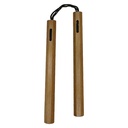
Dojo Rhythm Rope-Control Nunchucks - Natural Wood
11 sold in last 24 hours
These hardwood nunchucks are built for dojo rhythm, not wall display. The rope connection runs quiet and forgiving, letting you work longer rounds without hardware bite. Natural wood warms to your grip, the smooth cylinders track clean through transitions, and the balance invites real control work—chambers, rebounds, and flow drills. For instructors and students who want traditional rope nunchucks that feel right from the first spin, these deliver honest feedback and dependable training consistency.
Dojo Rhythm Rope-Control Nunchucks for Serious Training Flow
Some weapons are designed to impress a camera. These rope-control nunchucks are built to impress your instructor. Natural hardwood, quiet rope, and clean geometry come together in a set that rewards discipline, repetition, and real dojo rhythm—nothing extra, nothing gimmicked.
Traditional Rope Nunchucks Built for Dojo Fundamentals
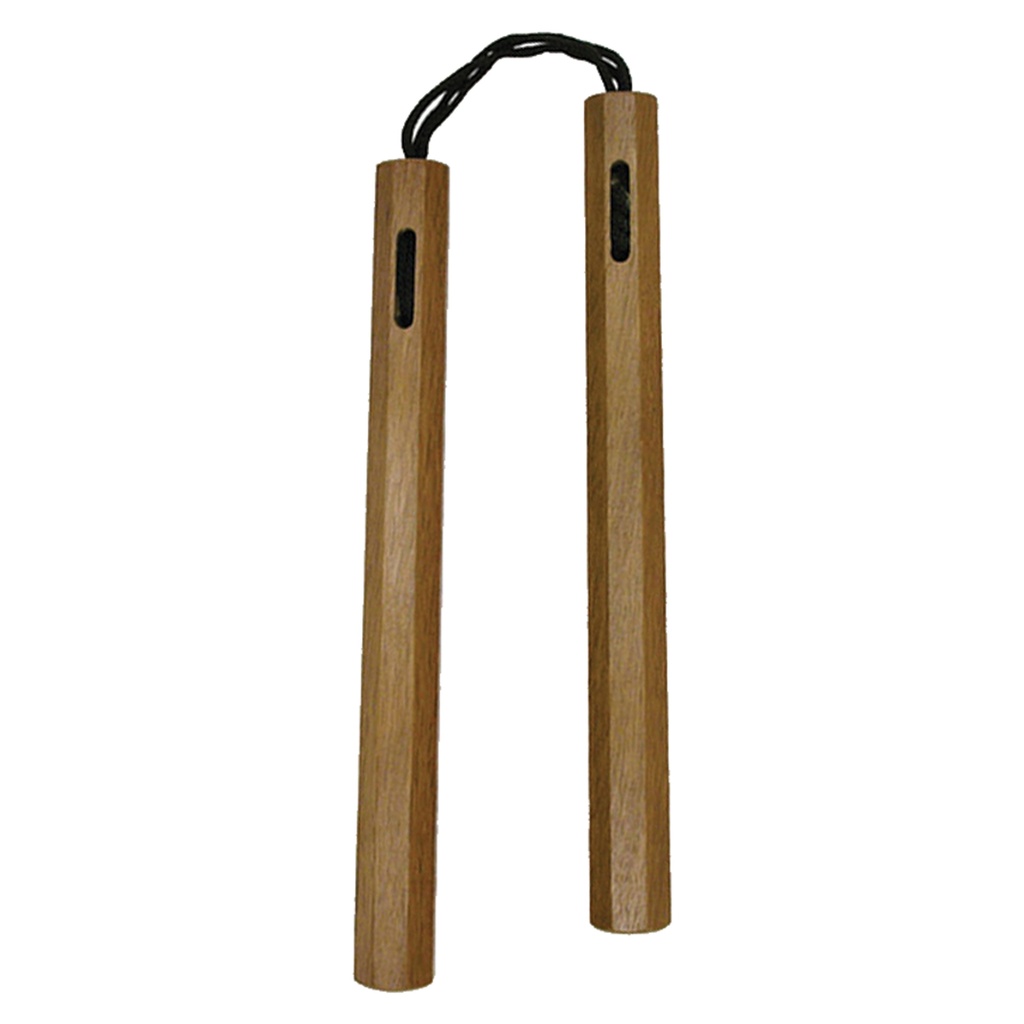
These are classic rope nunchucks in the original spirit of dojo training: two straight hardwood handles joined by a simple black rope connector. No metal caps, no chains, no ornate finishes—just the traditional form that lets you focus on technique. The natural wood handles are smooth but not slick, with enough grain and warmth to settle into your hand as you work chambers, strikes, and rebounds.
The flat-cut ends and evenly matched handle lengths keep rotation predictable. When you’re drilling basics—hip-loaded chambers, high blocks, diagonal strikes—you want equipment that behaves the same way every time. That’s exactly what this set is built to do.
Quiet Rope Connection for Controlled Practice
The defining feature here is the rope connection. Rope nunchucks behave differently than chain-connected variants, and for dojo work that difference matters. Rope runs quieter in the air, is more forgiving on mis-timed catches, and tracks with a smoother, more organic swing arc. That’s why many instructors still prefer rope for controlled indoor practice.
Rope Slot Design and Flow
Each handle is cut with a vertical slot that the braided rope feeds through. That slot keeps the rope centered and aligned, so the connection doesn’t wander or bind as you transition from front spins to back passes. The result is a predictable pivot point between the handles, which pays off when you’re refining speed control, rebound angles, and recovery after contact.
Because the rope runs through the wood instead of relying on bulky hardware, the transition between grip and connector stays clean. That makes fast grip changes—end-to-end rolls, thumb pinch catches, or mid-handle transitions—more consistent, especially for intermediate students.
Balance and Feedback for Real Reps
These hardwood nunchucks are intentionally straightforward: cylindrical handles, evenly cut, with a rope length dialed for standard dojo spacing. That balance gives you honest feedback. If your timing is off, you’ll feel it. If your snap and chamber are clean, the rotation will confirm it.
For demonstrations and class drills, that predictability is worth more than any decorative flourish. Instructors can demo a pattern and know that students using the same style of nunchuck will see and feel similar movement in their own hands.
Why Traditional Hardwood Nunchucks Still Belong in the Dojo
In a market full of foam trainers and tactical reinterpretations, traditional hardwood rope nunchucks hold their ground because they still do one job better than almost anything else: they teach control. Wood carries momentum, demands respect, and forces correct technique. Foam can teach placement; wood teaches discipline.
The natural wood finish on this set isn’t just cosmetic. Bare hardwood gives you micro-feedback—tiny shifts in grip, temperature, and pressure that you simply don’t feel through thick coatings or soft foam. Over time, that feedback becomes part of your body memory: you’ll know when your grip is right before the next strike ever leaves your chamber.
What Buyers Ask Before Purchasing an Automatic Knife
Even though this product is a set of traditional rope nunchucks—not an automatic knife—the questions serious buyers ask in the blade world run parallel: legality, mechanism differences, and what makes a specific piece worth owning. If you also collect or carry automatics, this context matters.
Are automatic knives legal?
Under U.S. federal law, automatic knives (often called switchblades in legal language) are regulated primarily by the Federal Switchblade Act, which restricts interstate commerce and mailing of automatic knives under certain conditions. However, day-to-day carry and ownership are governed almost entirely at the state and sometimes local level.
Some states allow automatic knives with few restrictions, some limit blade length, opening mechanism, or carry method, and a handful still prohibit possession or carry outright. The key point: there is no single nationwide rule for whether an automatic knife is legal to carry. Before you buy or carry an automatic knife, you should check current state statutes and any relevant city or county ordinances where you live and where you travel. Laws change, and enforcement can vary, so relying on up-to-date, jurisdiction-specific information is essential.
What's the difference between an automatic knife, OTF, and a switchblade?
In enthusiast terms, an automatic knife is any folding knife whose blade deploys to the locked position by pressing a button, switch, or similar control in the handle. A spring drives the blade the rest of the way from closed to open once that control is activated.
“Switchblade” is the older legal and cultural term, often used in statutes. Mechanically, most switchblades are automatic knives, but collectors tend to reserve the term “automatic” for modern purpose-built designs and use “switchblade” when referring to classic styles or legal language.
OTF—out-the-front—describes a specific subtype of automatic. Instead of pivoting from the side like a conventional folder, an OTF blade travels linearly along the handle’s axis and emerges from a front opening. Many OTF knives are double-action, meaning the same sliding control both deploys and retracts the blade using internal springs and tracks; single-action OTFs typically auto-deploy and must be manually reset.
All OTFs are automatics, and most automatics are treated as switchblades in law, but not all automatic knives are OTF. Side-opening autos and front-deploying OTFs share the core characteristic: press a control, the blade fully opens under spring power.
What makes this automatic knife worth buying?
This listing is for rope-control hardwood nunchucks, not an automatic knife, but the same logic serious buyers apply to automatics explains why these are worth adding to your training kit:
- Mechanism honesty: Rope connection, no gimmicks—just a proven, traditional linkage that moves predictably.
- Material choice: Natural hardwood with a smooth, matte finish that grips, warms, and wears in instead of wearing out.
- Purpose-driven design: Handle length, diameter, and spacing tuned for dojo-style patterns and partner drills.
- Feedback, not flash: Every spin and strike tells you something about your timing and control.
- Instructor credibility: A classic training weapon that looks at home in a serious dojo, not a novelty shop.
Choosing Gear That Matches Your Discipline
Whether you’re the kind of buyer who obsesses over automatic knife action geometry or the kind of practitioner who notices a half-inch difference in rope length on a set of nunchucks, the mindset is the same: equipment matters. These rope-control hardwood nunchucks are for martial artists who care about feel, timing, and control more than decoration. They’re simple, honest tools that reward good technique and highlight bad habits.
If your training philosophy values fundamentals over flash, this is the kind of traditional rope nunchuck you keep on the rack, ready for the next round of basics, combinations, and flow drills.