
Dojo Rhythm Balanced Shinai Practice Sword - Natural Bamboo
5 sold in last 24 hours
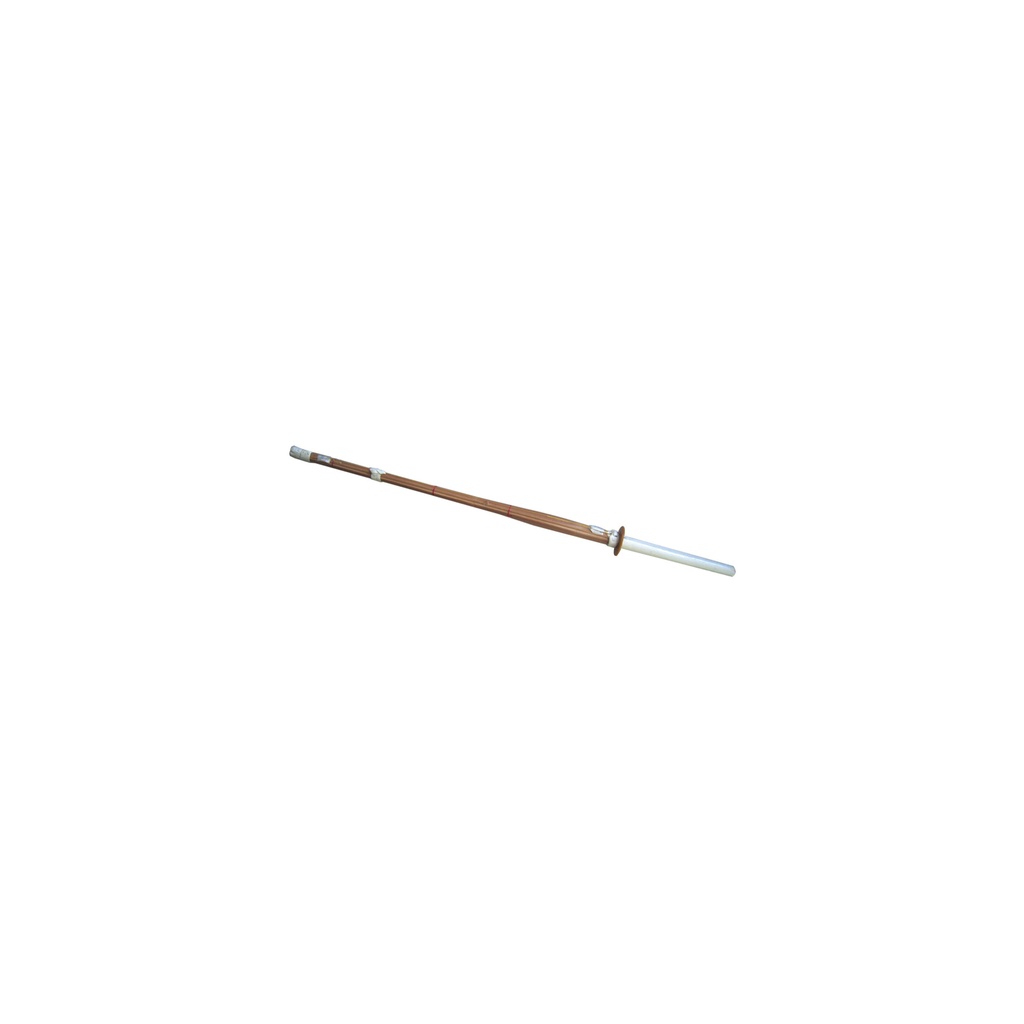
First contact with a good shinai should feel alive. This dojo-length bamboo practice sword brings balanced flex, a fitted tsuba, and a leather-wrapped grip that settles into both hands without a fight. The white tip makes line and distance easy to read, helping students and clubs sharpen timing, control, and target focus. A straightforward, reliable shinai built for real kendo training and daily keiko, not display.
Dojo-Length Balance Built Into a Traditional Shinai Practice Sword
The right shinai doesn’t just survive class; it teaches with you. This dojo-length bamboo practice sword is built around that idea—natural bamboo staves for live flex, a proper tsuba and leather-wrapped grip for secure two-handed cuts, and a clean white tip that makes every line and strike easier to read. It’s a straightforward training tool for kendo students and clubs who care more about feel, distance, and rhythm than flashy decoration.
Why This Practice Sword Earns Its Place in the Dojo
A shinai is not a toy. It’s the daily stand-in for a live blade, and kendo practitioners judge it by very specific standards: length, balance, flex, and how it behaves on impact. This shinai practice sword hits those marks with a traditional segmented bamboo construction and dojo-length profile that feels right in chudan-no-kamae. The weight sits where it should—forward enough to track cuts, light enough to move through repeated suburi without wrecking your shoulders.
Segmented Bamboo That Works With Your Cuts
The body is built from natural bamboo staves bound along the length. That segmented construction is the whole point of a shinai: it lets the sword flex and disperse impact instead of transferring every bit of force into your partner or target. On contact, the bamboo compresses and rebounds, taking the edge off full-speed strikes so you can train hard with proper form and still walk off the floor ready for the next round.
Leather-Wrapped Grip and Proper Tsuba
The handle is wrapped for traction and feel, giving you consistent purchase in both hands. That matters during fast exchanges when sweat and repetition start to work against you. The round tsuba locks into place near the grip, keeping your lead hand protected and helping define where your hands belong on the tsuka. Together, they create a grip zone that feels familiar and repeatable every time you pick it up.
Designed for Kendo Training and Club Sparring
This is a shinai practice sword that’s meant to live on the dojo rack, not on a wall. The unsharpened, bamboo construction and fitted white tip mark it clearly as a training weapon—safe for drills, kata-style movement, and controlled sparring under supervision. The straight, slightly tapered profile tracks naturally through men, kote, and do cuts, giving beginners a clear line to follow and experienced kendoka a tool they won’t fight against.
White Tip for Line, Distance, and Feedback
The white tip is more than decoration. On a bright dojo floor, it stands out, making it easier for both partners and instructors to see where the strike is landing and how the line travels. That visual feedback shortens the learning curve for new students and makes corrections cleaner during partner drills and jigeiko.
Dojo-Length Balance for Realistic Engagement
Length matters. This shinai follows standard dojo proportions so maai—the distance between partners—feels correct. When a student learns timing and entry with a properly sized practice sword, that sense of measure carries over to every drill and future upgrade. Too short and everything feels cramped; too long and they cheat distance. This one keeps you honest.
Built for Daily Use: Clubs, Classes, and Beginners
For clubs and schools, reliability beats flash every time. This natural bamboo shinai practice sword is straightforward to integrate into a class: recognizable construction, clear end protection, proper guard, and a grip that won’t confuse beginners. It’s light enough for extended practice yet substantial enough to teach respect for alignment and control.
Because the finish is clean and minimal, instructors can focus on what matters—stance, posture, hasuji (blade angle), and follow-through—without students getting distracted by unnecessary decoration. It’s the dojo equivalent of a good chef’s knife: not fancy, but absolutely the right tool for the work.
What Buyers Ask Before Purchasing an Automatic Knife
Are automatic knives legal?
Under United States federal law, automatic knives—often called autos or switchblades—are regulated primarily by the Federal Switchblade Act. That act controls interstate commerce and shipment, especially by mail, but it does not set a single nationwide rule for carry. Actual carry legality, blade length limits, and where you can have an automatic knife (public buildings, schools, certain cities) are all handled at the state and sometimes local level.
Some states allow automatic knives for most adults with few restrictions; others limit them to law enforcement, military, or those with specific permits; a few still impose outright bans or tight blade-length caps. Before you buy an automatic knife or switchblade, you should check both your state statutes and local ordinances, and pay attention to any separate rules for concealed versus open carry and for vehicles, workplaces, or government facilities.
What’s the difference between an automatic knife, OTF, and a switchblade?
Collectors and serious users draw clear lines between these terms. An automatic knife is any folding knife where the blade deploys under spring tension when you activate a button, lever, or actuator on the handle—no manual opening of the blade itself. Most side-opening autos fall into this category.
An OTF knife (out-the-front) is a specific type of automatic where the blade travels in line with the handle and exits from the front instead of pivoting out from the side. OTFs can be single-action (spring deploy, manual retract) or double-action (spring both ways via the slider). "Switchblade" is essentially the legacy legal term used in statutes for automatic knives in general. Enthusiasts tend to use "automatic" and then get more specific—side-opening auto, OTF, single-action, double-action—because those distinctions actually describe the mechanism.
What makes this automatic knife worth buying?
When you evaluate an automatic knife, you’re looking at three core elements: the deployment mechanism, the blade steel, and how the whole package carries. A well-built automatic snaps open with authority, locks solidly without excessive play, and resets without grit or hesitation. Blade steel should match the use case—toughness and edge retention balanced against how you actually sharpen and carry the knife. Add in a secure, well-designed pocket clip, a safe, positive actuator, and hardware that can survive thousands of cycles, and you have an automatic knife that belongs in a serious collection instead of a novelty drawer.
Training, Not Flash: A Shinai Practice Sword for Serious Dojos
If you care about good tools, the same mindset that leads you to the right automatic knife will push you toward the right practice sword. This dojo-length shinai practice sword in natural bamboo is built for students and instructors who measure gear by feel, feedback, and longevity—not by gimmicks. Straightforward construction, clean balance, and a grip that encourages proper technique make it a dependable partner for kendo training, club practice, and daily keiko.