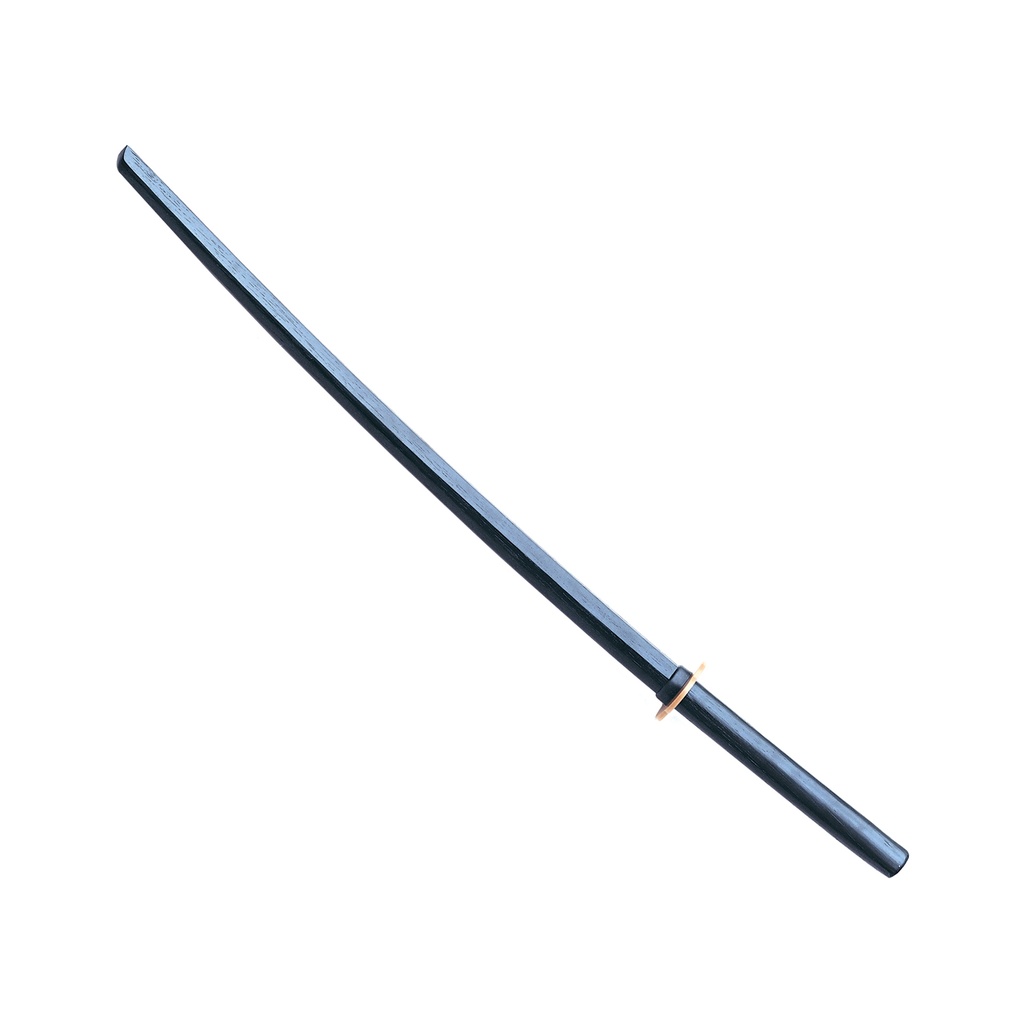
Dojo Shadow Discipline Training Sword - Black Wood
5 sold in last 24 hours
This isn’t a wall-hanger, it’s a dojo tool. The Dojo Shadow Discipline Training Sword – Black Wood is a one-piece bokken built for kata, partner drills, and endless class rotations. The katana-style curve and smooth finish let it move cleanly through cuts without chewing up hands or partners. At full-length with a round tsuba, it teaches distance and line control safely, giving instructors a reliable, uniform training sword that keeps the focus where it belongs: on form, timing, and intent.
Dojo Shadow Discipline Training Sword - Black Wood
The Dojo Shadow Discipline Training Sword - Black Wood is a one-piece bokken built for exactly what real dojos demand: repetition, alignment, and safety that doesn’t feel like a toy. This is a full-length wooden katana trainer designed to disappear in the hands so the art can show up instead.
Why This Bokken Feels Right in the Hands
Anyone who has spent time on the mat knows the difference between a random wooden stick and a proper bokken. Balance, curve, and surface finish dictate how honest your cuts, thrusts, and transitions feel. This one-piece black wood training sword delivers a katana-style curve that naturally tracks through common cutting angles without fighting your shoulders or wrists.
The smooth, matte-to-satin finish matters. Cheap, rough bokken telegraph every grain into your palms, causing hot spots and fatigue during long kata. This Black Wood bokken keeps the surface consistent and unobtrusive, so students can focus on extension, hip power, and line—without subconsciously adjusting for discomfort.
Built as a Dojo Workhorse, Not a Decorative Sword
At approximately 40 inches overall, this training sword hits the traditional bokken length many kenjutsu, aikido, and kendo-influenced schools expect. The katana-style profile, subtle ridge along the spine, and squared blunt tip all support realistic blade awareness without the risk of steel. You get enough mass out front to feel where the "edge" would be, but not so much that beginners lose control.
The cylindrical handle section transitions cleanly into the curved "blade" portion, giving a clear tactile cue for where the hands belong. That’s the kind of detail instructors appreciate when working with new students who don’t yet have instinctive hand placement. The lack of ornamentation is intentional—nothing here distracts from footwork, distance, and timing.
Round Tsuba That Teaches Distance, Quietly
The light-wood round tsuba isn’t decorative fluff; it’s a functional training feature. In partner practice, that tsuba becomes a hard stop that teaches students where the guard line actually lives. It gives a visual and physical reference for correct maai (distance) in thrusts and cut entries, without introducing edges or metal hardware that can split skin.
One-Piece Construction for Consistent Feel
Because this bokken is carved from a single piece of wood, there are no joints, inserts, or glued components to loosen or shift over time. That consistency matters in a dojo setting where weapons get passed from student to student. The balance and feel stay predictable across classes and seasons, which is exactly what you want when building muscle memory.
Training Sword Performance: How It Moves and Why It Matters
A good training sword doesn’t need to be heavy; it needs to be honest. This Black Wood bokken offers enough weight to demand structure in the shoulders and core, but not so much that it trains compensation or tension. In solo kata, the katana-style curve encourages proper cutting trajectories, while the smooth surface lets the weapon glide across gi fabric in paired drills instead of catching or tearing.
The blunt tip and wooden edge profile are deliberately forgiving in contact work. When students miss distance or angle in partner practice, the impact is dispersed over a wider area. That’s the difference between a tool that supports safe correction and one that punishes every mistake with bruises that sideline beginners.
Choosing the Right Training Sword for Your Dojo
For instructors, the real test is simple: can you put twenty of these bokken on a rack and trust them to feel uniform enough that any student can pick one up and get realistic feedback from their movement? This Dojo Shadow Discipline Training Sword is built for that exact rack—schools, programs, and clubs that value consistency over decoration.
The deep black finish also earns its keep. Uniform, black bokken present cleanly on the mat, photograph well for promotional material, and make it easy to visually confirm weapon readiness and orientation during class. That’s a practical safety and presentation advantage, not just an aesthetic flourish.
What Buyers Ask Before Purchasing an Automatic Knife
Even though this product is a wooden training sword and not an automatic knife for sale, serious buyers in any edged-weapon category ask the same core questions: legality, mechanism, and what makes one tool worth choosing over another. Here’s how those questions usually surface in the automatic knife world.
Are automatic knives legal?
Under U.S. federal law, automatic knives are restricted primarily in interstate commerce, not simple ownership. Federal regulations focus on shipping and importing automatic knives and switchblades across state lines, especially for non-military or non-law-enforcement use. The real complexity lives at the state and local level: some states allow you to buy an automatic knife and carry it openly or concealed, others limit blade length, restrict carry type, or ban automatic and switchblade mechanisms outright.
Anyone looking for an automatic knife for sale should check current state statutes and local ordinances for both possession and carry. Laws can distinguish between owning an automatic knife at home, transporting it, and carrying it daily as an EDC tool. When in doubt, consult a current legal resource or attorney; do not rely on outdated forum posts.
What’s the difference between an automatic knife, OTF, and a switchblade?
An automatic knife is a folding or telescoping knife that opens under spring tension when you intentionally activate a button, lever, or switch in the handle. A switchblade is the term used in many laws and older literature for the same broad class of automatic opening knives—legally, "automatic" and "switchblade" are often interchangeable, though enthusiasts tend to prefer the more precise term automatic knife.
OTF (out-the-front) knives are a specific subgroup of automatic knives where the blade deploys linearly out the front of the handle rather than pivoting from the side like a traditional folder. Many OTF knives are double-action automatic designs: a single slide or actuator both extends and retracts the blade under spring tension. Side-opening automatics, by contrast, use a button or scale release to snap the blade open, and you manually close them. Mechanism clarity matters: OTF is about direction of travel; automatic versus manual is about whether a spring is doing the deployment work after you initiate it.
What makes this automatic knife worth buying?
In the automatic knife category, the knives that are worth buying separate themselves in three ways: action quality, lock integrity, and real steel performance. A well-built automatic snaps open decisively, without bounce or hesitation, and locks up with minimal blade play. The button or actuator should have a defined, deliberate engagement point—no gritty half-steps or accidental bumps. The steel choice and heat treat should reflect honest use, whether that’s a corrosion-resistant stainless for EDC or a higher-carbon formula for edge retention. Collectors pay attention to these details: clean machining, consistent grind lines, and a tuned spring that cycles reliably beat any generic claim of "high quality" every time.
Where a Wooden Training Sword Belongs in a Serious Arsenal
If you’re the type of buyer who compares automatic knife mechanisms and cares about lock geometry or spring tuning, you already understand why a proper training sword matters. This Dojo Shadow Discipline Training Sword - Black Wood plays the same role in the dojo that a reliable automatic knife plays in your pocket: consistent performance, honest feedback, and construction that supports skill, not shortcuts.
Whether you’re outfitting an entire school or adding a dedicated practice blade to your personal rotation, this one-piece black wood bokken does exactly what good training gear should do—show up every session, stay out of the spotlight, and make your technique impossible to lie to.