Dojo Velvet Double-Sai Carry Case - Black Vinyl
3 sold in last 24 hours
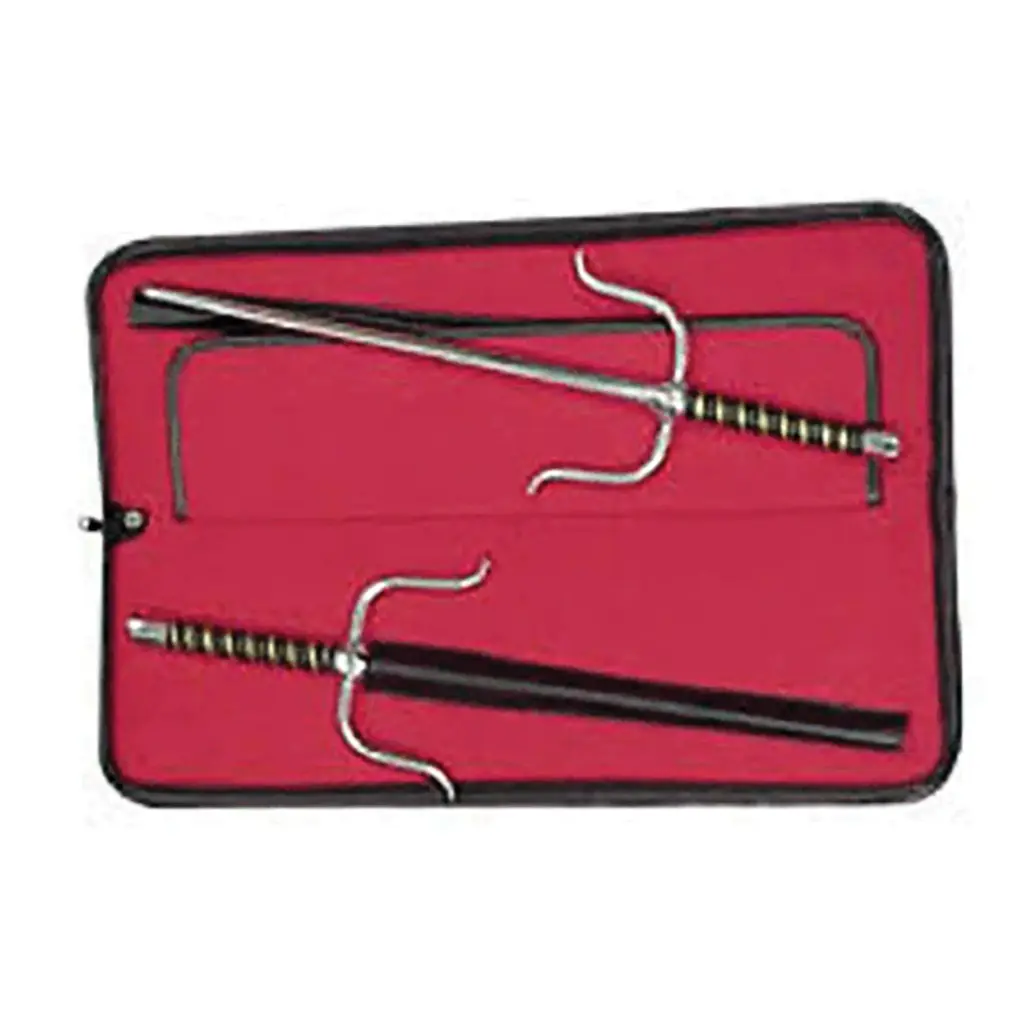
You know the difference between tossing sai in a gym bag and arriving like you mean it. This double-sai carry case opens to a red velvet interior that locks each weapon under dedicated straps, keeping tines and finish from grinding against anything. The black vinyl exterior shrugs off trunk rash and hallway scuffs, while dual handles make the walk from car to dojo clean and controlled. It’s not about storage—it’s about showing your weapons, and your training, the respect they’ve earned.
Why a Serious Sai Practitioner Chooses a Purpose-Built Carry Case
Anyone can wrap their sai in a towel and hope for the best. The people who care about their weapons—and the work they put in with them—use a dedicated carry case. The Dojo Velvet Double-Sai Carry Case - Black Vinyl isn’t decoration; it’s controlled transport. It keeps your tines, finish, and alignment intact from trunk to tatami, and it tells every student watching that equipment matters.
Protective Sai Case for Sale That Treats Your Weapons Like Tools, Not Props
This isn’t a generic martial arts gear bag with a sai crammed in the corner. The interior layout is built specifically around a matched pair of sai. Two dedicated channels, each with its own elastic retention, keep the weapons fixed in place so they don’t rattle, grind, or bang against each other. The red velvet-style lining does the quiet work: it cushions impact, prevents micro-scratches on polished metal, and presents the weapons like the serious tools they are.
The black vinyl exterior is the opposite of delicate. It shrugs off trunk slide, locker impacts, and the usual abuse of weekly training. Wipe it down, zip it shut, and it’s ready for the next class or seminar.
Built for the Road: From Trunk to Dojo Without the Road Wear
Real training doesn’t live in climate-controlled glass cases. It lives in cars, on trains, in cramped locker rooms, and on worn tatami. That’s why this double-sai case is designed to open flat like a book: you lay it down, unzip, and your weapons are immediately accessible, still exactly where you left them. No digging, no fumbling, no odd angles pulling a tine free.
The dual carry handles are placed for balanced transport with a full load. Two sai aren’t light; cheap single-handle bags twist or dig into your fingers. This handle setup gives you a stable, predictable carry whether you’re crossing a parking lot or walking through a crowded hallway at a tournament.
Red Velvet Interior: Not Just for Looks
The bright red velvet interior isn’t there for drama alone. A soft, nap-style lining does two critical jobs: it spreads out point pressure from tines and pommels so they don’t print through or stress the outer shell, and it creates a low-friction cradle that avoids dragging grit against your weapon’s finish. If you’ve ever watched chrome or polished steel dull from bad storage, you already know why this matters.
Dedicated Retention for Each Sai
Each sai sits in its own lane under retaining straps, preventing the classic problem of weapons shifting, crossing, and grinding in transit. That’s how tips get blunted and edges pick up mystery dings. This layout keeps them isolated, oriented, and ready to draw in the exact condition you packed them.
Collector-Grade Presentation for Instructors, Retailers, and Serious Students
There’s a reason instructors and retailers gravitate to cases like this. When you open it in front of a class or a customer, the impression is immediate: these aren’t costume pieces. They’re training weapons stored with care. The vivid red interior frames the sai, drawing attention to tine symmetry, polish, and wrap style. That matters if you’re teaching students what “right” looks like or showing a buyer why a particular pair is worth their attention.
For the serious student, this presentation is a quiet contract with yourself. You’ve invested in proper gear and given it a home that reflects that choice. Every time you unzip the case, you’re reminded that you’re not just showing up to swing metal—you’re training with intent.
What Buyers Ask Before Purchasing an Automatic Knife
Even though this product is a dedicated sai case—not an automatic knife—it lives in the same world of serious weapon handling, transport, and legal awareness. The questions buyers ask about automatic knives often parallel the discipline-minded approach of martial arts practitioners who carry traditional weapons in cases like this.
Are automatic knives legal?
Under U.S. federal law, automatic knives (often called switchblades) are regulated primarily by the Federal Switchblade Act, which focuses on interstate commerce, importation, and shipment across state lines, especially via the U.S. Postal Service. Federal law does not outright ban simple ownership by individuals, but it does restrict how automatic knives move in commerce. The real complexity comes at the state and sometimes local level. Some states allow automatic knives for ownership and carry with few restrictions; others allow possession but limit concealed carry, blade length, or how and where they can be carried; a few still maintain broad prohibitions.
Anyone looking to buy an automatic knife should check current state and local law where they live and where they plan to carry. Statutes change, and enforcement can vary. The responsible approach is simple: confirm your jurisdiction’s rules before purchasing, carrying, or transporting an automatic knife.
What’s the difference between an automatic knife, OTF, and a switchblade?
Mechanically, an automatic knife is any knife where the blade is deployed by a spring or similar mechanism when you press a button, switch, or lever on the handle. Once activated, the blade moves from closed to open under its own stored energy. Most side-opening autos pivot the blade out like a traditional folder, just driven by a spring instead of your thumb.
An OTF (out-the-front) automatic is a specific subtype where the blade travels forward in line with the handle, exiting from the front instead of pivoting from the side. OTFs can be single-action (spring deploys the blade, you manually reset it) or double-action (the same control both deploys and retracts the blade under spring power). "Switchblade" is largely a legal and cultural term that typically refers to automatic knives in general—especially side-opening autos—but it isn’t a distinct mechanical category on its own. Enthusiasts use "automatic" to talk about mechanism; lawmakers often say "switchblade" when regulating them.
What makes this automatic knife worth buying?
When evaluating an automatic knife, serious buyers look past surface flash. They study lockup consistency, spring strength over hundreds of cycles, button placement relative to grip, and steel selection—edge retention, toughness, and corrosion resistance balanced against intended use. A worthwhile automatic knife will have a clean, authoritative deployment without excessive handle shock, a lock that resists lateral play, and machining tolerances that don’t loosen into wobble after hard use. Steel choices are equally telling: heat-treated name steels with documented performance beat mystery metal every time. In short, the value in a good automatic isn’t the sound it makes—it’s the engineering you feel every time you deploy it.
Why This Sai Case Belongs in a Serious Training Kit
This case doesn’t pretend to be more than it is. It’s not a display shrine and it’s not a flimsy prop bag. It’s a purpose-built transport and protection system for two sai, with a red velvet interior that preserves finish and a black vinyl shell that takes the beating instead of your weapons. If you’re the kind of practitioner who cares enough to tape a handle properly, align your tines, and maintain your gear, this case lines up with that mentality.
Instructors, competitors, and dedicated students all benefit from the same detail: controlled access and consistent condition. You zip it open and your sai are right where you left them, looking ready instead of road-worn. That’s the quiet standard serious martial artists hold themselves to—owning equipment that reflects the work they’ve put in, and housing it in a case built for the job.