Dragon Flow Safe-Train Nunchucks - Blue Foam
11 sold in last 24 hours
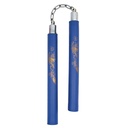
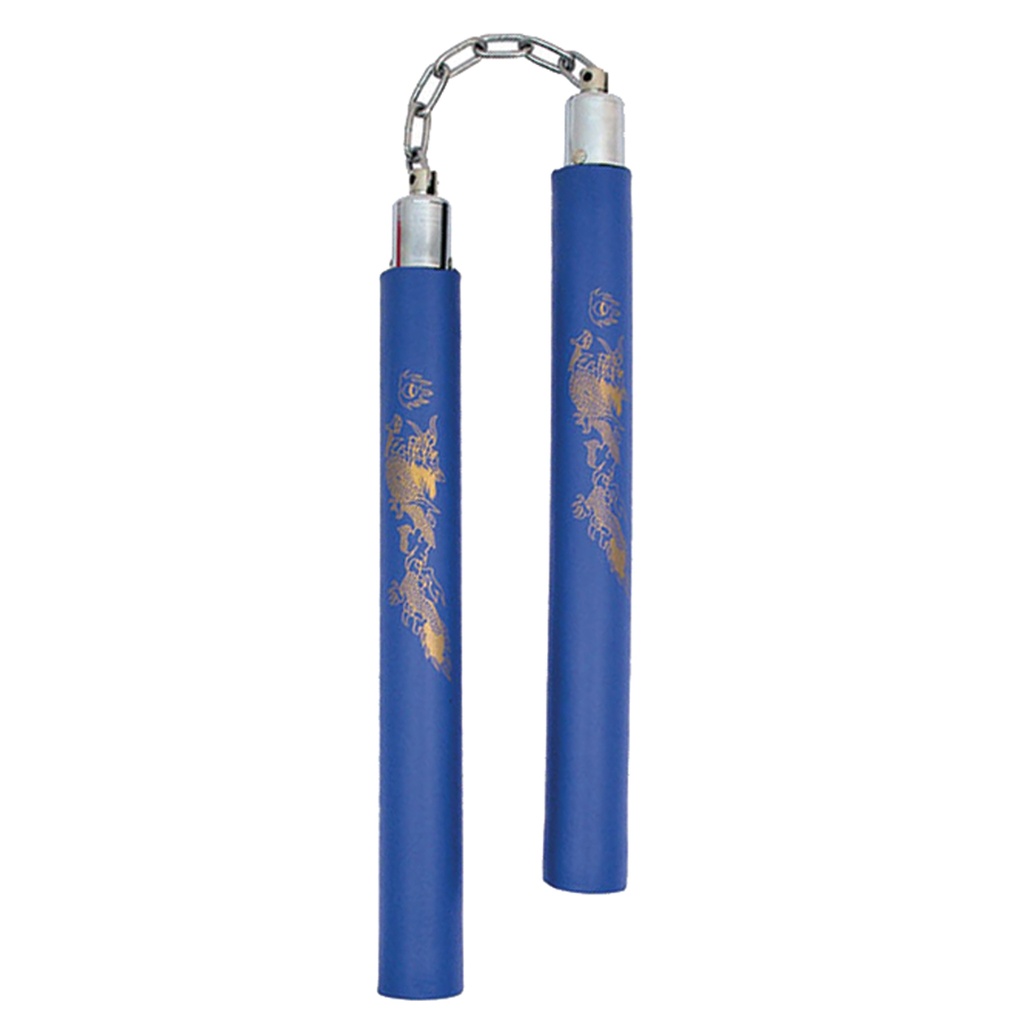
These Blue Dragon Safe-Train nunchucks are built for real dojo work without the bruises. Foam-padded 12-inch handles wrap a solid inner core, giving you feedback and control while taking the sting out of mistakes. A smooth ball-bearing chain tracks consistently through spins, strikes, and figure-eights so students can focus on timing and form. Ideal for beginners, kids, and class drills where safety matters as much as tradition.
Blue Dragon Safe-Train Nunchucks Built for Real Dojo Practice
Not every training session needs bruises to prove it happened. These Blue Dragon Safe-Train Nunchucks are built for the reality of modern dojos: you want students focused on timing, rhythm, and control, not flinching every time they miss a catch. Foam-padded handles over a solid inner core give you honest feedback on form while keeping contact mistakes from turning into injuries.
Why These Training Nunchucks Earn a Place in Your Dojo
At a glance, they look like classic nunchaku: twin handles, short chain, traditional dragon motif. The difference is in how they behave under repetition. Twelve-inch grips match the proportions of standard hardwood nunchucks, so technique transfers cleanly when students step up to heavier gear. The blue foam padding adds a forgiving outer layer that softens impacts on forearms, shoulders, and even the occasional forehead, without feeling like a toy.
For instructors, that balance matters. You get a training tool that respects the weapon’s lineage while clearly signaling that this is a safe-stage implement meant for learning fundamentals, partner drills, and youth classes.
Safe-Train Construction: Foam, Core, and Chain That Behave Predictably
Good training weapons aren’t random chunks of padding. They need to track, pivot, and return in a way that mirrors the real thing. That’s where the construction of these Blue Dragon Safe-Train Nunchucks stands out.
Foam-Padded Handles with Real Feedback
Each 12-inch handle uses a foam outer layer over an inner core. The foam absorbs impact and spreads out force, so mistakes don’t punish beginners into quitting. The inner core keeps the weight distribution and stiffness consistent, which matters when you’re drilling passes, spins, and transitions that depend on predictable swing arcs.
The matte blue surface also gives a bit of grip without grabbing at the skin or gi fabric, helping students maintain control through extended practice sets.
Ball-Bearing Chain for Smooth, Repeatable Flow
These are traditional chained nunchucks, not a rope-linked variant. The short metal chain and ball-bearing swivels at the caps keep rotation clean and reduce binding when you change direction quickly. For training, that smooth roll is critical: students can actually feel how timing and wrist position affect the path of the handles, instead of fighting friction or stiff joints.
The chain length stays in that practical middle ground — short enough for tight control, long enough for classic strikes and figure-eights without clipping your own hands if your spacing is correct.
Training Use Cases: From First Class to Flow Drills
These Blue Dragon Safe-Train Nunchucks are built for instructors who need a reliable, low-drama way to bring weapons into class, and for students who want to explore nunchaku without decorating their arms with bruises.
Beginner and Youth Classes
Foam-padded construction makes these an easy choice for kids’ programs and first-time weapon modules. The visual of the gold dragon on blue handles still says “traditional martial arts,” but parents see clearly that these are training tools, not hardwood impact weapons. Students can learn basic grips, chamber positions, simple strikes, and control drills with far less risk.
Intermediate Flow, Rhythm, and Form Work
For more experienced students, the 12-inch length and ball-bearing chain make these useful for refining combinations and transitions at higher speed. Because they’re padded, you can push into longer sets, fatigue, and experimentation without paying as heavily for the inevitable mistakes. That’s exactly how muscle memory gets built.
Design Details That Respect Martial Arts Tradition
Training gear doesn’t have to look like a pool noodle. The gold dragon graphic running the length of each handle nods to the weapon’s roots in East Asian martial arts without drifting into cheap novelty. Blue as the base color keeps the overall look calm and approachable — a deliberate shift from aggressive black or red, which can look out of place in youth or mixed-level classes.
Metal end caps and chain hardware keep the profile familiar for anyone who has handled traditional wooden nunchaku. That matters when you’re trying to prepare students for eventual progression without shocking them with a completely different feel later.
What Buyers Ask Before Purchasing an Automatic Knife
You’re looking at training nunchucks here, not an automatic knife for sale. But the same mindset applies: tool choice, legal context, and intended use all matter. Below are the questions automatic knife buyers usually bring to the table, answered clearly for reference.
Are automatic knives legal?
In the United States, automatic knives (often called switchblades in legal language) are regulated primarily at the state level. Federal law (the Switchblade Knife Act) restricts interstate commerce and shipment of automatic knives under certain conditions, especially across state lines and into federal jurisdictions, but it does not universally ban ownership. State and sometimes local laws decide whether you can own, carry, or conceal an automatic knife, and under what circumstances. Some states allow automatic knives for everyday carry, some restrict them to certain blade lengths or to law enforcement, and a few still largely prohibit them. Before you buy or carry an automatic knife, you need to check the current laws in your state and city, and understand that those laws change over time.
What's the difference between an automatic knife, OTF, and a switchblade?
Mechanically, an automatic knife is any knife that opens its blade using a spring or stored energy when you press a button, slide, or similar control in the handle. A switchblade is the older legal term that usually refers to the same class of knives — side-opening or out-the-front blades that deploy automatically by switch or button. An OTF (out-the-front) automatic knife is a specific subtype where the blade travels straight out and back into the handle, instead of pivoting from the side like a typical folding automatic. Most OTFs are automatic, and many are double-action, meaning the same control both deploys and retracts the blade using spring tension.
What makes an automatic knife worth buying?
A serious automatic knife is defined by its mechanism and execution, not just by the fact that it pops open. Reliable spring strength, secure lockup, consistent deployment speed, and robust materials separate a quality automatic knife from cheap novelty pieces. Enthusiasts look for precise machining at the pivot or internal track (for OTFs), a button or slide that feels positive without grit, and blade steel that holds an edge and resists corrosion appropriate to its intended use — EDC, duty, or collection. The value comes from how confidently it deploys and locks every time, and how well the build holds up under real-world carry.
Choosing the Right Training Tool: Why These Blue Dragon Nunchucks Make Sense
If you approach martial arts gear the same way automatic knife collectors approach mechanisms, the Blue Dragon Safe-Train Nunchucks hold up to scrutiny. The foam padding isn’t an afterthought; it’s tuned to make impact survivable while keeping swing behavior honest. The ball-bearing chain doesn’t bind under direction changes. Handle length mirrors real nunchaku. And the traditional dragon motif keeps the look anchored in the art, not in gimmicks.
For dojos, instructors, and students who take training seriously, this is the kind of practice weapon that lets you stack reps without stacking injuries — the right tool for learning clean, controlled nunchaku work in a modern training environment.