Duelist’s Gambit Pistol Sword Cane - Pewter Black
5 sold in last 24 hours
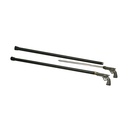
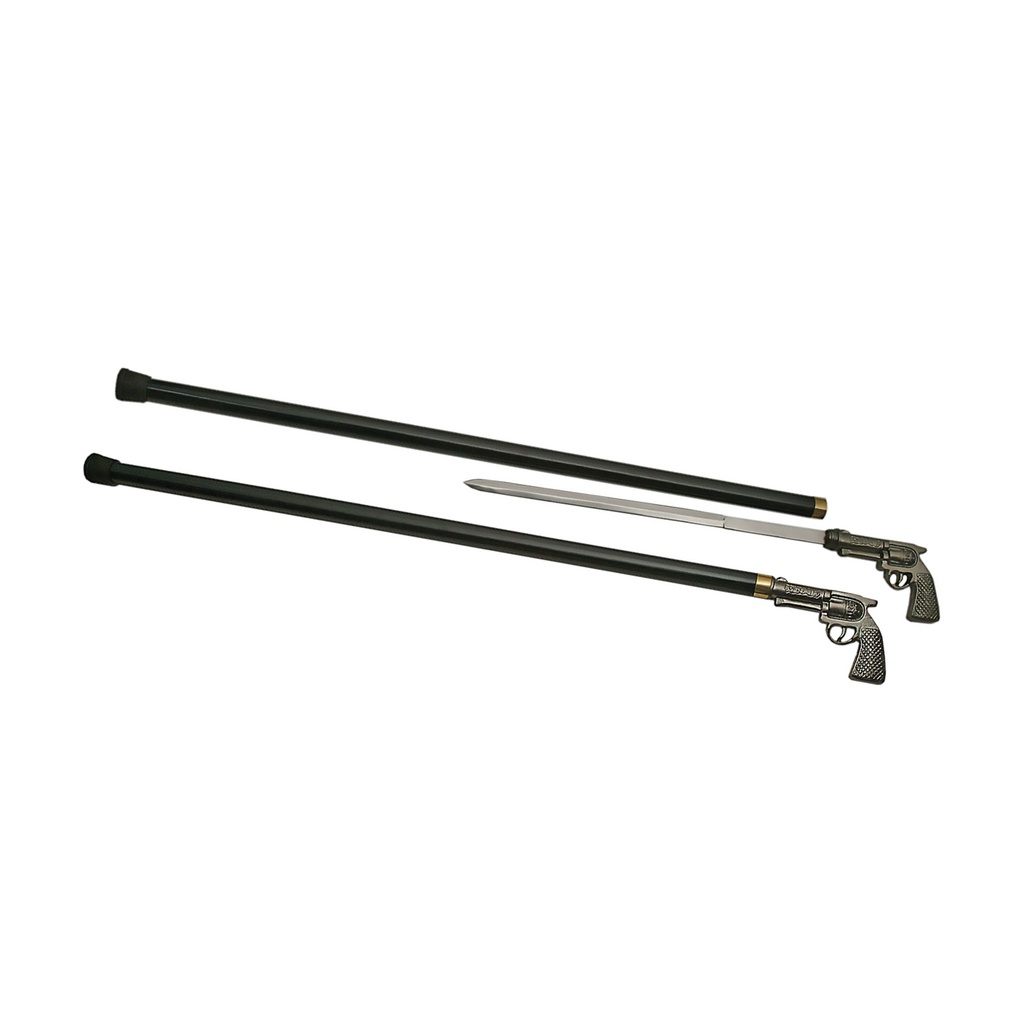
This isn’t a gimmick stick; it’s a duelist’s statement. The Duelist’s Gambit Pistol Sword Cane hides a straight, spear-point blade inside a clean black cane shaft, capped with a detailed pewter-tone pistol handle. At a glance, it reads as vintage gentleman’s cane. In hand, it becomes a dramatic reveal piece that anchors themed collections, cosplay kits, or display walls. If you like your decor with a concealed edge and a story baked into the hardware, this sword cane earns its keep.
Duelist’s Gambit Pistol Sword Cane - Pewter Black
The Duelist’s Gambit Pistol Sword Cane is what happens when a designer actually studies period dueling pistols and gentleman’s canes instead of just slapping a random handle on a stick. At first glance, it’s a tall, formal black cane with a pewter-finished pistol grip. At second glance—when you draw the blade—it’s a full-length sword cane built to anchor a collection, a costume, or a display shelf without looking cheap or theatrical.
Not Just a Prop: How This Sword Cane Is Built
This is a concealed-blade cane, not a walking stick with a toy glued on top. The black cane shaft houses a narrow, straight spear-point blade that runs most of its length, giving you a real steel profile instead of a half-hearted insert. The pewter-tone pistol handle is sculpted with a defined trigger guard, textured grip, and the lines of an antique dueling pistol, so it reads correctly from across a room and passes the close-up test in photos.
A brass-colored accent band at the top of the shaft visually breaks the transition from cane to pistol handle and gives the piece a little period formality. A rubber tip on the base lets it stand in a display, lean in a corner, or play supporting role in cosplay without sliding around or scuffing floors.
Why Collectors Reach for a Pistol-Handle Sword Cane
Straight talk: a sword cane lives or dies on silhouette and reveal. If the handle looks wrong, it cheapens everything. If the draw is clumsy, it never leaves the corner. This design nails both. The pistol grip is the focal point—detailed enough to read as an 18th–19th century-inspired dueling pistol, but not so overloaded with fantasy engraving that it screams costume shop. The clean black shaft keeps your eye where it belongs: on the pewter pistol and the steel when it’s drawn.
The reveal is simple and satisfying. The handle and upper section detach cleanly from the cane sheath, bringing the blade free in one movement. Because the concealed blade runs long—around half the overall 34-inch length—you get a true sword-cane look, not a stubby letter opener hidden inside a tube. For themed rooms, photoshoots, or storefront merchandising, that proportion is what sells the illusion.
Display Presence: How It Works in a Collection or Store
Collectors and retailers both care about the same thing here: does it pull attention across the room? The answer is yes. The black cane shaft is intentionally understated, so the pewter pistol handle and the glint of the blade do the heavy lifting in any display. Stand it in an umbrella stand, lean it in the corner of a study set, or line it up with other sword canes and it still stands out thanks to the unique pistol profile.
For retailers, the Duelist’s Gambit Pistol Sword Cane excels as a traffic driver. It’s the kind of piece people point at, ask to handle, and photograph. That moment is the difference between someone breezing past a rack and actually stopping to browse. For private collectors, it’s the conversation-starter on the wall or by the door—more interesting than a standard cane, but less on-the-nose than hanging another replica sword.
Mechanics and Handling: What You Actually Get
Concealed Blade and Balance
The blade is a straight, narrow spear-point profile sized to the cane’s length. It’s built for visual drama and thematic accuracy more than hard use, but the geometry still matters: a spear point keeps the look tight and historically adjacent instead of wandering into fantasy dagger territory. Because the blade runs deep into the shaft, the balance in hand feels more like a slim short sword when drawn than a flimsy rod.
Sheathed, the weight bias shifts to the pistol handle, which is exactly what you want in a sword cane: the top feels solid and anchored, while the shaft stays visually clean and relatively light. The rubber tip at the base gives you enough traction for basic positioning and stage or cosplay walking, though this should be treated as a display/novelty piece, not as a medical or load-bearing cane.
Fit, Finish, and Daily Reality
The pewter-tone finish on the pistol handle is what sells the illusion. It mimics aged metal with enough detail—trigger guard, frame contours, grip texture—to look right in hand and in photos. The black cane shaft’s matte finish keeps reflections down and dresses the piece up; it doesn’t fight the handle for attention. The accent band acts like a visual ferrule, giving a subtle break that looks appropriate next to both historical reproductions and more modern display weapons.
In terms of day-to-day reality, treat this like a decorative sword cane: it’s ideal for costume events, themed photo sessions, office or den display, and as a standout piece among historical or fantasy collectibles. It’s not built as a primary walking aid, and you shouldn’t rely on it as one.
Legal Context: What to Know About Owning a Sword Cane
A sword cane is legally a concealed blade in most jurisdictions, and that matters. This is not an automatic knife, OTF, or switchblade, but some of the same legal concerns apply because you’re dealing with a hidden weapon inside what appears to be a normal cane.
In the United States, there’s no single federal law that bans sword canes outright, but many states and cities restrict or prohibit concealed blades, disguised weapons, or sword canes specifically. Some places treat them like prohibited weapons entirely; others allow ownership in the home but restrict carrying them in public. Before you carry or display this outside of private property, check your state and local laws on concealed weapons, disguised weapons, and sword canes in particular.
For most buyers, the smart move is to treat the Duelist’s Gambit Pistol Sword Cane as a collectible and display piece. Keep it on the wall, in a rack, or in a themed room, and stay within your local legal framework.
What Buyers Ask Before Purchasing an Automatic Knife
Are automatic knives legal?
Automatic knives—often called autos, switchblades, or OTF knives—sit in a separate legal category from sword canes, but the same principle applies: know your laws. In the U.S., federal law mainly restricts interstate commerce and mailing of automatic knives, not simple ownership, but many states and cities have their own rules about possessing, selling, or carrying them.
Some states now allow automatic knives for everyday carry with blade-length limits, others allow ownership but restrict carry, and a few still heavily regulate or ban them. If you’re looking for an automatic knife for sale to carry daily, you should read your state statutes and local ordinances on automatic, switchblade, and assisted-opening knives before you clip one in your pocket.
What’s the difference between an automatic knife, OTF, and a switchblade?
Mechanically, an automatic knife uses a spring-loaded mechanism to open the blade with a button, lever, or switch—press, and the blade deploys under its own power. A side-opening automatic swings the blade out from the side of the handle like a traditional folder.
An OTF (out-the-front) automatic sends the blade straight out the front of the handle along a track. Most OTFs enthusiasts chase are double-action: the same sliding switch both deploys and retracts the blade. A single-action OTF uses the switch to fire the blade open, but needs a manual reset or secondary motion to retract.
“Switchblade” is the older, umbrella term most laws use for automatic knives in general—both side-openers and OTFs. In enthusiast use, people often say “auto” or “OTF” to be specific, but when you read statutes, assume “switchblade” usually means any true automatic knife.
What makes this sword cane worth buying?
It’s the combination of silhouette, theme, and execution. The pistol handle isn’t a vague, generic shape—it looks like a real vintage-style dueling pistol, complete with trigger guard and period lines. The blade is long enough to earn the name sword cane, not just “cane with a short spike inside.” The black shaft, pewter-tone metalwork, and brass band hit that sweet spot between collectible and display-friendly.
For the price point, you’re getting a display and cosplay piece that photographs extremely well, anchors a themed collection, and instantly turns into a conversation magnet. If your collection leans historical, western, steampunk, or gentleman-adventurer, this piece drops right into that world without clashing.
For Collectors Who Want More Than Just Another Wall Hanger
The Duelist’s Gambit Pistol Sword Cane is for the buyer who’s bored with generic fantasy blades and wants a piece that tells a more grounded story. It’s not an automatic knife for sale, not an OTF, and not a switchblade—it’s a concealed sword cane built around a pistol motif that feels like it belongs in a period parlour or a gunfighter’s study. If your shelves already hold autos and folders, this is the statement piece that changes the rhythm of your collection and pulls the eye exactly where you want it.
| Overall Length (inches) | 34 |
| Theme | Pistol |
| Concealment Type | Cane |