Duty Drill Realistic Training Pistol - Black Polypropylene
13 sold in last 24 hours
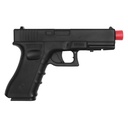
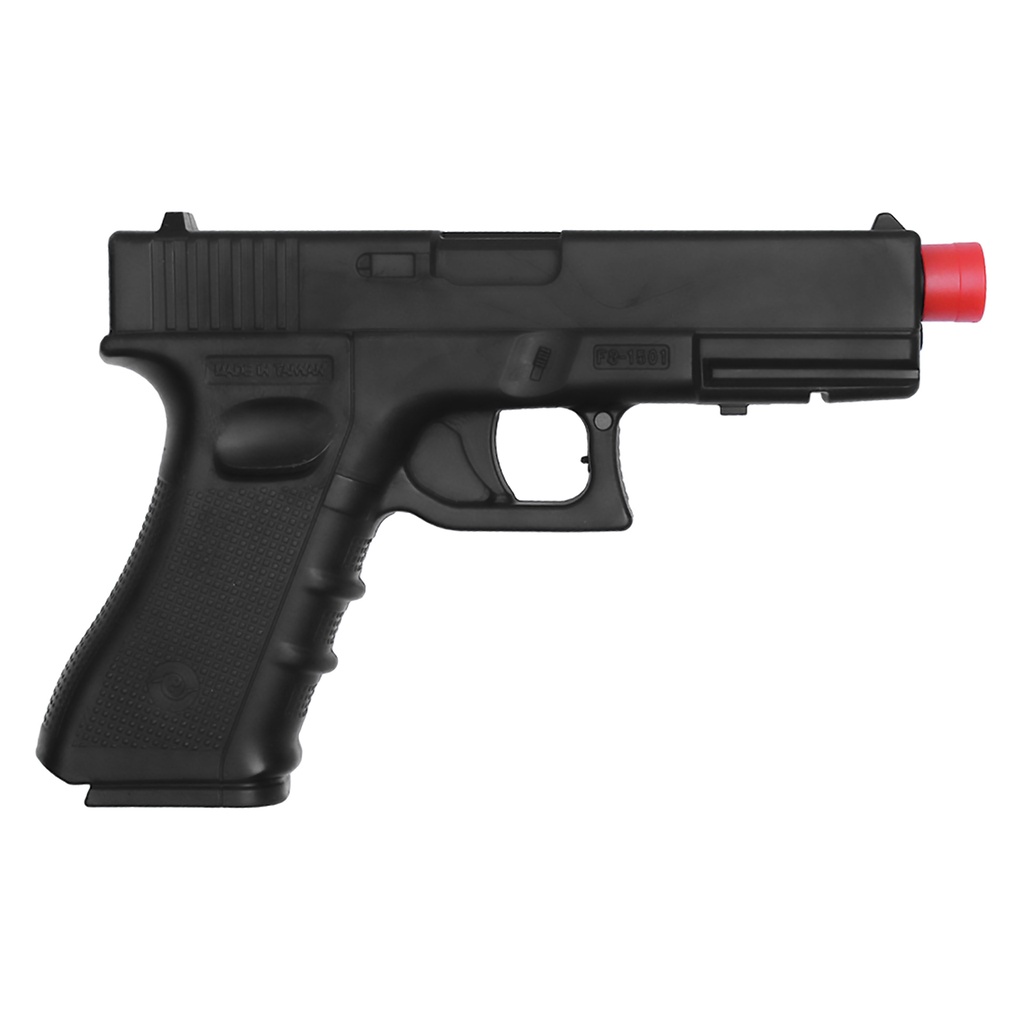
This isn’t a toy, it’s a tool. The Duty Drill Realistic Training Pistol is a full-size polypropylene handgun replica built for serious retention, disarm, and holster drills. The modern semi-auto profile, accessory rail, and textured grip give you realistic handling, while the bright orange tip makes its non-functional, training-only role unmistakable. Instructors, security teams, and holster makers get a rugged stand‑in that shrugs off abuse without the liability of live steel or real firearms on the mat or sales floor.
Duty Drill Realistic Training Pistol - Built for Serious Practice
Not every problem needs live steel or a loaded mag. The Duty Drill Realistic Training Pistol is a full-size, non-functional training handgun built for people who actually train weapon handling, holster work, and defensive scenarios. One-piece polypropylene, modern duty-gun geometry, and a high-visibility orange tip make it a professional tool, not a wall decoration.
Why a Polypropylene Training Pistol Belongs Next to Your Live Gear
If you run classes, run scenarios, or just take your own skills seriously, you already know there are places where a real pistol is the wrong tool. This training pistol fills that gap. It’s sized like a modern semi-auto duty handgun, with:
- A full-length slide profile for realistic draw and holster indexing
- A squared, undercut trigger guard for proper support-hand placement
- An accessory rail molded into the frame for holster compatibility tests
- Textured grip and finger grooves that let you work retention drills with intent
The point is simple: your dry work should feel like the real thing in the hand, while staying clearly non-lethal to everyone in the room.
Mechanics of a Non-Functional Gun That Still Feels Like a Real Sidearm
This isn’t a cheap hollow plastic shell. The 9-inch training pistol is molded from solid polypropylene, giving it enough mass and rigidity to stand up to repeated grabs, disarms, and holster reps without folding, cracking, or warping. The slide, frame, rail, and sights are all part of a single piece, so there are no moving parts to fail and no components to shed during high-intensity practice.
Why Polypropylene Works for Hard Training
Polypropylene hits a rare performance sweet spot for training guns: it’s rigid enough to hold its shape under pressure, tough enough to take impact and flex instead of shattering, and light enough that you can run long sessions without beating up students or training partners. On mats, on concrete, in the shop—this material takes abuse with minimal cosmetic damage and no catastrophic failure.
Realistic Geometry, Zero Live-Fire Risk
The modern semi-auto outline is intentional. A squared-off slide with rear serration lines, fixed front and rear sight posts, and a rail section under the barrel all match the kind of duty pistols students actually carry. That matters when you’re teaching draw stroke, reholstering, retention, and disarm work. But there’s no moving slide, no working trigger, no barrel, and no chamber—just a solid, non-functional replica that looks the part without any of the risk.
Training and Display Uses That Justify a Spot in Your Kit
Serious instructors and gear dealers don’t keep this kind of piece around as a prop; they keep it because it solves specific problems.
- Weapon retention drills: Work from open or concealed carry, fight for the gun, and go full speed without worrying about a real firearm in the scramble.
- Disarm training: Law enforcement, security, and defensive classes get a stand-in that feels like a real pistol but won’t put holes in anything.
- Holster demonstrations: Holster makers and shop owners can demo fit, draw, and reholstering safely at the counter.
- Scenario work: Force-on-force style roleplay without live guns in the room, clearly flagged by the orange tip.
The bright orange muzzle tip is a visual promise: this is for training, not firing. That clarity builds trust in a classroom or retail environment.
Safety by Design: Bright Orange Tip, Zero Functionality
Realistic training tools walk a fine line. They need to mirror the size and profile of a true defensive pistol without inviting confusion or risk. This piece solves that with two design choices:
- High-visibility orange tip: The muzzle end is clearly marked, telegraphing “trainer” at a glance from across the room.
- One-piece construction: Nothing cycles, nothing chambers, nothing fires. It’s a solid replica, and cannot be converted into a working firearm.
In mixed environments—classrooms, empty-hand training spaces, retail counters—that’s exactly what you want. The form factor of a real gun, with none of the mechanical risk.
What Buyers Ask Before Purchasing an Automatic Knife
Are automatic knives legal?
Under U.S. federal law, automatic knives (often called switchblades in statutes) are regulated mainly by the Federal Switchblade Act, which restricts interstate commerce and mailing of automatic knives but doesn’t outright ban simple possession at the federal level. The real complexity is at the state and local level: some states allow automatic knives with few limits, others restrict blade length, opening mechanism, or who may carry them, and a handful still prohibit carry or ownership. Before you buy or carry an automatic knife, check your state and local laws, and remember that what’s legal to own isn’t always legal to carry concealed or across state lines.
What's the difference between an automatic knife, OTF, and a switchblade?
“Automatic knife” is the broad mechanical term: a folding or sliding knife that opens with a button, switch, or similar actuator and is powered open by a spring or stored energy. A switchblade is the traditional legal and cultural term for that same class of knives—side-opening automatics like the classic button-activated designs. An OTF (out-the-front) knife is a specific type of automatic where the blade travels in line with the handle and exits through the front, rather than pivoting out from the side. All OTFs are automatic knives, but not all automatic knives are OTF, and most side-opening automatics are what statutes call switchblades.
What makes this automatic knife worth buying?
When you’re shopping for an automatic knife for sale, the difference between a throwaway and a keeper is in the details: how the action is tuned, the lock-up at full deployment, the blade steel’s hardness and grind, and how the handle ergonomics support real use instead of just looking aggressive in photos. A serious automatic should open decisively without excessive kick, lock solidly with no play, and use steel that can actually hold an edge at the hardness it’s heat-treated to. Combine that with a pocketable profile and hardware you can service, and you’ve got a piece that earns its place in an EDC rotation instead of just living in the drawer.
Who This Training Pistol Is Really For
If you care enough about skill to work past live-fire into control, retention, and holster work, this 9-inch polypropylene training pistol earns its space. Firearms instructors get a durable, clearly safe stand-in. Security teams and martial arts schools get a realistic sidearm profile without live-weapon liability. Holster makers and retailers get a professional demo piece that drops into modern-duty holsters and tells the fit story without ever bringing a real gun onto the sales floor.
Different tool, same mindset: choosing the right equipment for the job. This time it just happens to be a training pistol instead of an automatic knife for sale, but the standard of purpose-built gear is exactly the same.