Ember Tide Quick-Deploy Assisted EDC Knife - Red Aluminum Inlay
5 sold in last 24 hours
This is an assisted opening knife built for people who actually use their gear. The flipper tab and spring assist drive the 3.37-inch 3Cr13 drop point into action fast, then the liner lock and jimping keep you in control. At 4.70 inches closed, it carries like a true EDC, not pocket clutter. The red aluminum inlays aren’t just loud—they anchor a sculpted handle that locks into the hand. A modern folder for buyers who care how a knife deploys, not just how it looks.
Assisted Opening Knife for Sale with Real EDC Intent
If you’re looking at this Ember Tide, you’re not hunting for a wall-hanger. You want an assisted opening knife that actually earns pocket time. This isn’t an automatic knife or OTF switchblade pretending to be tactical. It’s a spring-assisted folding knife built for one-handed deployment, everyday use, and the kind of fit that disappears in the pocket until you need it.
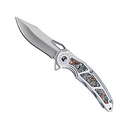
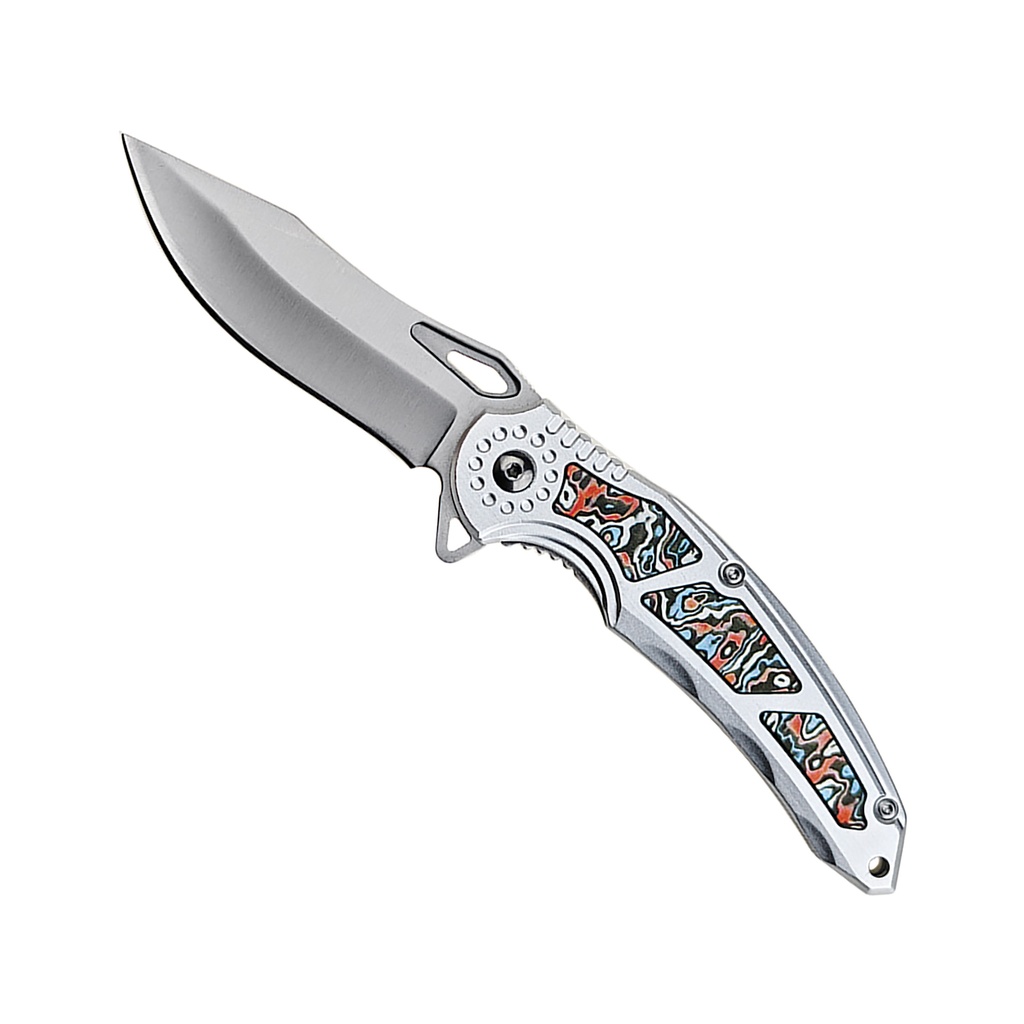
The Ember Tide Quick-Deploy Assisted EDC Knife runs a clean satin drop point in 3Cr13 stainless, paired with a sculpted aluminum handle and bold red inlays. The story here is simple: quick, predictable action and a comfortable, modern chassis that doesn’t feel like every other budget folder on the table.
Why This Assisted EDC Belongs Next to Your Automatic Knives for Sale
Serious buyers browsing any automatic knife for sale category already live in the world of springs, buttons, and deployment speed. This knife slots into that mindset with an assisted mechanism that respects the same priorities: reliable action, one-handed control, and a blade profile that actually cuts.
The flipper tab and internal spring assist work together to fire the blade out with a snappy, confident motion. You start the move with a light press; the assist does the rest. It’s not a push-button automatic, but the deployment speed lives in the same neighborhood—without the same legal headaches in many jurisdictions.
For collectors who line up automatic knives, OTFs, and the occasional switchblade, this is the kind of assisted piece that fills a gap: mechanical interest, fast action, and a price that makes it easy to beat on in real life.
Mechanics that Matter: Action, Lockup, and Steel
Mechanism is where most commodity folders phone it in. This one doesn’t. The Ember Tide uses a spring-assisted flipper plus an elongated thumb hole, giving you two fully functional one-handed opening options. The flipper is the primary—tuned so that once you overcome minimal detent, the blade snaps decisively to lockup.
Action and Lock: How the Ember Tide Actually Runs
The liner lock engages cleanly along the tang, with enough surface contact to inspire confidence without needing a pry bar to close it. That balance matters. Too aggressive a lock and the knife is a chore; too light and you don’t trust it. Here, the geometry hits the usable middle: positive lockup, consistent disengagement.
Jimping on the spine and around the forward finger choil gives real purchase when you choke up. It’s not ornamental texturing—it’s placed where your hand naturally indexes during controlled cuts. Combined with the curved handle and finger groove, the knife settles into a grip that feels more expensive than it is.
Steel and Edge Reality: 3Cr13 Done Honestly
The blade steel is 3Cr13 stainless—no mythical super steel claims. In the real world, that means easy sharpening, good corrosion resistance, and edge retention that suits light to moderate EDC use. Box duty, rope, plastic, food prep in a pinch—it will do its job, and a few passes on a stone or ceramic rod bring it right back.
At 3.37 inches, the satin-finished drop point gives you a long enough edge for work without tipping the knife into awkward territory for daily carry. The plain edge makes sharpening straightforward, and the drop point geometry offers a strong tip for precision work without being needle-fragile.
Design, Ergonomics, and the Red Aluminum Inlay Story
The visual hook is obvious: those bold red patterned aluminum inlays set into a satin-finished silver frame. But this isn’t just paint-by-numbers flash. The inlays are recessed into textured handle scales, adding both traction and visual depth. You get style without sacrificing grip.
The curved handle profile and finger groove are what a regular at a custom knife show would call "honest ergonomics"—no wild sculpting just to look aggressive. It sits naturally in a standard hammer grip and still feels secure when you choke up for detail work.
A single-position pocket clip keeps carry simple: tip-down, ready to draw. Combined with a 4.70-inch closed length and relatively slim aluminum frame, it rides comfortably without turning your pocket into a brick.
Collector Detail: Why This Isn’t Just Another Cheap Assisted Folder
From a collector standpoint, this knife earns its slot as a styled, modern assisted opener that contrasts nicely with your more serious automatic knives and OTF models. The decorative circular texturing near the pivot is a small but notable touch—an intentional design choice rather than an afterthought.
The dual-opening setup (flipper plus thumb hole), layered handle inlays, and clean satin grind give it a more deliberate, "designed" feel than the typical generic assisted knife. That’s the difference between something you forget in a drawer and something you reach for when you don’t want to risk your higher-end autos.
Legal Context: Assisted Opening vs Automatic Knife for Sale
Any time you see a spring in a folding knife, the legal radar should turn on. This is a spring-assisted opening knife, not a true automatic knife or switchblade under most statutes. You initiate opening manually with the flipper or thumb hole; only after you start the motion does the spring assist complete the deployment.
Federal U.S. law treats automatic knives and switchblades differently from assisted openers, especially regarding interstate commerce and mail. Many states that restrict automatic knives and OTF switchblades still allow assisted opening knives for carry and purchase. That said, local and state laws vary widely—and change.
The safe approach: treat this like any serious cutting tool. Before you buy, check your state and local regulations on assisted opening knives, not just automatic knives for sale. If you’re crossing state lines with it, do your homework first. Enthusiasts know: the best knife in the world is useless if you can’t legally carry it.
What Buyers Ask Before Purchasing an Automatic Knife
Are automatic knives legal?
In the United States, automatic knives and switchblades are regulated at both the federal and state levels. Federal law (the Switchblade Knife Act) restricts interstate commerce and mailing of automatic knives but doesn’t directly control simple possession within a state. The real complexity is at the state and local level: some states fully allow automatic knives, some restrict carry (especially concealed carry), and some ban them outright.
This Ember Tide is an assisted opening knife, which is generally treated differently from a true automatic knife because you must start opening the blade manually. Many states that limit automatic knives still allow assisted openers. Still, you should always consult current state and local laws or a reputable legal resource before assuming any knife—automatic, OTF, switchblade, or assisted—is legal to carry where you live.
What’s the difference between an automatic knife, OTF, and a switchblade?
Mechanically, an automatic knife (what most people casually call a switchblade) opens the blade by pressing a button, lever, or slide—no manual blade movement required. The spring drives the blade from closed to open on its own.
An OTF (out-the-front) is a specific type of automatic where the blade travels linearly out the front of the handle, instead of pivoting from the side like a traditional folder. Many OTFs are double action: the same control both deploys and retracts the blade under spring tension.
"Switchblade" is usually a legal and slang term for automatic knives—side-opening or OTF—where the blade opens solely via a spring and a release mechanism. By contrast, an assisted opening knife like the Ember Tide requires you to start the blade moving with a flipper or thumb stud/hole; the spring only helps finish the job. That mechanical difference is exactly why assisted knives are often treated more leniently under the law.
What makes this assisted knife worth buying?
This knife is worth adding to your rotation because it hits the sweet spot between speed, legality in many areas, and honest usability. The assisted flipper action is tuned for fast, repeatable deployment without feeling sketchy or sloppy. The liner lock engages reliably, the jimping and finger groove give real control, and the 3Cr13 steel is easy to maintain for everyday cutting tasks.
On top of that, the red aluminum inlays and satin handle finish give it a visual identity that doesn’t look like a clone of every other assisted folder on the market. It’s the kind of knife you don’t baby, but still appreciate when you pull it out next to your more expensive automatics and OTF pieces.
For Enthusiasts Who Choose Their Gear on Purpose
If your collection already includes an automatic knife for sale find or two, an OTF you’re proud of, and maybe a couple of old-school switchblades, the Ember Tide sits in that everyday slot where action still matters but abuse is expected. It’s a modern assisted opening EDC with deliberate design, honest materials, and a mechanism you won’t get bored flicking at the workbench.
Buy it because you care how a knife deploys, how it sits in the hand, and how it rides in the pocket—not because you needed one more piece of anonymous hardware.
| Blade Length (inches) | 3.37 |
| Overall Length (inches) | 8.07 |
| Closed Length (inches) | 4.70 |
| Blade Color | Silver |
| Blade Finish | Satin |
| Blade Style | Drop Point |
| Blade Edge | Plain |
| Blade Material | 3CR13 Stainless Steel |
| Handle Material | Aluminum |
| Theme | Red Inlay |
| Pocket Clip | Yes |
| Deployment Method | Spring-assisted |
| Lock Type | Liner lock |