
Field-Core Ceramic Filtration Element - Blue & White
6 sold in last 24 hours
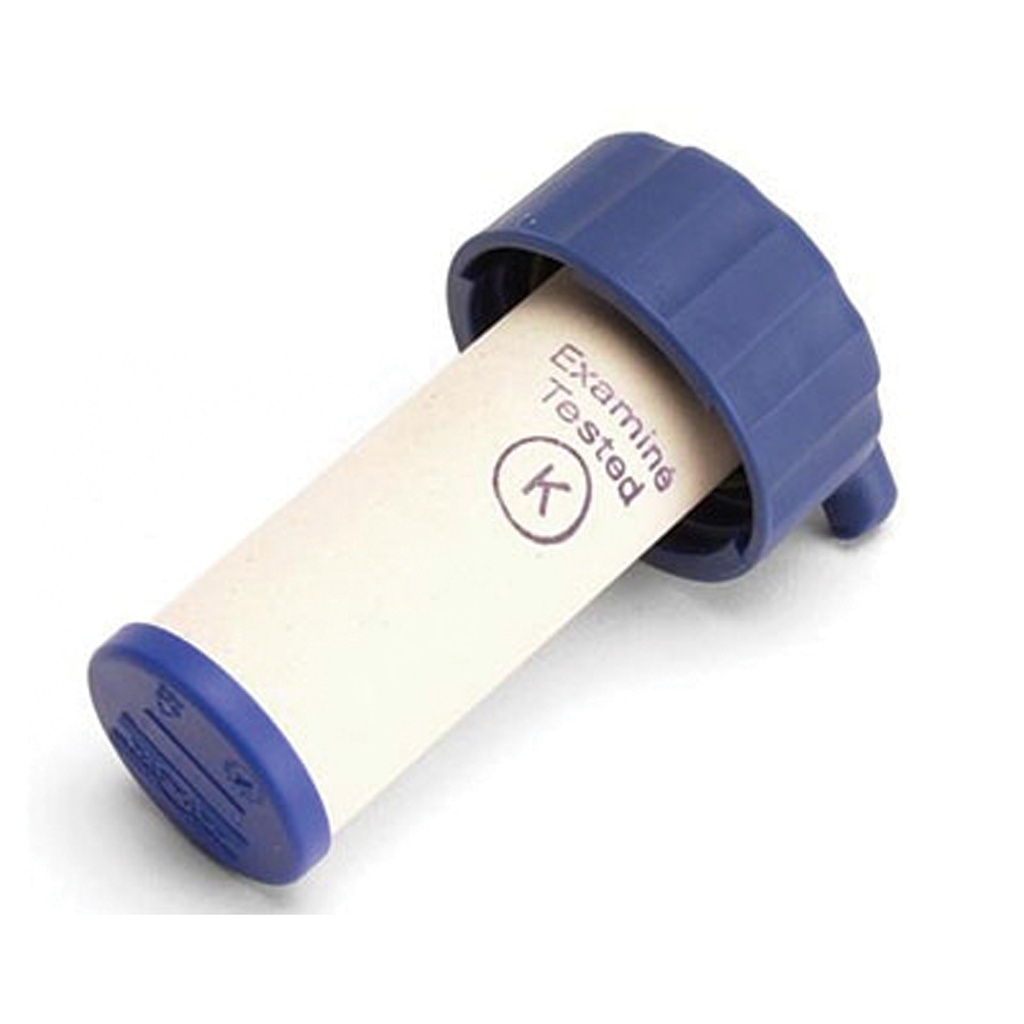
When your Katadyn Mini matters most, this Field-Core Ceramic Filtration Element keeps it working. Designed as a direct replacement for the Katadyn Mini system, this compact ceramic cartridge restores reliable water purification for backpacking, emergency kits, and bug-out bags. The blue threaded collar and tested ceramic core drop into your existing unit with minimal fuss, so you’re not learning a new system when conditions are already stressful. If the Mini is part of your plan, this is the replacement element that keeps that plan alive.
Field-Core Ceramic Filtration Element - Blue & White
The Katadyn Mini has one job: turn sketchy water into something you can drink when there’s no tap for miles. The Field-Core Ceramic Filtration Element - Blue & White is the heart of that system. This is the replacement filter element for the Katadyn Mini, built to drop in, seal up, and get you back to pumping clean water instead of gambling on your last working cartridge.
Why This Filter Element Matters When Gear Actually Gets Used
In backpacking and emergency preparedness, the weak link is usually not the tool you bought once; it’s the consumable you forgot to replace. A Mini with a spent or cracked element is dead weight. This ceramic replacement element restores full performance to your Katadyn Mini so you can keep that compact purifier in front-line service instead of relegating it to the gear graveyard.
The off-white ceramic body does the real work: it’s a micro-porous barrier that physically removes sediment and microorganisms down to fine particulate size. The blue threaded collar and end cap exist for one reason—secure, repeatable fit inside the Mini pump housing so every stroke of that handle is pushing water through the element, not around it.
Mechanics of a Reliable Water Filter Element
There’s no mystery here, just solid engineering. This Katadyn Mini replacement element is a compact ceramic cartridge designed for field service and repeat use. Instead of a disposable plastic cartridge that goes in the trash after a weekend, you get a ceramic core that can be cleaned, restored, and kept in play for extended trips and long-term storage.
Ceramic Filtration You Can Maintain in the Field
As you pump, particulates and biological contaminants build up on the outer surface of the ceramic. Flow drops. With a cheap filter, that’s the end of the story. With a ceramic element like this, you pull it, scrub it down with the included pad or a clean abrasive surface, rinse, reinstall, and you’re back to usable flow. You’re not just buying a replacement part—you’re buying more life out of the purifier you already trust.
Compact Form Factor Built Around the Katadyn Mini
The blue collar is threaded and ribbed for a reason: secure engagement and easy grip even when your hands are cold, wet, or gloved. The nozzle port on one end seats into the Mini’s internal plumbing; the opposite blue cap braces the cartridge against the housing. The entire geometry is tuned so the pump’s pressure is forced through the ceramic wall instead of bypassing it. That’s the difference between ‘water went through something’ and ‘water was actually filtered’.
Preparedness Buyers: Why This Specific Element Belongs in Your Kit
If the Katadyn Mini is living in your go-bag, glovebox, or pack, treating it as a permanent, maintenance-free device is wishful thinking. Filters clog. Elements crack if they’re abused or frozen wet. The time to find out yours is dead is not when you’re standing over a questionable creek.
This Field-Core Ceramic Filtration Element gives you a direct, no-drama way to reset your system to factory-level performance. No adapters, no improvisation, no hoping an off-brand cartridge will seal correctly. It’s purpose-built for the Mini, which means your pump stroke, output rate, and hand feel all stay exactly as you’re used to.
What Buyers Ask Before Purchasing an Automatic Knife
Are automatic knives legal?
Under U.S. federal law, automatic knives (often called switchblades in legal language) are regulated mainly by the Federal Switchblade Act. That act restricts interstate commerce and shipment of automatic knives, but it does not outright ban ownership on a national level. The real decision point is state and local law. Some states allow automatic knives for everyday carry with few restrictions; others limit blade length, restrict carry to one’s property, or ban civilian possession altogether. Before you buy an automatic knife for sale online, you need to check your specific state statute and, ideally, your city or county ordinances. If you plan to travel, remember that crossing state lines with an automatic or OTF knife can change what’s legal the moment you pass a sign. When in doubt, read the law yourself or consult a qualified local source.
What's the difference between an automatic knife, OTF, and a switchblade?
In enthusiast language, all three terms overlap, but the mechanics matter. A true automatic knife is any knife where the blade deploys from the closed position by pressing a button, switch, or lever, and the opening is powered by a spring or stored energy in the mechanism. A side-opening automatic looks like a standard folder, but the blade pivots out from the side under spring tension when you hit the release.
An OTF (out-the-front) automatic knife is a specific subtype of automatic where the blade moves linearly out the front of the handle. Many OTFs are double-action: the same sliding control both deploys and retracts the blade, with internal springs handling the motion in both directions. A switchblade is the older legal and cultural term, and in most statutes it essentially means any automatic knife where the blade is released by a button in the handle. Collectors tend to use “automatic,” “OTF,” and “side-opener” to be precise about the action, and reserve “switchblade” for legal context or vintage pieces.
What makes this automatic knife worth buying?
When you’re evaluating an automatic knife for sale, you’re not just buying a blade that happens to open quickly. You’re paying for lock-up, repeatable action, and steel that holds an edge while surviving the shock of every snap-open deployment. The best automatics pair a tuned spring system with tight pivot tolerances so the blade fires with authority, then stops in the same locked position every time without bounce or play. On the steel side, modern automatics often use high-performance stainless or tool steels—think 154CM, S35VN, M390—heat treated to a Rockwell hardness that balances edge retention with toughness, so the tip doesn’t chip out with hard EDC use. Add in a dialed-in button or slider, pocket clip that actually carries well, and you end up with a piece that feels like a tool you can trust, not a novelty.
Legal Context: Automatic Knives, Carry Reality, and Responsible Ownership
Automatic knives, OTFs, and traditional switchblades sit in a tighter legal box than your average folder. Some states are opening up—repealing old bans and treating automatics as just another pocketknife. Others remain extremely restrictive. If you’re going to buy an automatic knife, you should treat carry like you treat firearm or concealed carry law: specific, local, and subject to change. Know your state’s statute number. Know whether blade length matters. Know if there’s a difference between owning at home and concealed carry in public. And if you carry across state lines, assume the rules reset at every border until you’ve checked them.
Closing the Loop: Serious Buyers, Serious Gear
Whether it’s a ceramic filter element keeping your Katadyn Mini in the fight or an automatic knife riding in your pocket, reliability is the separating line between gear you show off and gear you actually trust. Collectors and serious users both care about the same thing in the end: does the mechanism do exactly what it’s supposed to do, every time, under real-world abuse? When you buy an automatic knife for sale from a dealer who speaks your language—mechanics first, hype last—you’re not just adding another piece to the drawer. You’re choosing equipment that’s worth staking a day, or a trip, or a bad situation on.