Forge-Scar Rustic Kitchen Cleaver Knife - Black Hammered
9 sold in last 24 hours
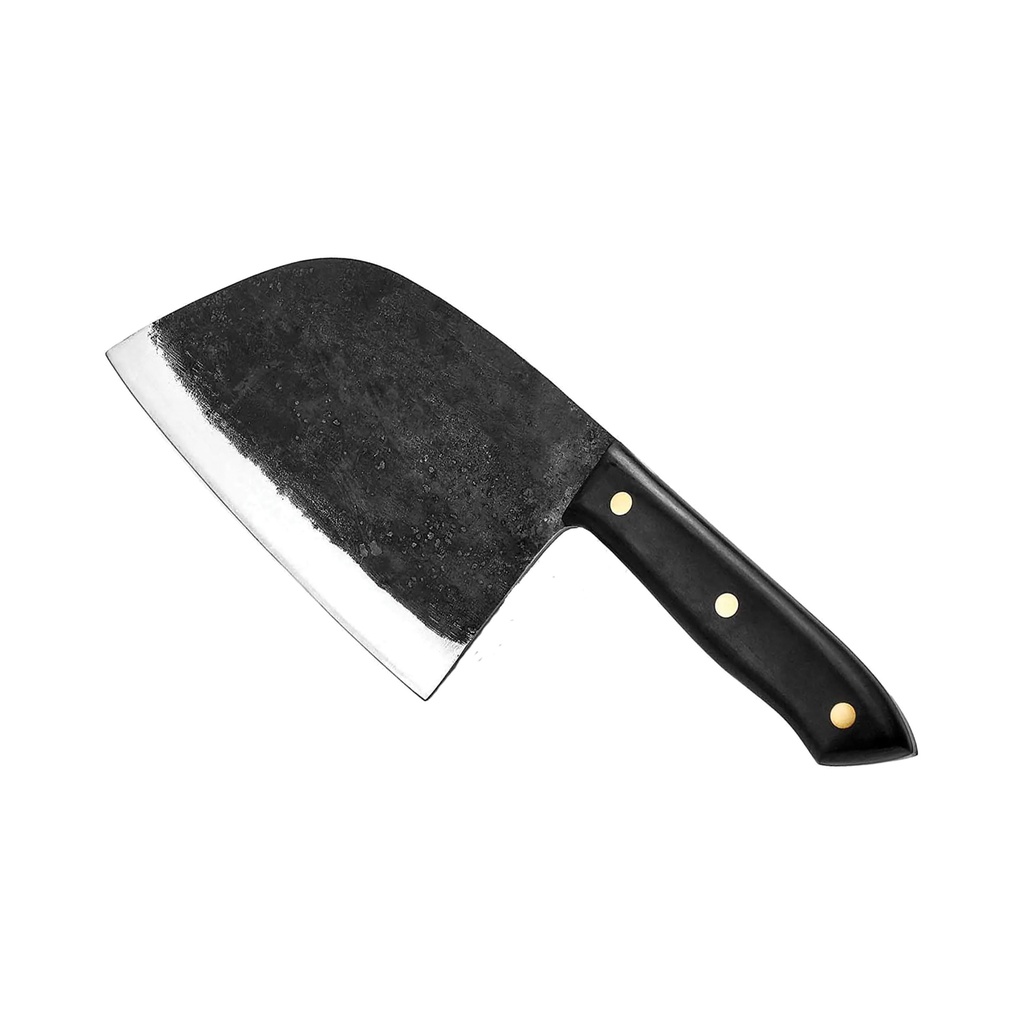
This isn’t a wall-hanger, it’s a working cleaver. The Forge-Scar Rustic Kitchen Cleaver Knife pairs a 7.75-inch 1080 high carbon steel blade with a hammered black finish that shrugs off sticking and drags clean through dense prep. Full-tang construction and a contoured pakkawood handle keep the 12.5-inch profile balanced and controllable. From poultry joints to hard veg, it delivers that satisfying, confident chop that makes real prep feel like craft, not work.
Forge-Scar Rustic Performance Meat Cleaver – Built Like a Real Tool
The Forge-Scar Rustic Performance Meat Cleaver - Black Hammered is what happens when you stop treating kitchen knives like decor and start treating them like equipment. Full-tang 1080 high carbon steel, a hammered black blade face, and a pakkawood handle that actually locks into your hand – this is a cleaver meant to be used, not just photographed.
At 12.5 inches overall with a 7.75-inch blade, it’s sized for real prep: breaking down poultry, portioning big cuts, splitting hard vegetables, and doing the ugly, necessary work that thin chef knives complain about. It’s a rustic workhorse with enough refinement in the grind and geometry to make that work feel smooth instead of brutal.
Why This Fixed-Blade Cleaver Matters More Than Another “Knife for Sale”
Most mass-market cleavers look the part and fold under pressure. Here, the design choices are deliberate and honest:
- Blade steel: 1080 high carbon – tough, simple, and proven for working blades.
- Profile: Broad rectangular cleaver blade with a rounded spine corner for control.
- Construction: Full tang, visible along the spine, with three brass rivets anchoring the scales.
- Finish: Black hammered face with a polished cutting edge for bite and glide.
- Handle: Ergonomic pakkawood, contoured for a natural pinch and rear grip.
This isn’t an automatic knife, OTF, or switchblade – there’s no deployment mechanism to obsess over here, just a fixed blade that’s always ready the second your hand closes on it. The action is all in your swing and how well the knife stays tracked through the cut. On that front, the Forge-Scar runs circles around a lot of pretty, underbuilt kitchen steel.
Hammered 1080 Steel: Where Rustic Look Meets Functional Geometry
The black hammered finish isn’t just there to telegraph “hand-forged” attitude. On a wide cleaver like this, that hammered texture does two important jobs:
- Reduces drag: The dimples break up surface contact so dense product – meat, squash, cabbage – doesn’t suction to the blade face on every cut.
- Manages food release: You get a cleaner separation as you push through, especially in high-volume chopping sessions.
Under that finish you’ve got 1080 high carbon steel, a straightforward work steel that takes a keen edge quickly and isn’t afraid of impact. In the real world, that means:
- Easy field maintenance: A stone, a rod, or a strop brings it right back.
- Honest toughness: Better suited to heavy chopping and edge abuse than many brittle high-alloy stainless options.
- Real bite: Properly sharpened, 1080 has aggressive toothiness that grabs and pulls through sinew and connective tissue.
Yes, it will ask you to respect carbon steel: dry it, don’t leave it soaking, and a light coat of oil won’t hurt. The trade-off is a cleaver that feels alive on the board instead of dead and over-alloyed.
Blade Geometry That Actually Works on the Board
The wide cleaver face gives you power and knuckle clearance, but the details are what make it satisfying to use:
- Polished cutting edge: The transition from hammered face to bright edge is not just aesthetic – it tells you exactly where the working steel starts.
- Subtle curvature: Enough flat to get clean, straight chops; just enough belly to allow a controlled rock on herbs or small veg.
- Flat butt cap: Adds a stable reference point in hand and lets you apply heel pressure without hot spots.
Handle, Balance, and Control: The Unromantic Details That Make It a Daily User
On a cleaver, the handle determines whether you’re in control or just along for the ride. The Forge-Scar’s pakkawood scales are matte-finished, contoured, and pinned in place with three brass rivets over a full tang. The result is predictable, repeatable indexing in your grip.
At 4.75 inches, the handle gives you enough room to choke up for detail or slide back for maximum leverage. The curve through the spine and belly of the handle keeps the cleaver anchored when you’re striking through joints or hard root vegetables. No slick, overpolished “show knife” feel – this is grippy, honest, and ready for wet, real-world prep.
Rustic Aesthetic with Working-Tool Intent
The black blade, brass rivets, and dark pakkawood aren’t there to cosplay as a chef’s Instagram prop. They’re there because they age well. Scratches blend into the hammered finish. The handle hides wear. This is the kind of knife that looks better after a few hard seasons on a cutting board or butcher block.
Legal Context: Fixed-Blade Kitchen Cleaver vs. Automatic Knife Laws
Collectors who also carry automatic knives, OTFs, and modern switchblades are used to thinking about knife laws. With this Forge-Scar Rustic Performance Meat Cleaver, the story is simpler. It’s a fixed-blade kitchen tool, not an automatic knife, not an OTF, and not a switchblade under U.S. federal definitions.
Federal restrictions around automatic knives focus on commerce and interstate shipment of blades that open automatically by a button, spring, or similar mechanism. A full-tang kitchen cleaver deployed by your hand lifting it off a magnetic strip doesn’t qualify. That said, local jurisdictions may regulate open carry of large fixed blades, especially outside of kitchen or professional environments.
Use it as intended – in the kitchen, at the smoker, at a camp kitchen or prep table – and you’re operating well inside the normal expectations for a culinary tool, not pushing automatic knife legal gray areas.
What Buyers Ask Before Purchasing an Automatic Knife
Are automatic knives legal?
At the federal level in the U.S., automatic knives and classic switchblades are regulated mainly in terms of interstate commerce and certain restricted possessions; the key factor is a blade that opens automatically via a button, spring, or other mechanical assist in the handle. Many states have eased their bans on owning and carrying an automatic knife, but the rules vary wildly – from full legality to blade-length limits to outright restrictions.
OTF knives (out-the-front) are simply a subset of automatic knives where the blade deploys straight out of the handle rather than pivoting from the side. They’re often treated the same as other autos under the law. If you’re buying an automatic knife for EDC, you check your specific state and local codes, not just a generic “legal or not” answer.
The Forge-Scar cleaver you’re looking at here isn’t an automatic knife at all – it’s a fixed-blade meat cleaver, so those automatic and switchblade regulations don’t apply to it in the same way.
What’s the difference between an automatic knife, OTF, and a switchblade?
Mechanically, an automatic knife is any knife that opens its blade fully with the press of a button, lever, or similar control, using a spring or stored energy. A side-opening automatic pivots the blade out from the spine of the handle.
An OTF knife (out-the-front) is a type of automatic where the blade rides in a track and deploys linearly out the front of the handle. Many modern OTFs are double-action – the same control both deploys and retracts the blade.
Switchblade is the older, legally loaded term often used in statutes to describe automatic knives. In enthusiast circles, we tend to use more precise language: automatic, OTF, double-action, single-action. None of this applies to the Forge-Scar – as a fixed-blade cleaver, it’s the opposite of a deployment puzzle: no action, no springs, just steel and your hand.
What makes this cleaver worth buying over a generic kitchen knife?
First, geometry and steel: a 7.75-inch 1080 high carbon blade with a hammered finish that actually changes how food behaves on the blade. Second, construction: visible full tang, three-brass-rivet handle, and pakkawood scales that feel planted, not slippery. Third, purpose: this is built to take on the heavy work most thin chef knives complain about – bones, thick joints, dense veg – without feeling like a dead lump of metal.
If you already appreciate the precision of a good automatic knife action or the lockup on a quality OTF, you’ll recognize the same attention to function here – just translated into a fixed-blade kitchen tool. It’s a cleaver you buy because you cook and prep seriously, not because you need another prop.
For Buyers Who Treat Their Kitchen Like a Workbench
The Forge-Scar Rustic Performance Meat Cleaver - Black Hammered is for the same kind of person who debates coil springs vs. leaf springs in an automatic knife or compares the snap of different OTF deployments. You care about how a tool behaves under load. You notice the difference between lazy mass-market geometry and a blade that actually tracks straight through a cut.
Here, you’re not buying an automatic knife for sale – you’re buying its fixed-blade kitchen counterpart. Honest carbon steel, full-tang construction, and a rustic aesthetic that rewards use, not coddling. If your idea of a good evening involves both a tuned auto in your pocket and a proper cleaver on the board, this belongs in your lineup.
| Blade Length (inches) | 7.75 |
| Overall Length (inches) | 12.5 |
| Blade Color | Black |
| Blade Finish | Hammered |
| Blade Style | Cleaver |
| Blade Edge | Plain |
| Blade Material | 1080 steel |
| Handle Material | Pakkawood |
| Theme | Rustic |
| Handle Length (inches) | 4.75 |