Forge-Wave Butcher Cleaver Knife - Brown Pakkawood
6 sold in last 24 hours
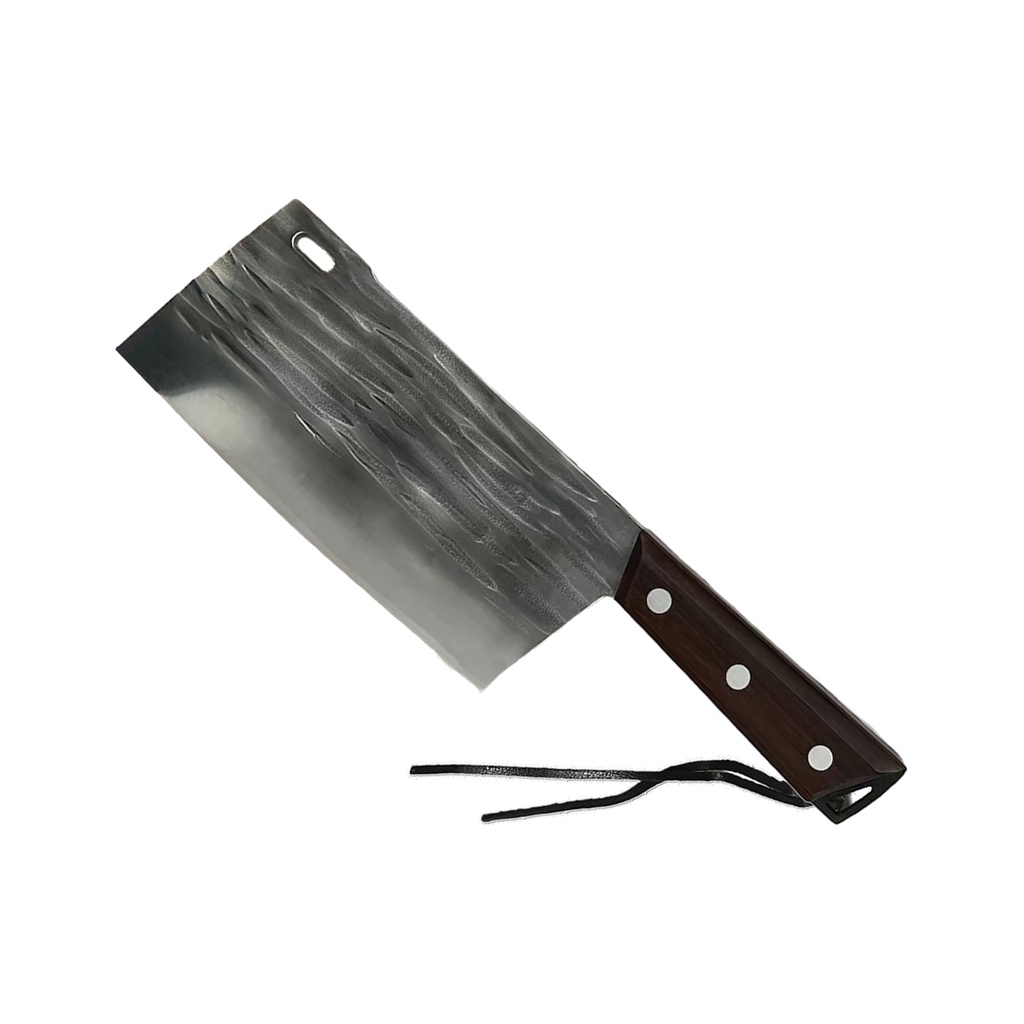
This isn’t a decorative cleaver, it’s a forged tool meant to live on the board. The Forge-Wave Butcher Cleaver Knife in 1080 high carbon steel brings a 7.75" working edge and full-tang authority to dense cuts and daily prep. The rippled blade face speaks to real hammer time, while the brown pakkawood handle and exposed tang give you locked-in control. It hits the board with that inevitable, confident feel you only get from a properly forged kitchen workhorse.
Forge-Wave Butcher Cleaver Knife - Brown Pakkawood
Some knives feel optional. A real meat cleaver should feel inevitable the moment it hits the board. The Forge-Wave Butcher Cleaver Knife is built around that idea: a wide slab of 1080 high carbon steel, hand-forged with a rippled texture up top and a clean, straight working edge below. It’s not pretending to be a do‑everything chef’s knife. It’s unapologetically a cleaver, made to live where heavy prep happens.
Why This Cleaver Earns a Permanent Spot on the Board
The first thing you notice is mass and balance. At 12.5" overall with a 7.75" blade, this cleaver doesn’t feel clumsy or front-heavy. The full tang runs straight through the brown pakkawood handle, with three rivets tying steel and handle into one rigid unit. That full-tang spine, running all the way to the exposed butt, is what keeps this from twisting in your hand if you turn into bone or dense cartilage. It’s a butcher-style architecture that matters when you’re breaking down big cuts.
1080 High Carbon Steel: The Workhorse Choice
1080 high carbon steel is not a marketing gimmick—it’s a smart, traditional choice for a working cleaver. It takes a keen edge fast, responds well to a stone or steel, and has the toughness you want when the knife’s job is impact, not delicate slicing. You’re trading a little corrosion resistance for toughness and sharpenability, which is exactly the right deal for a tool that will see real board time and regular maintenance.
The rippled forged finish on the upper blade does more than just look good. That texture comes from real hammer work and controlled forging. It slightly reduces food adhesion compared to a perfectly flat slab and, more importantly, it tells you how the steel was moved and shaped, not just stamped out of sheet stock.
Blade Geometry: Built for Heavy, Rhythmic Work
The blade is a classic rectangular cleaver profile: tall, wide, and dead-straight along the cutting edge. There’s no pretense of a gentle rocker here. This is for straight, decisive chops and push cuts. You bring it down, it goes where you aim it. The edge width and thickness are tuned so you get enough meat behind the edge to survive impacts, without turning it into a dead wedge that just crushes instead of cutting.
Board Feel and Control
That straight edge and tall profile do something important: they give you repeatable contact with the cutting board. Once you find the angle that bites cleanly, you can run that same angle through piles of prep—ribs, poultry, thick veg—without fighting the blade. The slot cutout near the spine trims some forward weight and gives you an easy visual index point when you’re lining up cuts.
The exposed tang at the butt, paired with the lanyard, gives you another control point. Choke back on the handle, index off the butt, and you can let the cleaver’s own mass do more of the work for big chopping without white‑knuckling the grip.
Handle and Ergonomics: Pakkawood Done Right
Handles on heavy-use tools are where a lot of budget knives fall apart. Here, the brown pakkawood scales are set over a full tang and finished smooth, but not slick. Pakkawood—stabilized hardwood infused with resins—holds up to moisture and kitchen abuse better than bare natural wood while keeping that warm, organic feel in hand.
The handle length at 4.75" gives most hands a full, comfortable grip without forcing you into any weird contouring or aggressive finger grooves. It’s a straight, honest profile that works whether you’re choked up near the heel for tight work or back on the handle for harder hits. The glossy finish is more about sealing than shine; wipe it down, and it looks ready for service again.
Built as a True Full-Tang Tool
Full tang means steel from tip to butt, visible along the spine and base of the handle. On a cleaver, that’s not a nice‑to‑have. It’s what keeps the blade tracking straight through tougher material and prevents that unnerving “handle flex” you get from partial-tang bargain choppers. The triple-rivet construction locks everything together; nothing here is cosmetic.
Kitchen Role: Your Heavy Prep Anchor
This cleaver is not a showpiece for a magnetic strip you never touch. It’s designed to be the heavy anchor at your block. Breaking down pork shoulders, segmenting racks, dividing whole chickens, halving dense squash—these are the jobs where a regular chef’s knife feels overmatched and fragile. The Forge-Wave cleaver is the right tool for that abuse.
Because of the blade height and flat profile, it also doubles nicely for scooping up chopped aromatics or trimmed bones off the board. The rippled upper blade gives you grip if you like to guide the blade with your off-hand during controlled push cuts, while the polished lower section is your cutting surface—easy to clean, easy to inspect, easy to maintain.
Care, Patina, and Long-Term Ownership
High carbon 1080 will reward you if you treat it like a serious tool. Wipe it dry after use, don’t leave it soaking in a sink, and it will develop that dark, honest patina that serious kitchen knives wear. That patina isn’t damage; it’s a working record of meals, prep sessions, and seasons. In return, you get a cleaver that sharpens quickly and holds working bite through real, repeated impact.
If you’re coming from thin stainless chef’s knives, this cleaver will recalibrate what “confidence” at the board feels like. It’s less about razor-thin delicacy and more about a repeatable, solid strike that splits exactly what you line up under the edge.
What Buyers Ask Before Purchasing an Automatic Knife
While this Forge-Wave Butcher Cleaver Knife is a fixed-blade kitchen tool—not an automatic knife, OTF, or switchblade—many of our customers collect both kitchen steel and automatic mechanisms. These are the questions they typically ask on the automatic side of their collection.
Are automatic knives legal?
Under U.S. federal law, automatic knives (often called switchblades in statutes) are regulated mainly in terms of interstate commerce and shipping, not simple ownership. Federal rules restrict how automatic knives and OTF models move across state lines and into certain federal facilities, but they do not outright ban private ownership nationwide. The real complexity lives at the state and sometimes local level. Some states allow automatic knives for carry with blade-length limits, some allow possession but restrict carry, and a few still heavily restrict both. The only responsible approach is to check your specific state and local laws before you buy or carry an automatic knife, and to treat those laws as dynamic—legislatures have been actively updating automatic and switchblade statutes over the last decade.
What’s the difference between an automatic knife, OTF, and a switchblade?
Mechanically, an automatic knife is any folder where the blade is deployed by pressing a button, lever, or switch that releases spring tension to fire the blade open. Most side-opening autos look like conventional folders but spring-open from the side. An OTF (out-the-front) automatic is a subtype where the blade travels in line with the handle, exiting straight out the front via a track. Many OTFs are double-action, meaning the same control both deploys and retracts the blade under spring tension. “Switchblade” is largely a legal and cultural term that statutes use to describe automatic knives in general—both side-opening autos and OTFs can fall under switchblade language depending on the law. This Forge-Wave cleaver, by contrast, is a fixed-blade kitchen knife: no spring, no button, no automatic mechanism to trigger any of those statutes.
What makes this automatic knife worth buying?
Applied to this cleaver, the better question is: what makes this knife worth a spot next to your chef’s knife? The answer is deliberate design for heavy work—1080 high carbon steel tuned for impact, a full-tang construction that keeps the blade tracking true, and a handle that balances the wide cleaver profile without feeling like a crowbar. For automatic knife collectors who appreciate engineering and honest materials, this cleaver scratches a similar itch: simple, robust mechanics executed correctly and meant to be used hard, not babied.
For Collectors Who Respect Purpose-Built Steel
If you’re the kind of buyer who cares about how an automatic knife’s action feels, how its steel responds to a stone, and whether the design actually suits its intended role, this Forge-Wave Butcher Cleaver Knife will make sense to you immediately. It’s a purpose-built kitchen cleaver with the same design honesty you look for when you buy an automatic knife for sale: no gimmicks, no overpromises—just a forged tool that does heavy work the way it should.
| Blade Length (inches) | 7.75 |
| Overall Length (inches) | 12.5 |
| Blade Color | Silver |
| Blade Finish | Rippled |
| Blade Style | Cleaver |
| Blade Edge | Plain |
| Blade Material | 1080 high carbon steel |
| Handle Finish | Glossy |
| Handle Material | Pakkawood |
| Theme | Rippled Blade |
| Handle Length (inches) | 4.75 |
| Tang Type | Full Tang |
| Pommel/Butt Cap | Exposed tang |