Frontier Lineage Clip-Point Hunting Knife - Natural Stag
8 sold in last 24 hours
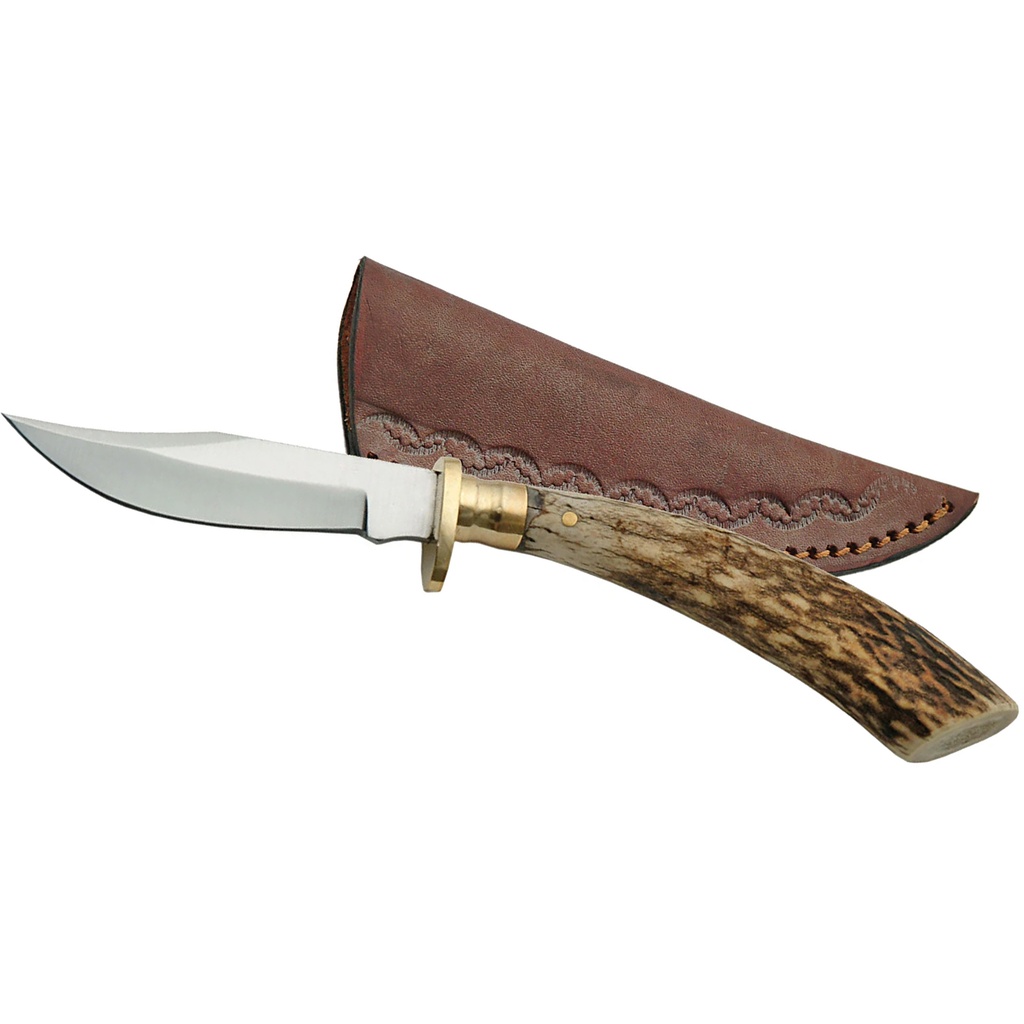
This is a fixed blade hunting knife built the way they used to do it—full tang, clip point, and natural stag you actually want to use. The 7.5-inch satin blade gives you reach and control for field dressing, while the brass guard and stag handle lock into the hand instead of skating around in it. It rides easy in the fitted leather belt sheath and works even easier in camp, a classic field hunter that feels right from the first cut.
Frontier Lineage Clip-Point Hunting Knife - Natural Stag
The Frontier Lineage Clip-Point Hunting Knife is exactly what it looks like: a traditional fixed blade hunting knife built for real field work, not display-case fantasy. Full-tang steel, a 7.5-inch clip point, natural stag in the hand, brass at the guard, and leather on the belt. No gimmicks, no tacticool styling—just a heritage field hunter that does its job cleanly when it matters.
Why This Fixed Blade Field Hunter Belongs on Your Belt
On a real hunt, the knife either disappears in your grip or it fights you. This one disappears. The 7.5-inch clip point gives you the reach and control you want for breaking down medium to large game, with a profile that glides through hide and tissue instead of wedging. The satin finish reduces drag and wipes clean easily, while the straight spine and defined swedge let you choke up or drop back depending on the cut you’re making.
The natural stag handle is the opposite of sterile synthetics. That texture—the real antler grain, the subtle irregularity—is what gives you lock-in grip when things get slick. The brass guard is there for one reason: to keep your hand from riding onto the edge when you’re twisting, pulling, and working tired. It’s functional, not decorative, and it earns its place on every push cut.
Mechanics of a Traditional Field Knife That Actually Works
This isn’t an automatic knife, an OTF, or a switchblade—it’s a classic fixed blade hunting knife where the mechanism is the simplicity of full-tang steel and pinned stag. There’s no spring to fail, no button to gum up, just a solid piece of steel running through a natural handle you can trust.
Full-Tang Construction You Can Beat On
Full tang matters. It means the steel runs the entire length of the handle, not a hidden stub or partial tang lost in filler material. On a field knife, that translates to honest strength when you’re twisting through joints, splitting the sternum, or using the spine to baton kindling in camp. You’re not wondering what’s under the handle scales—you can see the tang and feel it carry the load.
Clip Point Geometry Tuned for Field Work
The clip point profile is a classic for a reason. The fine tip and long belly combination gives you a controlled puncture to start your cuts, then a generous slicing edge for opening and peeling back hide. The straight-ish spine lets you apply thumb pressure without gymnastics, and the subtle swedge keeps the tip agile instead of blocky. In the field, that means you can go from careful caping work to heavier breakdown cuts without feeling like you brought the wrong knife.
Carry and Use: Leather Sheath, Real-World Balance
The leather belt sheath is built for quiet, simple carry. Brown leather, welted edge, scalloped stitching—classic hunting-rig details that protect the blade and keep it from sawing through your gear. It rides reasonably high, keeping the knife from banging off brush and truck seats while still letting you draw cleanly with a full hand on the stag.
Balance is slightly forward of the guard—exactly where a field hunter should live. You get a bit of blade weight working for you through longer cuts, but not so much that it feels like a camp chopper. In camp, it’ll handle food prep, light wood work, and rope duty without feeling clumsy or out of place.
Collector Appeal: Natural Stag and Heritage Lines
For the collector who lives in the traditional lane, this knife hits the right notes: natural stag scales with visible texture and color variation, a brass guard that will patina with time, and a clip point silhouette that could have walked out of a mid-century hunting catalog. Each stag handle will have its own grain and character, which is exactly what serious stag-handle buyers look for—no two pieces are truly identical.
This is the kind of knife that works as a first hunting knife for a new hunter and as a backup belt knife for someone who already owns customs and wants a no-nonsense field blade they won’t baby. It’s not a safe queen; it’s the knife that earns scars honestly and looks better for it.
Legal Context: Where a Fixed Blade Hunting Knife Fits In
Unlike an automatic knife, OTF, or spring-actuated switchblade, this Frontier Lineage is a straightforward fixed blade hunting knife. There’s no button, no spring, no automatic deployment—just a full-tang blade in a leather sheath.
In the U.S., most knife laws draw a clear distinction between fixed blades and automatic knives. While automatic knives and switchblades can be restricted by state or local law, a traditional fixed blade hunting knife like this is generally treated as a tool—especially in the field, during hunting, fishing, and camping activities. That said, some jurisdictions do regulate overall blade length or concealment of fixed blades, so it’s on you to confirm your local and state rules before everyday carry or transport in urban areas.
If your usual interest is automatic knives or OTF switchblades, consider this the legal low-drama option: a classic hunting knife built for legitimate field use that steers clear of automatic knife legal gray zones in most regions.
What Buyers Ask Before Purchasing an Automatic Knife
Many of our customers are automatic knife enthusiasts first and hunters second, so they ask the same core questions whether they’re buying an automatic knife for sale, an OTF, a switchblade, or a traditional fixed blade like this. Here’s how this field hunter fits into that bigger picture.
Are automatic knives legal?
In the U.S., automatic knives (including many knives casually called switchblades and some OTF designs) are regulated under a mix of federal and state laws. Federal law primarily restricts interstate commerce and mailing of automatic knives, but it doesn’t outright ban ownership nationwide. The real complexity lives at the state and local level:
- Some states largely allow automatic knives and OTF switchblades with few restrictions.
- Some allow them with conditions—blade length limits, occupational exemptions, or carry-type rules.
- Others still heavily restrict or ban automatic knife carry or sale.
This Frontier Lineage is not an automatic knife, not an OTF, and not a spring-loaded switchblade. As a fixed blade hunting knife, it typically falls under more permissive “tool” or “sporting use” categories. Still, laws change, and local ordinances can be stricter than state law. If you’re shopping automatic knives for sale alongside this, check current statutes in your state before assuming what’s legal to carry.
What’s the difference between an automatic knife, OTF, and a switchblade?
Mechanically, the distinctions matter:
- Automatic knife: A folding knife where the blade is deployed by a spring when you press a button or actuator. Side-opening autos are the most common—blade pivots out from the side like a manual folder, but under spring power.
- OTF (Out-The-Front) knife: A specific type of automatic where the blade slides straight out the front of the handle. Many OTFs are double-action, meaning the same switch both deploys and retracts the blade under spring tension.
- Switchblade: In common language, it’s usually any automatic knife; legally, it’s often the statutory term used in laws covering spring-deployed blades, whether side-opening or OTF.
This Frontier Lineage is none of those. It’s a fixed blade hunting knife—no pivot, no button, no internal mechanism to deploy. You draw it from the leather sheath, you work, you sheath it again. If you collect automatic knives and OTF switchblades for the mechanics, this sits in the "field tool" category: simpler, but still very much part of a serious cutting kit.
What makes this hunting knife worth buying?
Three things: honest construction, practical geometry, and heritage materials. Full-tang steel under pinned natural stag gives you real-world strength and grip. The 7.5-inch clip point is long enough for bigger game but still controllable for fine work. The brass guard and leather belt sheath lock it into the traditional hunting lane instead of chasing trends.
For the buyer who usually scans pages of automatic knives for sale and OTF switchblades, this knife fills a different role: the dependable field blade you don’t hesitate to take into bad weather, rough terrain, or a bloody dressing job. It’s the one that works so cleanly you barely think about it—and that’s exactly what you want from a hunting knife.
Built for Hunters, Respected by Collectors
If you’re the kind of buyer who knows why mechanism matters on an automatic knife, you’ll appreciate the straightforward honesty of this fixed blade. No springs, no sliders, no marketing noise—just a well-proportioned clip point, full-tang strength, natural stag, brass, and leather doing their job without drama.
Whether it sits beside your automatic knife collection as the dedicated field tool or becomes the first knife you hand to someone on their first hunt, the Frontier Lineage Clip-Point Hunting Knife - Natural Stag earns its place the old-fashioned way: by cutting clean, carrying light, and staying ready whenever the work starts.
| Blade Length (inches) | 7.5 |
| Overall Length (inches) | 7.5 |
| Blade Color | Silver |
| Blade Finish | Satin |
| Blade Style | Clip Point |
| Blade Edge | Plain |
| Blade Material | Steel |
| Handle Finish | Natural |
| Handle Material | Stag |
| Theme | None |
| Tang Type | Full Tang |
| Pommel/Butt Cap | Stag |
| Carry Method | Belt Carry |
| Sheath/Holster | Sheath |