Frontier Siege Survival Fixed Blade Knife - Black Tanto
12 sold in last 24 hours
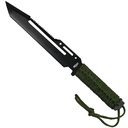
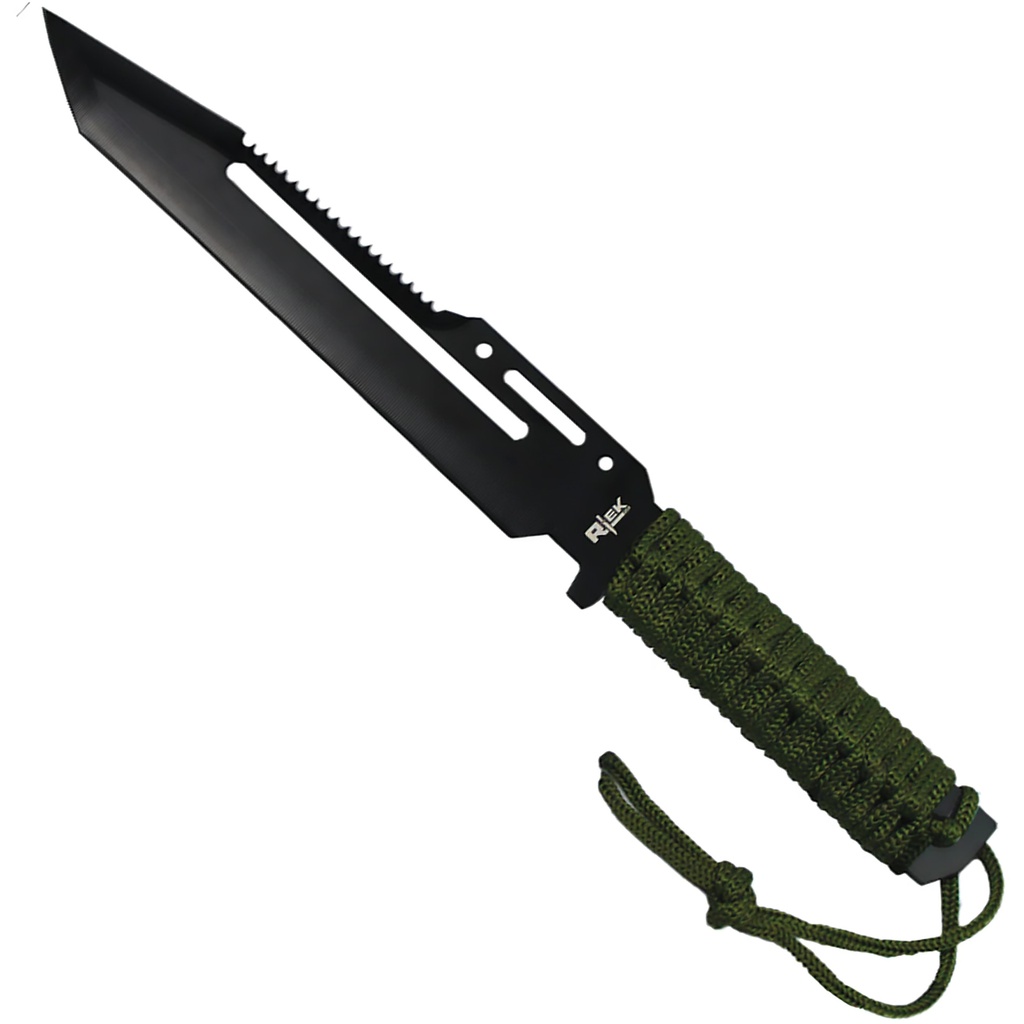
This is not an automatic knife; it’s a full-tang survival fixed blade built for when things get real. The RTEK Survivalist Combat Knife brings a 9" black American tanto blade with a spine serration run that actually bites into wood, cord, and plastic, not just air. The green cord-wrapped handle gives you a secure, glove-friendly grip in wet or cold conditions. If you want a field knife that feels like it was designed by someone who’s actually cut things outside a cardboard box, this is it.
Serious Steel for Real Work: Survival Fixed Blade, Not a Toy
If you came here looking for an automatic knife for sale, park that thought for just a second. This RTEK Survivalist Combat Knife isn’t an automatic, OTF, or switchblade. It’s a full-tang fixed blade built for the ugly jobs your folders shouldn’t have to do. Long black American tanto, spine serrations that actually cut, and a cord-wrapped handle that makes sense in the field. Different tool, different mission.
Why This Fixed Blade Belongs Next to Your Automatic Knives
Enthusiasts who buy automatic knives for sale already know the deal: an auto is about instant deployment, fast access, and one-handed control. A survival fixed blade like this RTEK is about leverage, reach, and abuse tolerance. The two belong together in the same kit.
This knife runs a 9" black-coated American tanto blade with a partial serrated spine. That profile gives you three distinct working zones:
- Primary straight edge for clean push cuts, feathering, and controlled slicing.
- Tanto secondary point for puncture and prying tasks where a fine tip would snap.
- Back serrations that saw through rope, light wood, and plastic when a plain edge starts to struggle.
It’s full tang, so the steel runs from tip to lanyard loop. No pivot, no springs, no action to fail. That’s the entire point of pairing a fixed blade like this with your favorite automatic knife: the auto gets you quick access; the fixed blade does the hard, dirty work without complaint.
Mechanics Without a Mechanism: What Makes This Blade Work
There’s no button, no coil spring, and no double-action mechanism here. But any serious automatic knife buyer understands: geometry is a mechanism of its own.
American Tanto Geometry Built for Abuse
The American tanto tip on this survival combat knife gives you a reinforced point instead of a delicate, needle-like profile. That means you can thrust into dense material, scrape, or gently pry without treating the knife like it’s going to break if you look at it wrong. For collectors used to slim OTF blades, the difference is immediate when you get this in hand.
The transition between the primary and secondary edge lets you choke forward and use that corner for controlled scraping and scoring, similar to how some people use the shoulders of their automatic blades but with more steel behind it.
Serrated Spine: Why the Teeth Are on Top
Most commodity knives toss serrations on the primary edge because it looks aggressive. This design puts them on the spine, where they make more sense for an actual survival fixed blade:
- Keep your main edge clean for fine work and food prep.
- Use the spine serrations as a dedicated saw for cord, webbing, and small branches.
- Maintain each section separately instead of trying to sharpen a mangled combo edge.
For a user who already owns an automatic knife for EDC, this gives you a separate tool tuned for the grind of camp and field tasks.
Carry, Balance, and Field Reality
At 14" overall and about 12 oz, this is not a pocket piece and it’s not pretending to be. The included nylon sheath rides on your belt, with a pouch for the sharpening stone so you’re not trying to strop a work knife on a rock you just found near the fire.
The green cord-wrapped handle does three things right:
- Texture: The wrap gives honest grip, even when your hands are wet or gloved.
- Comfort: It softens the flat tang profile so prolonged carving or batoning doesn’t hot-spot you as fast.
- Redundancy: Worst case, you’ve got usable cordage if you’re willing to strip your handle in an emergency.
Balance is blade-forward, exactly where a survival and combat-style fixed blade should be. You get confident chopping and decisive tip control, instead of the dainty neutrality some EDC-focused knives chase.
Legal Context: Fixed Blade vs Automatic Knife Laws
Here’s where it matters for buyers who usually search for an automatic knife for sale or an OTF knife for carry: this RTEK is a fixed blade with no spring, button, or automatic deployment. That means it’s not treated like an automatic knife or switchblade under U.S. federal law.
Under federal law (the 1958 Switchblade Act and its later updates), the focus is on knives that open automatically by button, inertia, or gravity. A full-tang survival fixed blade like this never folds, never deploys, and is not an automatic or switchblade.
However, state and local laws still matter. Many jurisdictions regulate blade length, concealed carry, or "dirk/dagger" style knives regardless of whether they’re automatic:
- Some states restrict concealed carry of fixed blades over a certain length.
- Others draw lines around "combat" appearance or double edges.
- Transport rules can differ between vehicle carry and on-body carry.
Bottom line: this is not an automatic knife and doesn’t fall under switchblade statutes, but you still need to know your local fixed blade laws before you decide how and where to carry it.
What Buyers Ask Before Purchasing an Automatic Knife
You’re likely here because you’re already tuned into the automatic knife world, and you’re weighing how a survival fixed blade fits into that ecosystem. Let’s walk through the questions that come up most often with serious buyers.
Are automatic knives legal?
At the federal level in the U.S., automatic knives and switchblades are regulated mainly by the Federal Switchblade Act. It limits interstate commerce and shipment of autos and OTF knives in certain circumstances, but it does not outright ban ownership. The real complexity comes from state and local laws:
- Some states: Broadly allow automatic knives, OTFs, and switchblades for ownership and carry.
- Others: Allow ownership but restrict concealed carry, blade length, or specific mechanisms.
- A few: Still heavily restrict or effectively ban automatic knives.
If you’re looking for an automatic knife legal to carry in your state, you need to check your current state code, local ordinances, and any recent law changes—knife laws have been trending more permissive, but it’s your responsibility to confirm. This RTEK Survivalist Combat Knife is not an automatic, OTF, or switchblade, so those specific automatic knife laws don’t apply, though general fixed blade rules might.
What’s the difference between an automatic knife, OTF, and a switchblade?
Mechanically and legally, the distinctions matter:
- Automatic knife (side-opening auto): A folding knife that opens by pressing a button, lever, or similar control. A spring drives the blade out of the handle from the side, like a conventional folder that launches itself.
- OTF (Out-The-Front) knife: A subset of automatic knives where the blade travels linearly out of the front of the handle. Can be single-action (needs manual retraction) or double-action (same control deploys and retracts).
- Switchblade: A legal term often used interchangeably with "automatic knife" in statutes. In many laws, any spring-driven, button-actuated blade that opens automatically qualifies as a switchblade.
This RTEK Survivalist Combat Knife is none of those. It’s a fixed blade: the steel is permanently exposed, no hinge, no action, no deployment. That’s why automatic and switchblade laws typically do not apply to it, even though it clearly has a tactical and combat-ready aesthetic.
What makes this survival knife worth buying?
For a buyer who already owns or is shopping for an automatic knife for sale, this knife earns its place by doing what autos are bad at:
- Full-tang strength: No pivot, no lock, no weak point when you baton wood, pry lightly, or chop.
- Purposeful geometry: American tanto tip, straight main edge, and functional spine serrations give you multiple tool faces in a single blade.
- Field-focused handle: Cord wrap over exposed tang is simple, serviceable, and offers emergency cordage if you need it.
- Ready-to-go kit: Nylon sheath with sharpening stone pouch acknowledges that a working knife will need edge maintenance, not just Instagram photos.
This isn’t a safe queen. It’s the blade you pair with your favorite automatic knife so you’re covered from fast deployment to heavy field use.
For Buyers Who Know Why They Carry Steel
If you’re the kind of buyer who reads action timing, spring tension, and lock engagement before you ever hit "buy automatic knife," you already understand why a survival fixed blade like this matters. Your automatic or OTF covers the quick-access side of the equation. The RTEK Survivalist Combat Knife covers the rest: chopping, prying, pounding, and the kind of work that makes lesser blades tap out.
This isn’t an automatic knife for sale; it’s the fixed blade that belongs in the same kit as the autos you already trust. Different mechanism, same mindset: carry tools that are honest about what they’re built to do.
| Blade Length (inches) | 9 |
| Overall Length (inches) | 14 |
| Weight (oz.) | 12 |
| Blade Color | Black |
| Blade Finish | Matte |
| Blade Style | American Tanto |
| Blade Edge | Partial-Serrated |
| Blade Material | Stainless steel |
| Handle Finish | Textured |
| Handle Material | Cord wrap |
| Theme | Tactical |
| Handle Length (inches) | 5 |
| Tang Type | Full tang |
| Pommel/Butt Cap | Lanyard loop |
| Carry Method | Belt carry |
| Sheath/Holster | Nylon sheath |