Ghostline Covert Flipper Assisted Opening Knife - Matte Black
11 sold in last 24 hours
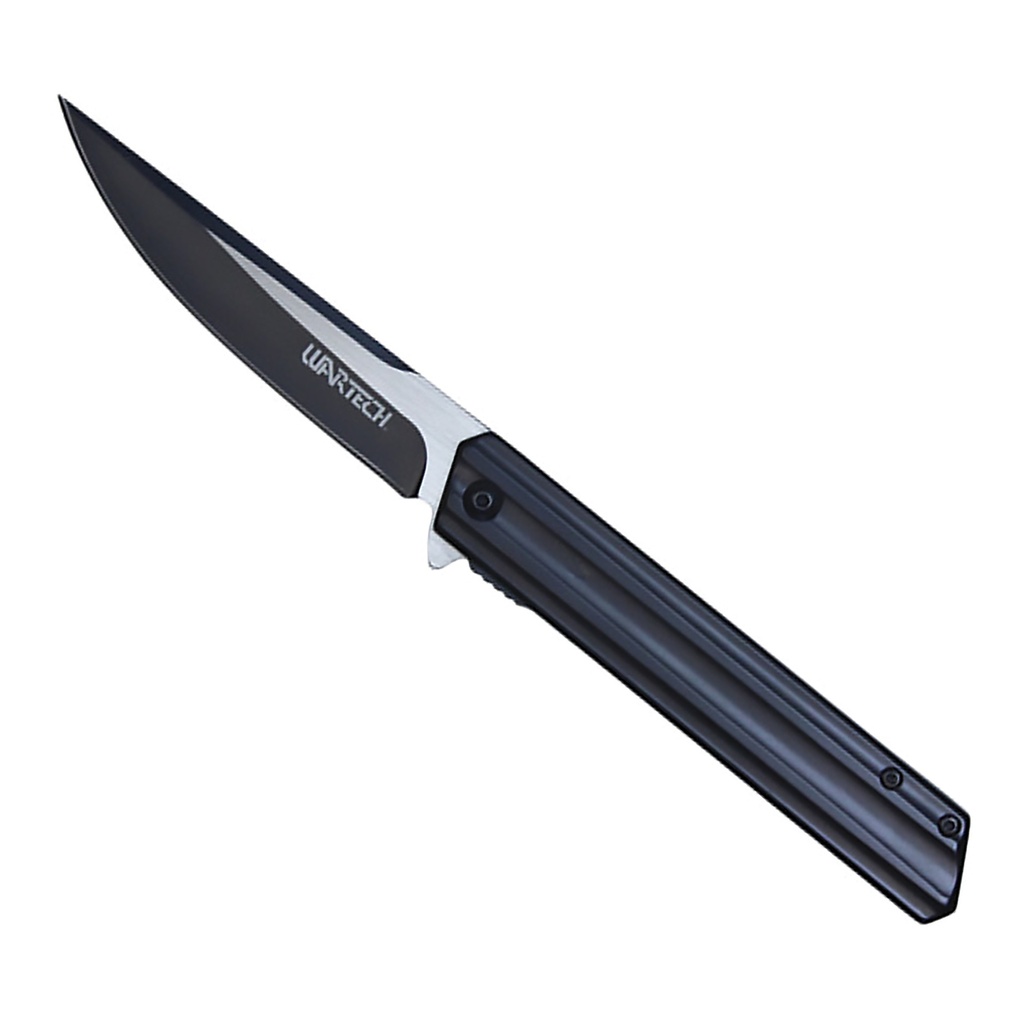
This is an assisted opening knife built for people who actually use their gear. A flipper tab and tuned spring-assist drive the blade out with authority, then the liner lock and grooved aluminum handle lock down control. At 4.75 inches closed, it disappears in pocket; deployed, it gives you a full 4-inch drop point of matte black stainless steel. If your idea of the best everyday carry is fast, discreet, and mechanically honest, this assisted folder earns its spot.
Ghostline Covert Control: Assisted Opening Knife for Real EDC Use
The Ghostline Covert Flipper Assisted Opening Knife - Matte Black is built for the person who cares more about action, lock-up, and control than marketing adjectives. This is not an automatic knife, not an OTF, and not a novelty switchblade. It’s a purpose-built, spring-assisted folding knife that lives in the pocket and works hard when it’s time to cut.
Why This Assisted Opening Knife Belongs in a Serious EDC Rotation
On paper, it’s straightforward: 4-inch matte black drop point blade, 4.75 inches closed, aluminum handle, liner lock, spring-assisted flipper. In hand, it’s a different story. The slim rectangular handle with longitudinal grooves gives you positive indexing without chewing up your fingers. The deep-carry style pocket clip keeps the knife low-profile and out of sight until you actually need it. This is the kind of assisted opening knife you carry because it disappears until it’s time to work.
Action: Tuned Spring-Assist with Flipper-First Deployment
The deployment is where this knife earns its keep. The flipper tab with jimping gives you a reliable contact point, even with wet or gloved hands. A properly tuned assisted opening mechanism is about timing, not brute force: the detent holds the blade securely closed until you deliberately press the flipper, then the internal spring takes over and snaps the blade into full lock-up with a clean, confident stroke. No lazy half-open, no mushy feel — just a direct, mechanical snap you can feel through the frame.
Liner Lock and Frame Geometry for Real-World Use
The liner lock cutout at the spine is more than a design flourish. It’s shaped to give your thumb a natural landing zone for closing, with enough exposure to be intuitive but not so much that it compromises strength. The straight handle geometry with subtle contouring keeps your wrist in a neutral position during push cuts, box opening, or rope work, while the jimped flipper doubles as a small finger guard when the blade is open.
Blade, Steel, and Finish: Why Matte Black Stainless Makes Sense
The blade profile is a classic drop point — and there’s a reason that shape keeps winning out in real-world cutting. You get a strong tip for piercing, enough belly for slicing, and a spine line that stays predictable in hand. The plain edge gives you maximum sharpening control; you’re not fighting serrations when it’s time to put the edge back.
The stainless steel blade, finished in matte black with contrasting silver flats, tells you a few things. First, the black finish helps with corrosion resistance and glare reduction — useful if you don’t want your knife announcing itself from across the room. Second, the two-tone grind makes it easier to visually track your edge along a stone or strop. This is the kind of detail people who actually sharpen notice and appreciate.
Carry and Concealment: Built to Ride Quiet, Open Fast
At 4.75 inches closed, this assisted opening knife falls squarely into the pocketable EDC category. The slim rectangular handle avoids the pocket bulk you get with overly sculpted tactical knives. The deep-carry pocket clip keeps the knife low in the pocket — little to no handle sticking out, less visual noise, and less chance of snagging on a seatbelt or pack strap.
Balance matters. With approximately half the length in handle and half in blade, the pivot sits in that sweet spot where the knife feels neutral in hand. That neutrality means cleaner, more controlled cuts and less fatigue if you’re doing repetitive slicing.
Mechanics You Feel Every Time You Open It
What separates this from gas-station-level spring-assists is consistency. A well-executed assisted action doesn’t need you to muscle the flipper each time. You apply the same deliberate motion, and the spring does the same job, on demand. The screw-fastened construction means you can adjust pivot tension if you want a little more resistance or a little more snap — maintenance and tuning that real knife people actually do.
Legal Context: Where an Assisted Opening Knife Fits
Here’s where terminology matters. This is an assisted opening knife, not a fully automatic knife, not an OTF, and not a classic push-button switchblade. The blade does not open solely by pressing a button or switch in the handle; you start the motion manually with the flipper, and the internal spring completes the opening. That mechanical distinction is exactly why assisted opening knives are treated differently than automatic knives and switchblades in many jurisdictions.
Under U.S. federal law, automatic knives and traditional switchblades fall under the Federal Switchblade Act for interstate commerce. Assisted openers like this one generally do not, because they require manual initiation. However, state and local laws can still vary widely. Some states are permissive toward assisted opening knives and automatic knives alike; others have blade length limits, mechanism restrictions, or carry-location rules.
Translation: this design is built to be more broadly acceptable than a true automatic knife, but you are still responsible for knowing your local knife laws before you carry. When in doubt, check your state and city regulations instead of guessing.
What Buyers Ask Before Purchasing an Automatic Knife
Even though this is an assisted opening knife, most serious buyers cross-shop it with automatic knives, OTF knives, and traditional switchblades — and they ask the same core questions before pulling the trigger.
Are automatic knives legal?
In the U.S., automatic knives (including many side-opening autos and OTF switchblades) are regulated by the Federal Switchblade Act for interstate sale and shipment, but federal law doesn’t outright ban ownership. The real complexity lives at the state and local level. Some states allow automatic knives and switchblades for everyday carry, some allow possession but restrict concealed carry, some limit blade length, and a few still prohibit them almost entirely.
Assisted opening knives like this Ghostline sit in a different category in most jurisdictions because they require manual initiation via the flipper tab; the blade does not open solely by a button in the handle. That said, knife laws change, and enforcement can be subjective. The only responsible move is to check your current state and municipal code before you buy or carry, especially if you’re comparing this to a true automatic knife for sale.
What’s the difference between an automatic knife, OTF, and a switchblade?
Mechanically, here’s the breakdown:
- Automatic knife / switchblade (side-opening): Blade opens from the side via a button, switch, or lever in the handle. You press the control, the spring drives the blade open. No manual start needed.
- OTF (out-the-front) automatic: Blade deploys straight out the front of the handle, usually via a sliding switch. Can be single-action (auto deploy, manual retract) or double-action (auto both ways).
- Assisted opening knife (this Ghostline): Looks like a manual folder, but uses a spring to assist once you start opening the blade via a flipper or thumb stud. You must initiate the movement; the spring completes it.
Collectors will sometimes use “switchblade” as a casual umbrella term, but legally and mechanically, assisted opening knives are a distinct category — and that distinction matters both for how they carry and how they’re regulated.
What makes this assisted opening knife worth buying?
If you’re a mechanism-first buyer, this piece justifies its pocket space on three fronts:
- Reliable, repeatable action: The spring-assisted flipper is tuned for decisive, one-hand deployment without the maintenance demands of a full automatic knife.
- Carry geometry that disappears: Slim 4.75-inch closed length, matte black aluminum scales, and a deep-carry clip give you true low-print pocket carry.
- Usable blade shape and finish: A 4-inch drop point in stainless with a matte black finish and contrasting flats — practical to sharpen, practical to use, and easy to keep low-visibility.
Add in the liner lock, jimped flipper tab, and straightforward screw construction, and you’ve got a knife that’s easy to tune, easy to maintain, and honest about what it is: a modern assisted opening EDC that favors function over flash.
For Enthusiasts Who Care How a Knife Actually Works
If you’re the kind of buyer who gravitates toward precise mechanisms — whether that’s a dialed-in automatic knife, a double-action OTF, or a finely tuned flipper — this assisted opener fits right into that mindset. It doesn’t pretend to be a switchblade, and it doesn’t need to. It’s a clean, matte black, spring-assisted folder built for people who judge a knife by its action, its lock-up, and how it carries day after day. Choose it because you know exactly what you’re getting — and you actually care.
| Blade Length (inches) | 4 |
| Overall Length (inches) | 8.5 |
| Closed Length (inches) | 4.75 |
| Blade Color | Black |
| Blade Finish | Matte |
| Blade Style | Drop Point |
| Blade Edge | Plain |
| Blade Material | Stainless Steel |
| Theme | None |
| Pocket Clip | Yes |
| Deployment Method | Spring-assisted |