Golden Rhythm Ball-Bearing Training Nunchucks - Red Foam
11 sold in last 24 hours
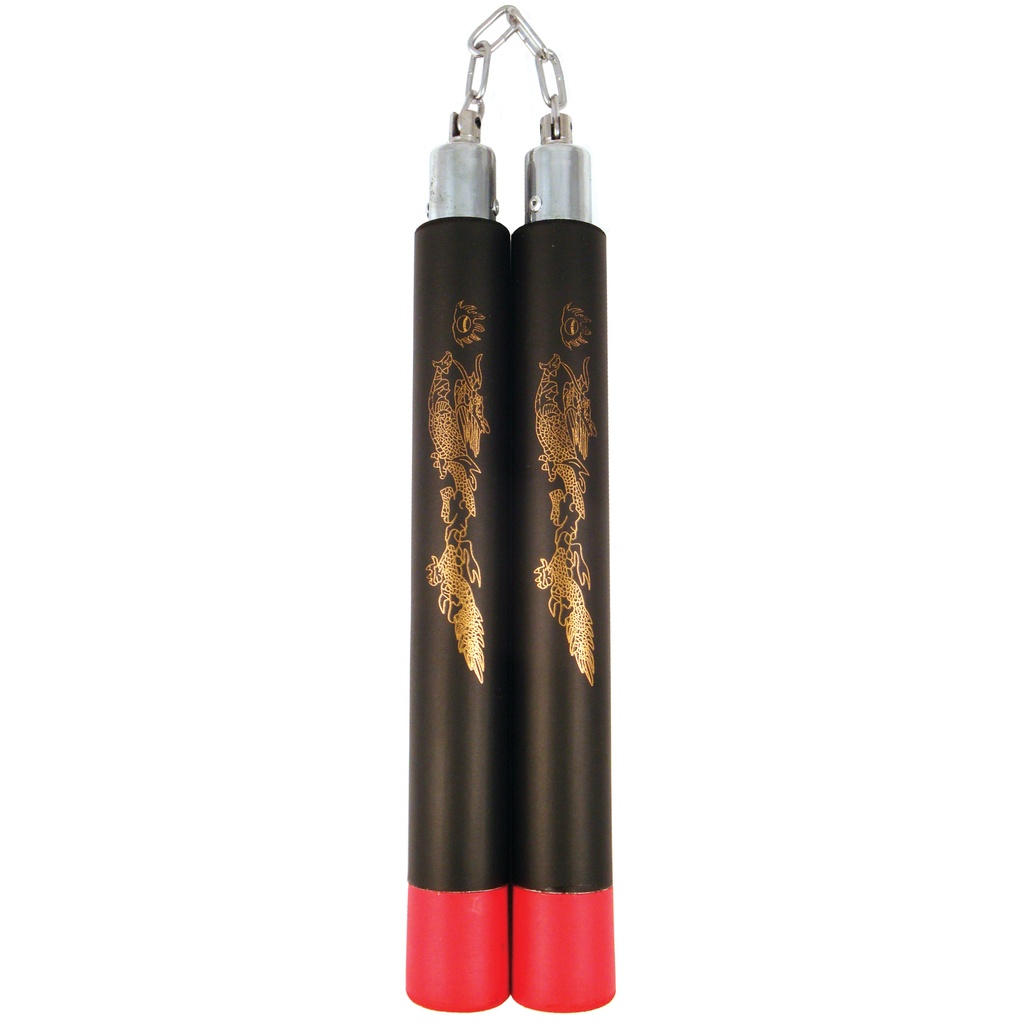
These Golden Rhythm Ball-Bearing Training Nunchucks are built to turn hesitation into clean, repeatable movement. Foam-padded black handles with red tips carry a classic gold dragon motif, while the ball-bearing swivel chain keeps spins smooth and predictable. They look like serious dojo gear but hit like a training tool, not a hospital visit. Ideal for beginners, kids, or instructors who want safe reps without losing the traditional nunchaku feel or flow.
Golden Rhythm Training Nunchucks Built for Real Dojo Reps
The Golden Rhythm Ball-Bearing Training Nunchucks - Red Foam take the classic dragon nunchaku look and strip out the fear factor. You get black foam-padded handles with a gold dragon motif, red impact tips, and a proper ball-bearing swivel chain. The result is simple: students actually train, instead of flinching after the first head shot.
Training Nunchucks That Look Serious, Not Like Toys
Most foam nunchucks miss the point. They’re safe, sure, but they look and feel like novelty gear. These are different. The black handles and gold dragon graphics read as traditional dojo equipment at a glance. Only when they’re in hand do you feel the forgiving foam and understand they’re purpose-built training nunchucks, not demo props.
For martial arts schools, that matters. Students respect what looks like the real thing. Parents relax when they see the red foam tips. Instructors get both: a pair of practice nunchaku that carry the visual weight of classic weapons while still being absolutely suited for first-day basics and intermediate flow drills.
Ball-Bearing Swivel Chain for Smoother Flow and Control
What separates these from cheap plastic-linked trainers is the connector. A ball-bearing swivel chain between the handles gives you consistent rotation and predictable tracking. That means when a student commits to a spin, the nunchucks follow the line they started—no binding, no sudden hitch in the motion.
Why the Ball-Bearing Connector Matters
On traditional cord-connected nunchaku, you need a feel for tension, slack, and how the cord twists. With a ball-bearing chain, the rotational friction is controlled and repeatable. Beginners get:
- Smoother figure-eight drills without random torque
- More accurate passes across the body
- Less surprise recoil when direction changes
Instructors can demonstrate techniques at full speed and know the students’ training nunchucks will behave similarly. That consistency is what builds confidence and rhythm in the first weeks of training.
Designed for Safe, High-Volume Repetition
These are training nunchucks engineered around one job: get students doing more reps with less fear of injury. The foam padding over the handles absorbs impact without killing feedback. When a student clips their elbow or shoulder, they feel it, but it doesn’t end the session. The red foam ends make it visually obvious where contact is happening—useful for coaching distance and control.
Forgiving, But Still a Real Training Tool
Because the handles are symmetrical and evenly weighted, students can transition later to wood or metal nunchaku without relearning the geometry of movement. The golden dragon motif is more than decoration—it’s a visual reference line for tracking spin and orientation in drills.
What Buyers Ask Before Purchasing an Automatic Knife
Are automatic knives legal?
Under U.S. federal law, automatic knives (often called switchblades in statutes) are regulated primarily by the Federal Switchblade Act. Federally, restrictions mainly concern interstate commerce, importation, and possession on federal property—not simple ownership at home. The real complexity comes at the state and local level: some states fully allow automatic knives, some limit blade length or carry type, and others restrict sale or carry entirely. Before you buy or carry an automatic knife, you should check your specific state and municipal laws. When in doubt, consult current statutes or a qualified legal source—laws change, and ignorance is not a defense.
What’s the difference between an automatic knife, OTF, and a switchblade?
In enthusiast terms, an automatic knife is any knife where the blade deploys from a closed position using a spring or stored energy, triggered by a button, lever, or similar control—no manual bias toward closure. A switchblade is usually the legal term for that same broad category, especially in statutes. OTF (out-the-front) knives are a specific sub-type of automatic knife where the blade travels linearly out the front of the handle. Side-opening automatics swing the blade out like a conventional folder but are spring-driven. All OTF knives are automatics, but not all automatics are OTF, and “switchblade” is mostly how lawmakers label them.
What makes this automatic knife worth buying?
When you evaluate an automatic knife, you’re looking at three pillars: action quality, lockup, and real-use design. A good automatic should fire with authority—no sluggish, halfhearted deployment—and lock up solidly with minimal blade play. Steel choice matters for edge retention and toughness, but so does heat treat and grind. Handle ergonomics, pocket clip placement, and control access (button or trigger placement) dictate how the knife behaves in actual EDC use, not just in a drawer. Serious buyers look for a clean, repeatable action, reliable lock, and a build that feels tuned rather than just assembled.
Who These Training Nunchucks Are Really For
If you run a martial arts school, teach weapons classes, or you’re a student serious about building nunchaku fundamentals without collecting bruises, these Golden Rhythm Ball-Bearing Training Nunchucks - Red Foam make immediate sense. They bring together traditional aesthetics, a smooth ball-bearing chain, and impact-forgiving foam in a package that keeps people training longer with better form.
This is gear designed to build rhythm, not fear—training nunchucks that earn their place in the dojo because students actually use them, week after week.