Gurkha Heritage Forward-Weighted Kukri Knife - Brass & Leather
5 sold in last 24 hours
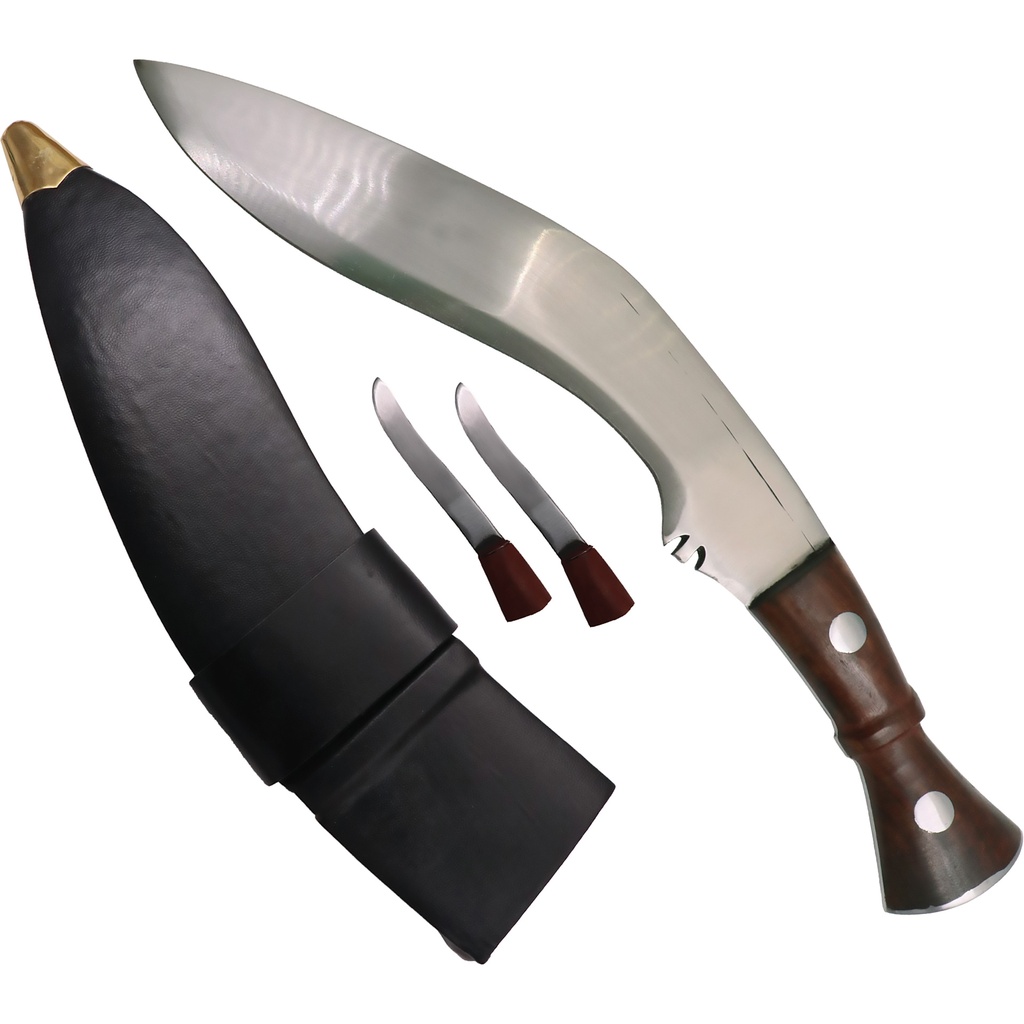
This isn’t a wall-hanger pretending to be a kukri. The Gurkha Heritage Forward-Weighted Kukri Knife carries a 12-inch polished carbon steel blade with real bite, brass hardware, and a leather sheath that brings karda and chakmak along for the ride. The mass sits forward where it should, so it chops and carves with authority while still balancing in the hand. For collectors and hard-use traditionalists, it’s a Gurkha-style workhorse with history built into the curve.
Himalayan-Inspired Gurkha Kukri Knife for Sale with True Forward Bite
The Himalayan Edge Classic Gurkha Kukri Knife isn’t trying to be everything to everyone. It’s doing exactly what a real kukri is supposed to do: put weight forward, drive deep, and turn every swing into work done. If you’re looking for a kukri knife for sale that actually respects the Gurkha lineage, start with the steel, the curve, and the way it carries on the belt.
Why This Kukri Knife Earns Its Place in a Serious Collection
On paper, it’s simple: 12-inch polished carbon steel kukri blade, brass bolster and pommel, wood handle, leather belt sheath with karda and chakmak companions. In hand, it’s a different story. The forward-weighted balance makes chopping feel almost unfair—gravity is doing half your work. This isn’t an automatic knife or a flashy OTF toy; it’s a traditional fixed blade designed around leverage, mass, and cutting geometry.
Collectors who already own a drawer full of modern folders will recognize what’s going on here immediately. The kukri’s distinctive recurve puts more steel ahead of the knuckles, so the blade wants to bite. That forward belly and dropped point give you chopping power and control in one profile. You feel it the first time the edge tracks straight through wood instead of glancing off.
Blade, Balance, and Carbon Steel That Wants to Work
This kukri runs a full-sized, approximately 12-inch polished carbon steel blade—long enough to swing like a short machete but thick enough to take real abuse. Carbon steel is the right call here. It isn’t a stainless showpiece. It’s meant to take a toothy working edge, see real use, and come back to sharp quickly with the included chakmak or a stone.
Forward-Weighted Geometry That Actually Does Something
The Gurkha profile is more than a curve for the sake of tradition. That forward bend shifts the center of gravity outward, so the knife hits harder than its length suggests. You get three effective zones: a fine control point near the handle for notching and carving, the main belly for chopping, and a powerful forward section for deep, committed cuts. It’s the same physics that made the kukri a battlefield and field tool for generations.
Handle, Brass Hardware, and Real Grip Security
The polished wood handle with brass bolster and flared pommel does what synthetic tactical handles try to imitate: it locks into the hand on the swing. The bell-shaped brass pommel resists slipping on heavy chops, especially when your hand starts to fatigue or sweat. Large brass pins anchor the construction visually and structurally, giving the knife that unmistakable traditional Gurkha silhouette.
Sheath, Karda, and Chakmak: The Complete Kukri System
What separates a real kukri system from a random big knife is the kit that comes with it. This set includes a black leather belt sheath with brass tip reinforcement and integral pockets for the two traditional side blades: karda and chakmak.
- Karda: The small utility knife for finer tasks—shaving tinder, food prep, detail work you don’t want to risk on the big blade.
- Chakmak: The traditional honing/striking piece for touching up and maintaining the main edge in the field.
Together, they turn this from "big curved knife" into a proper Gurkha-style system. You’ve got chopping, slicing, and maintenance all in one belt carry. It’s the kind of detail that makes a collector stop and look twice, because it respects the original pattern instead of just copying the silhouette.
Fixed Blade Kukri vs. Automatic Knives, OTFs, and Switchblades
If you’re here because you appreciate solid mechanics and precision, this kukri belongs in the same mental cabinet as your favorite automatic knife or OTF, even if the mechanism is different. An automatic knife relies on springs and timing; this relies on leverage, geometry, and balance. In a world of button-release switchblades, a full-size Gurkha kukri is the opposite end of the spectrum: no springs, no lock failures, just a full tang and a lot of steel doing honest work.
Where an automatic knife for sale might advertise lightning-fast deployment, this kukri sells itself on what happens after the blade is in motion—the power you get once it’s swinging. Different tools, different roles, same mindset: choosing the right mechanism for the job and respecting the engineering behind it.
What Buyers Ask Before Purchasing an Automatic Knife
Are automatic knives legal?
Under U.S. federal law, automatic knives (often called switchblades) are regulated mainly by the Federal Switchblade Act, which restricts interstate commerce but doesn’t generally tell you what you can own at home. Actual carry and ownership rules are decided at the state and sometimes local level. Some states allow automatic knives and OTFs with few restrictions; others limit blade length, opening method, or who can carry them; a few still ban them outright. Before you buy an automatic knife or switchblade, check your specific state and city laws—not just federal law—to know whether it’s legal to own, carry, or conceal in your area.
This Gurkha kukri, by contrast, is a traditional fixed blade. Fixed blades are also regulated by state and local law (often by length and carry method), but they’re treated differently than automatic knives. Don’t assume that because a fixed blade like this is legal where you live, an automatic or OTF is too—always read the statute.
What’s the difference between an automatic knife, OTF, and a switchblade?
Collectors separate these terms for a reason:
- Automatic knife: A knife that opens its blade using an internal spring, activated by a button, lever, or similar control. Most side-opening autos fall here.
- OTF (out-the-front): A specific type of automatic where the blade travels linearly out the front of the handle instead of pivoting out of the side. Many OTFs are double-action (press to deploy, press again to retract).
- Switchblade: The legal and colloquial term often used in statutes for automatic knives in general—especially side-opening autos. In law, "switchblade" usually means any spring-powered automatic knife.
This kukri is none of those. It’s a fixed blade: the blade is already out, permanently fixed to the handle. No springs, no deployment mechanism, no button. The mechanics that matter here are grind, balance, and how that forward curve translates into real cutting performance.
What makes this automatic knife worth buying?
Reframed correctly for this piece: what makes this kukri worth buying if you’re already deep into modern autos and OTFs?
- Authentic geometry: A true forward-curved Gurkha profile that chops and slices like the pattern is supposed to, not just a curved novelty blade.
- Carbon steel blade: Polished, tough, and easy to bring back to a working edge with the traditional chakmak or a stone.
- Complete system: Main kukri plus karda and chakmak, all riding in a single leather belt sheath with brass details.
- Collector and field bridge: It looks right on the wall and performs correctly in the field—a rare combination at this price point.
If you collect automatic knives for their mechanisms, this kukri offers a different kind of satisfaction: understanding how pure blade geometry and mass can be just as "engineered" as a spring-powered action.
Owning a Gurkha Kukri as a Serious Knife Enthusiast
At some point, every serious enthusiast branches out from folders, OTFs, and automatic knives to the patterns that built knife history. The Himalayan Edge Classic Gurkha Kukri Knife sits in that category. It’s a reminder that not all performance comes from springs and buttons; sometimes it comes from a big slab of carbon steel, a smart curve, and a handle that knows how to stay put.
If your collection already includes your favorite automatic knife for sale, a dependable OTF, and maybe a vintage switchblade or two, this kukri adds something different: Gurkha heritage, forward-weighted physics, and a full belt kit that actually wants to get dirty. It’s for the buyer who chooses tools on purpose—and understands why this curve has survived generations of hard use.
| Blade Length (inches) | 12 |
| Overall Length (inches) | 17 |
| Blade Color | Silver |
| Blade Finish | Polished |
| Blade Style | Kukri |
| Blade Edge | Plain |
| Blade Material | Carbon Steel |
| Handle Finish | Polished |
| Handle Material | Brass |
| Theme | Gurkha |
| Handle Length (inches) | 5 |
| Pommel/Butt Cap | Brass pommel |
| Carry Method | Belt sheath |
| Sheath/Holster | Leather |