Heritage Straight-Razor Style Pocket Knife - Pakkawood
15 sold in last 24 hours
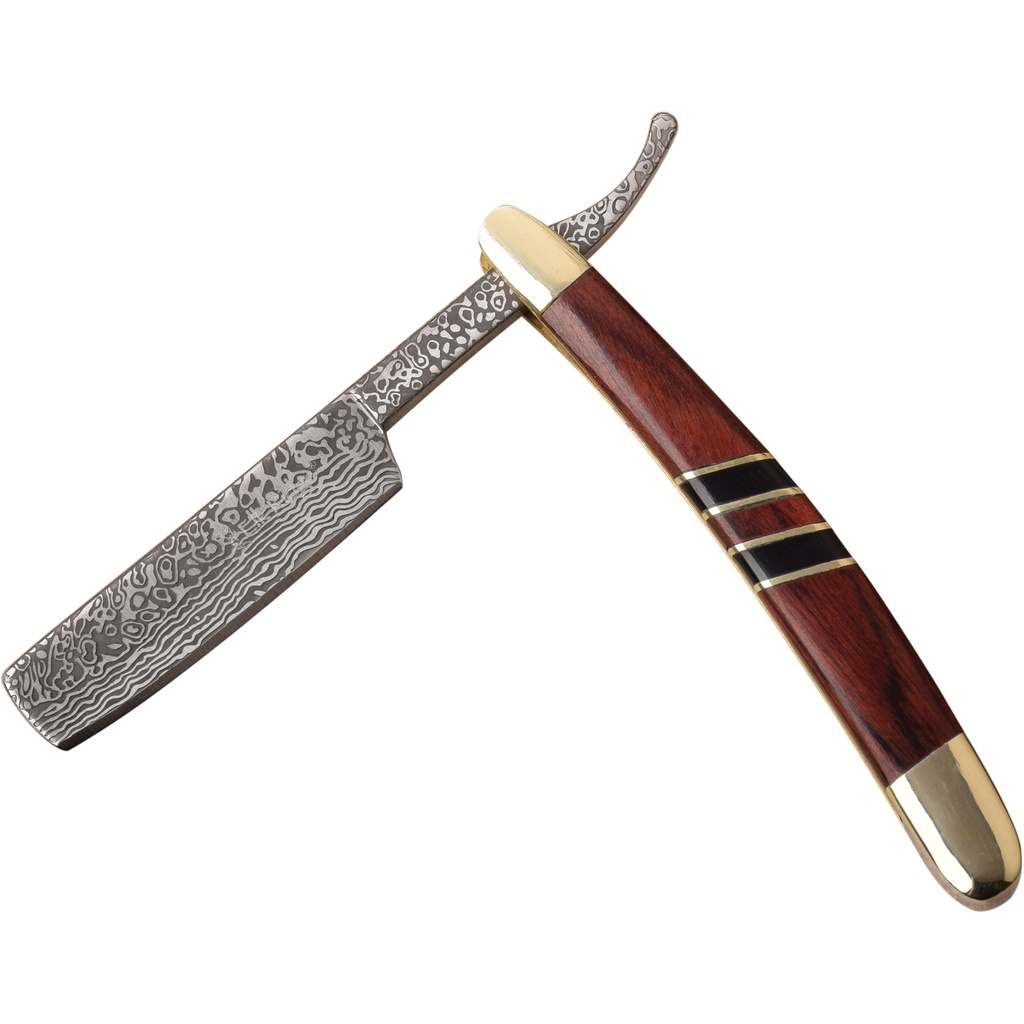
This is a manual folding pocket knife built for the enthusiast who respects old-world lines. The razor-style 3Cr13 blade with etched damascus pattern snaps open via the tang lever and settles into a slim 6.75" profile. Warm pakkawood scales and nickel silver bolsters give it that barbershop heritage look without babying the usability. If your EDC tastes run more gentleman’s carry than tactical billboard, this is the kind of knife you slip into your pocket and actually use.
Heritage Razor-Style Folding Pocket Knife for the Serious EDC Enthusiast
Every once in a while, a folding knife shows up that doesn’t scream for attention yet still makes every collector at the table pick it up. This heritage razor-style folding pocket knife is one of those pieces. It’s a manual folder with a straight-razor profile, an etched damascus 3Cr13 blade, and pakkawood scales that feel like they belong in an old-world barbershop rather than a mall kiosk. No gimmicks, no assisted springs, just honest mechanics and good lines.
Why This Folding Pocket Knife Feels Like a Vintage Straight Razor
Look at the blade first. The profile is pure straight-razor inspiration: long spine, shallow belly, squared tip, and a pronounced tang tail that functions like the hook on a traditional barber razor. On a real straight razor, that tail gives you control when opening and shaving; here it gives you positive purchase for manual deployment and fine control during cuts. The etched damascus pattern isn’t just for show either—it creates visual depth that echoes forged pattern-welded steel, giving this knife a period-correct look collectors recognize instantly.
At 2.75 inches of cutting edge and 6.75 inches overall, this pocket knife lives squarely in the gentleman’s EDC lane. It’s compact enough to disappear in a pocket, but the straight-razor geometry gives you a surprisingly authoritative edge for opening boxes, trimming cord, or clean slicing tasks. It’s not pretending to be a tactical fighter; it’s built for real-life daily carry with a classic silhouette.
Action, Steel, and Construction: Where the Mechanism Actually Matters
This is a manual folding knife, not an automatic knife, OTF, or switchblade. There’s no button, no spring-loaded plunge, no dual-action trick built into the frame. You open it the way you open a proper straight razor: thumb and forefinger on the tang tail, controlled rotation into the open position. That direct mechanical connection is exactly what many seasoned knife people want in a dress carry — you feel every degree of movement, no surprise snap, just a smooth, deliberate arc.
Manual Deployment with a Tang Lever You Can Actually Use
The curved tang lever at the end of the blade tang is more than a stylistic nod. It extends past the handle when closed, giving your fingers a positive hook for deployment. Compared to a standard nail nick on a slipjoint, this gives you better leverage, especially if your hands are wet or cold. For anyone who’s spent time with traditional razors, the motion will feel familiar and satisfyingly mechanical.
3Cr13 Steel and Edge Reality
The blade steel is 3Cr13, a stainless formulation that prioritizes corrosion resistance and ease of sharpening over extreme hardness. No marketing fantasy here—you’re not getting super steel, you’re getting a practical, user-friendly alloy. In the real world, that matters. You can bring this knife back to a working edge quickly on basic stones or even a pocket sharpener. For a gentleman’s EDC that might see everything from envelope duty to light food prep, that balance makes sense. You won’t cry if it hits a staple, and you won’t fight it on the stones.
Handle, Fit, and Carry: Gentleman’s EDC Without the Drama
The handle is where this pocket knife fully leans into the heritage aesthetic. Warm reddish-brown pakkawood brings stability and moisture resistance that traditional hardwood simply doesn’t match in the long term. Add in nickel silver bolsters at the front and a polished pommel at the rear, and you get a profile that reads more "dress pocket knife" than "toolbox beater." Black bands with brass accents break up the grain and add just enough visual structure to keep it from looking flat.
There’s no pocket clip here—and that’s intentional. This knife wants to ride loose in the pocket or in a small slip, the way classic gentleman’s folders always have. The gently curved handle sits naturally in the hand for light to medium tasks, and the lack of aggressive jimping or tactical scalloping keeps it comfortable in multiple grips. This is a companion piece, not a pry bar.
Collector Value: Where This Knife Earns Its Place in a Rotation
Collectors who live in the automatic knife and OTF space still appreciate a well-executed manual folder when it brings something specific to the table. Here, that "something" is the razor-inspired geometry combined with dress carry materials. You don’t see this profile every day in modern production knives, especially not paired with a barbershop visual language and a manageable EDC size.
The etched damascus pattern is a major part of the appeal. While it’s not true forge-welded pattern steel, the full-coverage etch across blade and tang gives this pocket knife a cohesive, custom-like presentation. The pakkawood with metal banding reads like a piece you’d see in a display of vintage shaving gear—straight razors, strops, and cologne bottles—yet it’s built as a practical modern folder you won’t be afraid to actually cut with.
Legal Context: Where This Manual Folder Fits in the Current Knife Climate
In a world where buyers constantly have to ask whether an automatic knife is legal to carry in their state, a straightforward manual folding knife like this is refreshingly uncomplicated. There’s no spring-assisted opening, no button-actuated automatic deployment, and no OTF mechanism hiding in the handle. You are the mechanism; the blade only moves when you move it via the tang lever.
Most jurisdictions that restrict automatic knives, switchblades, or certain OTF designs draw a clear distinction between spring-powered opening and purely manual folders. This knife falls into the manual category. Of course, local laws can still regulate blade length or public carry, so checking your city and state rules is always smart, but you’re not dealing with switchblade statutes here. For many buyers who navigate strict automatic knife laws, this style of gentleman’s folder becomes their go-anywhere, no-headache EDC.
What Buyers Ask Before Purchasing an Automatic Knife
Are automatic knives legal?
In the United States, federal law (the Switchblade Knife Act) mainly restricts interstate commerce and shipment of automatic knives and switchblades, especially across state lines and into certain federally controlled areas. Day-to-day carry is governed by state and local law, and that’s where things vary wildly. Some states allow automatic knives, OTF knives, and switchblades with few restrictions; others ban them outright or limit blade length, opening method, or where you can carry them. The key is understanding that an automatic knife uses a spring or stored energy to open via a button, lever, or similar control. This heritage razor-style folder is a manual knife, so most of those automatic-specific laws don’t apply—but you should still confirm your local regulations for any knife you carry.
What’s the difference between an automatic knife, OTF, and a switchblade?
Mechanically, an automatic knife is any folder that opens its blade using a built-in spring or stored energy when you press a button, scale, or lever. A switchblade is essentially the same thing—“switchblade” is the older, legal term often used in statutes to describe automatic opening knives. An OTF knife (out-the-front) is a specific automatic design where the blade travels linearly out of the front of the handle rather than pivoting from the side. OTFs can be single-action (auto deploy, manual retract) or double-action (auto deploy and auto retract). This heritage razor-style piece is none of those; it is a side-opening, manual folding pocket knife with no spring assist, so you provide all the opening force yourself via the tang lever.
What makes this pocket knife worth buying?
It earns its place by combining a distinctive straight-razor profile, a full etched damascus pattern, and dressy pakkawood with nickel silver hardware in a compact, truly usable EDC footprint. Mechanically, the manual action with tang lever offers direct, controlled deployment that appeals to buyers who like feeling the mechanics rather than outsourcing them to a spring. Aesthetically, it slots perfectly into a heritage, barbershop-inspired theme that you don’t see on every shelf. It’s the knife you carry when you want something that looks like it has a story, but you still expect it to cut, day after day.
For the Enthusiast Who Knows Why This Folder Belongs in Their Pocket
If your collection already includes automatic knives, OTFs, and modern switchblade designs, this heritage razor-style folding pocket knife fills a different niche. It’s the quiet, gentleman’s EDC you reach for when you want heritage lines, controlled manual action, and materials that look right next to a leather wallet and a mechanical watch. No hype, no tactical cosplay—just a well-executed pocket knife that respects the mechanics and the history behind its shape.