Heritage Scroll Damascus-Pattern Pocket Knife - Warm Wood
6 sold in last 24 hours
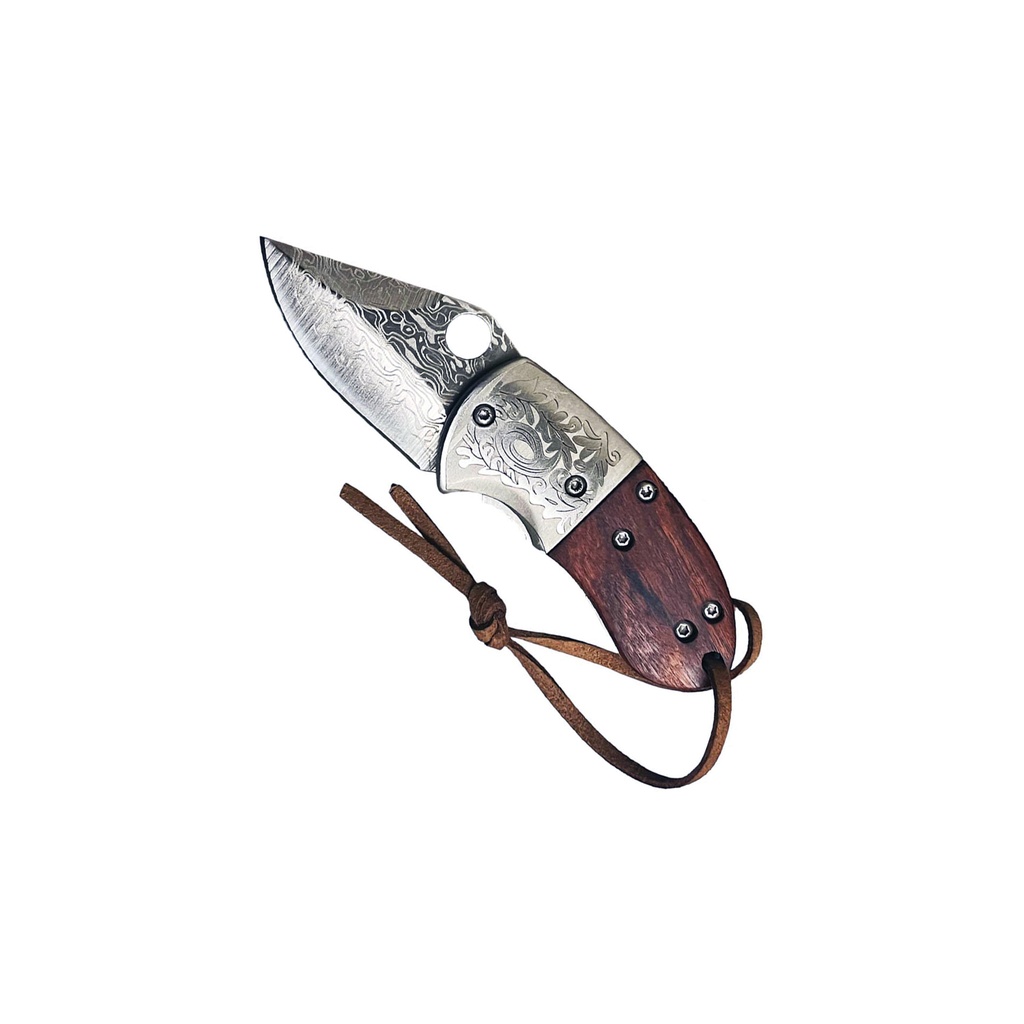
This isn’t another novelty Damascus; it’s a compact, heritage-inspired pocket knife built to be carried. A 2-inch Damascus-pattern stainless clip point folds into engraved bolsters and warm wood scales, locked by a positive liner lock. The broad blade geometry makes short work of everyday cuts, while the leather lanyard gives you fast retrieval from pocket or pack. If you want a pocket knife that looks like it came from your grandfather’s drawer but feels tuned for modern EDC, this one earns the ride.
Automatic Knives for Sale vs. True Manual Craft: Where This Heritage Folder Fits
If you’re here hunting through automatic knives for sale, you’re already in the right headspace: mechanics matter. Action matters. But not every worthy carry piece needs a spring behind it. This Heritage Scroll Damascus-Pattern Pocket Knife - Warm Wood is a reminder that a well-executed manual folder can scratch the same itch as an automatic knife you’d buy for everyday carry—just with a quieter sort of satisfaction.
What you’re looking at is a compact, gentleman-leaning pocket knife: 2-inch clip point, Damascus-pattern stainless blade, engraved stainless bolsters, contoured wood scales, liner lock, leather lanyard. No button, no coil spring, no OTF track—just honest, mechanical engagement you control with your thumb and wrist.
Before You Buy an Automatic Knife, Understand This Knife’s Mechanism
Mechanically, this is a manual folding knife with a liner lock. The large round thumb hole in the blade is your deployment engine. It gives you controlled, positive leverage to open the blade cleanly without relying on springs or assisted mechanisms.
Liner Lock Geometry and Why It Matters
A liner lock is only as good as the contact it makes on the tang. Here, the lock bar engages the base of the blade with a solid, visual seat—no timid edge contact. That means when this thing is open, it behaves like a small fixed blade in normal EDC cuts: mail, straps, light cardboard, rope. You feel the lock click home, you feel the confidence. That’s the same kind of assurance people chase when they buy an automatic knife for EDC—secure lockup after a reliable deployment.
Damascus-Pattern Stainless: Look of a Forged Blade, Logic of Modern Steel
The blade wears a Damascus-style pattern etched into stainless. It’s not a multi-bar forge-welded billet from a custom maker, and it doesn’t pretend to be. What you gain instead is stainless practicality: easier maintenance, better corrosion resistance, and a blade you don’t baby every time it meets moisture or a sticky box label. You get the visual drama of layered steel with the low drama of simple wipe-down care.
Choosing an Automatic Knife for Sale? Why This Damascus-Pattern Folder Still Belongs in Your Rotation
When serious buyers search automatic knives for sale, they’re usually chasing three things: fast deployment, reliable lockup, and a blade that feels like more than hardware-store stock. This little heritage folder answers those same urges in a different language.
Deployment is driven by you, not a spring, but the thumb hole and compact 4.5-inch overall length mean it clears the handle cleanly and quickly with a bit of practice. The broad clip point geometry gives you a strong tip with enough belly for slice cuts, and at 2 inches of blade, it slots neatly into EDC without feeling fussy or fragile.
The engraved bolsters and contoured reddish-brown wood scales are where the collector brain lights up. The scroll/floral motif on the stainless bolsters looks like it should live in a display case, but the fit and finish say "pocket carry," not "glass dome." Torx hardware across the handle keeps everything serviceable if you ever need to tighten things down after years of use.
Mechanics Over Hype: Action, Balance, and Real-World EDC Performance
Forget catalog fluff; let’s talk how it actually behaves.
Action: Thumb-Driven, Not Spring-Driven
Unlike a coil-spring automatic or double-action OTF, the action here is purely manual. That’s not a downgrade; it’s a different discipline. The thumb hole is oversized relative to the blade length, which means you get strong mechanical advantage. Even with gloves or wet fingers, you can drive the blade open with authority, and there’s less reliance on exact thumb placement than you see with small studs or nail nicks.
The pivot is tuned for a controlled, deliberate arc rather than a flipper-like snap. That’s appropriate for what this is: a heritage-style pocket knife with weekday practicality. You’re not staging this like a tactical out-the-front; you’re rolling it open to slice cord, break down a shipping label, or trim a loose thread.
Balance and Grip: Compact but Confident
At 4.5 inches overall with a 2.5-inch handle, this sits firmly in small-pocket-knife territory. The contoured wood scales give your fingers a natural index point, and the slight swell in the middle of the handle keeps it from feeling like a flat, generic slipjoint. Combined with the leather lanyard, you’ve got options: pinch grip for fine work, full three-finger grip with lanyard assist for heavier cuts.
What Buyers Ask Before Purchasing an Automatic Knife
Even when you’re looking at a manual folder like this, the same questions that come up when you buy an automatic knife or switchblade still apply: legality, mechanism, and whether it’s worth carrying over yet another cheap import.
Are automatic knives legal?
In the United States, federal law (the Switchblade Knife Act) mainly governs interstate commerce and shipment of automatic knives and switchblades, especially across state lines and into federal jurisdictions. It does not create one national rule for what you can personally carry day to day. That’s handled at the state—and often city—level.
Many states now allow some form of automatic knife, OTF, or switchblade carry, often with blade length limits, intent language, or location restrictions. Others remain restrictive or outright ban certain mechanisms. Before you buy an automatic knife or assume your existing auto is legal to carry, check your specific state and local statutes, including any city ordinances. Because this particular knife is a manual folding liner-lock, it is generally treated more permissively than a true automatic knife, but you are still responsible for understanding the laws where you live and travel.
What's the difference between an automatic knife, OTF, and a switchblade?
Collectors throw these terms around, but they’re not interchangeable:
- Automatic knife: A folding knife that opens by pressing a button, lever, or switch in the handle. A spring or similar mechanism drives the blade open—think side-opening autos.
- OTF (out-the-front): A specific automatic knife where the blade travels straight out of the front of the handle along a track. Double-action OTFs deploy and retract with a slide, single-actions usually require manual retraction.
- Switchblade: In U.S. legal language, this generally covers automatic knives that open by a button or similar device and are spring-driven. In casual speech, people often use "switchblade" to mean any automatic knife, but serious buyers keep the terms precise.
This Heritage Scroll Damascus-Pattern Pocket Knife is not an automatic knife, not an OTF, and not a legal "switchblade." It’s a manual folding liner-lock with thumb-hole deployment—no springs, no buttons, just mechanical engagement.
What makes this automatic knife worth buying?
Reframed correctly: what makes this knife worth adding to a collection already heavy with autos and OTFs?
- Visual heritage without babying: Damascus-pattern blade and engraved bolsters scratch the traditional itch, but the stainless construction and pocket-ready dimensions invite daily carry, not just display.
- Compact, legal-friendly footprint: A 2-inch blade and manual mechanism give you more breathing room in jurisdictions that frown on automatic knives or long switchblades.
- EDC reality: It’s small, light, and shaped to disappear into a pocket or hang from a lanyard without becoming dead weight.
- Collector satisfaction: This isn’t another black tactical slab. It brings scrollwork, wood grain, and Damascus flow pattern into a format you’ll actually use.
In other words, it earns its space next to your double-action OTFs and coil-spring autos by playing a different role: the quiet, heritage-styled cutter that still knows what work is.
Why This Heritage Damascus-Pattern Pocket Knife Belongs Next to Your Autos
If you spend your nights scrolling automatic knives for sale, comparing blade steels, deployment buttons, and lock strength, you already understand the language of mechanics. This knife speaks that same language—just more softly. Manual liner lock instead of button lock. Thumb hole instead of actuator. Damascus-pattern stainless instead of a high-polish spear point.
It’s an everyday carry piece that looks like it could have been handed down, yet it’s built to ride in your pocket now. And for an enthusiast or collector who chooses gear with intent, that’s the point: you’re not just buying another automatic knife, you’re building a rotation that makes sense. And this heritage Damascus-pattern pocket knife earns its place in that lineup.
| Blade Length (inches) | 2 |
| Overall Length (inches) | 4.5 |
| Blade Color | Silver |
| Blade Finish | Damascus |
| Blade Style | Clip Point |
| Blade Edge | Plain |
| Blade Material | Stainless Steel |
| Handle Material | Wood |
| Theme | Damascus |
| Handle Length (inches) | 2.5 |