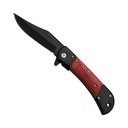
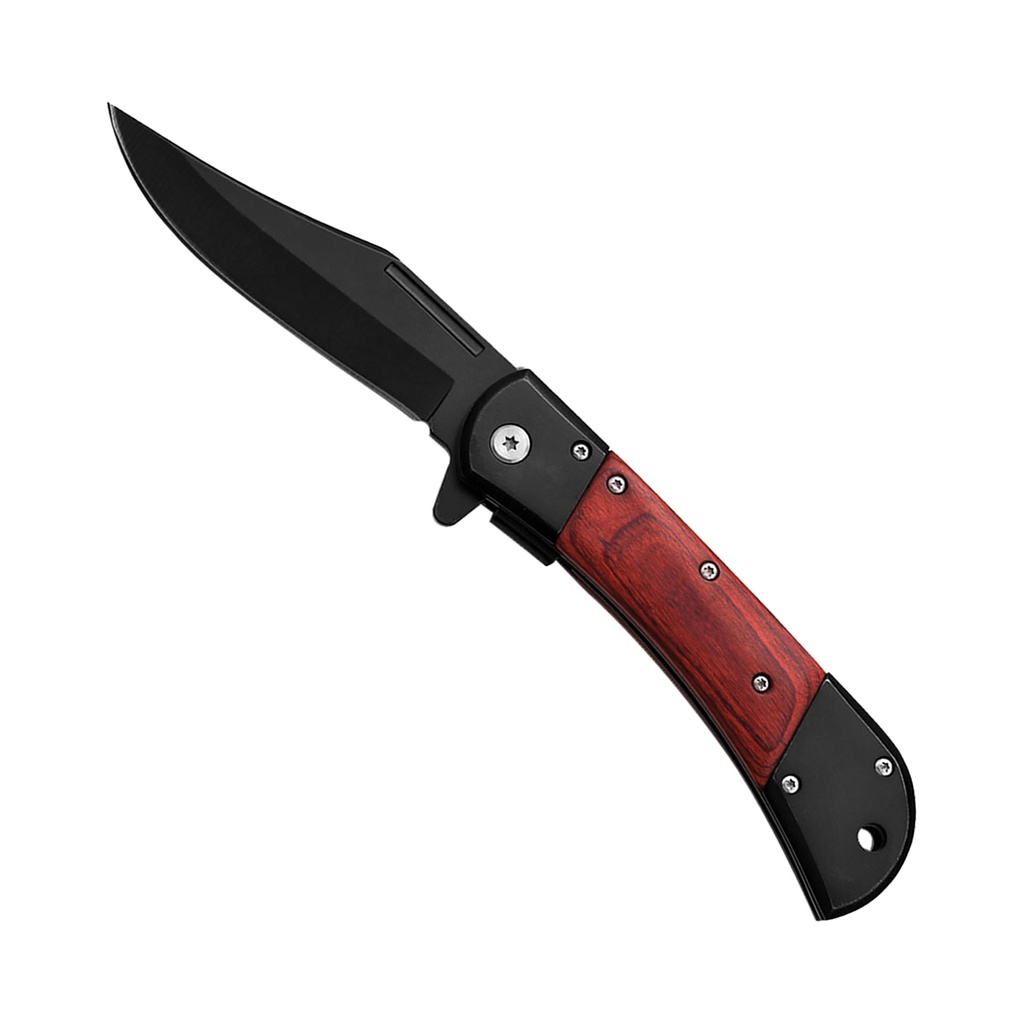
Heritage Snap EDC Assisted Knife - Black Wood
12 sold in last 24 hours
This isn’t an automatic knife pretending to be tactical—it’s an honest assisted EDC built to work. The flipper tab and coil assist snap the matte black clip-point blade into place with clean, predictable speed, while the liner lock bites down with zero drama. Black hardware frames the contoured wood inlay, giving it that “my grandfather would approve” profile with modern deployment. If you care how a knife actually opens, feels, and carries, this one earns a spot in the rotation.
Assisted EDC for Buyers Who Actually Care About the Mechanism
If you’re here to buy an automatic knife or something in that neighborhood, you’re probably already picky about action. This piece isn’t an automatic knife; it’s an assisted opening EDC that lives in the same universe of fast deployment and one-handed control. The difference matters, and if you care about how a blade moves from closed to locked, this knife earns your attention.
The Heritage Snap EDC Assisted Knife pairs a matte black clip-point blade with a curved black-and-wood handle that looks like a classic folder at a distance. In hand, it’s very much a modern assisted flipper—coil assist, positive detent, and a liner lock that settles home with a satisfying, unpretentious click.
Why Assisted, Not Automatic? Action That Makes Sense
Let’s get something straight: this is not an automatic knife, not an OTF, and not a switchblade in the classic sense. It’s a spring-assisted flipper. That means you start the opening with deliberate pressure on the flipper tab; once you clear the detent, the internal spring takes over and the blade drives open the rest of the way.
Mechanically, that gives you a few advantages:
- Control at the start of the stroke – You decide when the blade moves, not a hair-trigger button.
- Consistent deployment – The assist delivers the same snappy open every time once you break the detent.
- Simple internals – No complex automatic or OTF track to foul with pocket lint.
If you’re used to full automatic knives or double-action OTFs, this feels like their calmer, workday cousin—still quick, still satisfying, but tuned for everyday carry instead of the novelty of a firing button or slider.
Everyday Carry Detail: What This Knife Actually Does Well
Knife people don’t fall for buzzwords; they look at geometry, lockup, and carry. This assisted folder gets the fundamentals right.
Blade Shape and Real-World Cutting
The matte black clip-point profile gives you a fine, usable tip without going fragile. There’s enough belly for slicing boxes, cord, and food, and enough straight edge for controlled push cuts. No recurve drama, no tactical cosplay—just a clean working edge that sharpens easily.
The black finish keeps reflections down, which matters more than most people admit when you’re using it around others. A non-flashy blade reads as a tool, not a prop.
Lockup, Liner, and Confidence in Hand
The liner lock is visible and honest—no tricks, no mystery mechanism. You feel it travel over and seat fully behind the tang. That visual confirmation is something collectors respect because it’s where you can literally see the maker’s tolerance decisions play out. Sloppy liner locks telegraph cut corners; this one lands with authority and disengages cleanly.
Automatic Knife for Sale Alternatives: Why This Assisted EDC Belongs in the Same Drawer
Most people shopping for an automatic knife for sale are chasing speed and one-handed reliability. This assisted opening knife checks both of those boxes without crossing fully into automatic territory.
- Deployment Speed: Once you crack the detent on the flipper tab, the assist spring does the rest. It’s fast enough that anyone watching will assume “automatic” unless they know the difference.
- Carry Profile: The low-profile clip rides deep and parallel to the handle spine. In a pocket, it disappears—no billboard, no overbuilt hardware screaming for attention.
- Visual Character: Wood inlay paired with black hardware reads as “grown-up EDC,” not mall-ninja gear. It’s the knife you can carry at work without looking like you’re auditioning for a movie.
If your rotation already includes actual automatic knives for sale—button-lock side-openers, OTFs, even a dedicated switchblade—this is the piece you grab on the days you want the same one-hand convenience with a quieter profile.
Mechanics That Earn Collector Respect
Collectors care less about price and more about whether the mechanics are honest for the category. This assisted opening knife earns that respect with a few small but important details.
Flipper Tab and Detent Tuning
A good flipper lives or dies by its detent. Too light and the blade half-opens and dies mid-arc. Too heavy and you’re fighting the knife. This one sits in that usable middle ground: you feel the resistance as you pre-load the tab, then it breaks cleanly and the spring takes over. No wrist-flick gymnastics required.
Handle Construction and Wood Inlay
The black metal frame and bolsters are pinned and screwed down around a red-toned wood inlay. It’s not just a sticker of “classy” on top—it’s a structural, contoured piece of the handle that affects how the knife indexes in your palm. The arc of the handle tracks the blade line, which is why it feels natural when you choke up or back off.
Legal Context: Where This Knife Sits Compared to Automatics
When people search for an automatic knife for sale, the next question is always legality. This is where the assisted mechanism matters.
In the U.S., federal law (the Switchblade Knife Act) targets true automatic knives—blades that open by pressing a button, spring, or other device in the handle without manual blade contact. Many states layer their own laws on top, restricting switchblades, some OTFs, and certain automatic side-openers.
An assisted opening knife like this typically requires you to push on a flipper or thumb stud attached directly to the blade. You initiate the movement; the spring only completes it. In many jurisdictions, that’s treated differently from a full automatic. But the key point: laws vary widely state by state and even by city. Before you carry this or any knife, you need to check your local regulations, especially if your area draws a hard line between manual, assisted, and automatic knives.
What Buyers Ask Before Purchasing an Automatic Knife
Are automatic knives legal?
Under U.S. federal law, automatic knives (true switchblades) are restricted in interstate commerce with some exceptions for military and law enforcement. The real complexity comes at the state level: some states allow automatic knives and switchblades with few limits, others allow possession but restrict carry, and some heavily restrict or ban them outright. OTF knives and button-fired side-openers often fall into those same categories. Assisted opening knives, like this one, are frequently treated as standard folders because you must start the blade manually—but not always. The correct move is simple: look up your specific state and local knife laws before you buy, carry, or ship, and when in doubt, consult a qualified legal source.
What’s the difference between an automatic knife, OTF, and a switchblade?
Definitions matter. A switchblade is the classic legal term for a true automatic knife: press a button or lever in the handle, and a spring snaps the blade open. An automatic knife in enthusiast language usually means that same thing—side-opening, button-fired blades that deploy under spring power once triggered. An OTF (out-the-front) knife is a specific automatic where the blade travels straight out of the handle’s front; double-action OTFs deploy and retract via a sliding switch. This assisted opening knife is different: you push directly on the blade’s flipper tab to start it moving, and only then does a spring assist complete the opening. Fast, but not the same mechanism class as a true automatic or OTF.
What makes this automatic knife worth buying?
Strictly speaking, this isn’t an automatic knife—it’s an assisted flipper that appeals to the same crowd. What makes it worth owning is the combination of mechanism and restraint. You get genuinely snappy assisted action, a properly tuned liner lock, and a clip-point blade that’s actually shaped for daily cutting, not for drama. The wood-and-black handle hits that sweet spot between traditional and modern, so it won’t look out of place in an office pocket or at a campsite. If you collect full autos and OTFs, this is the piece that fills the “quietly competent EDC” slot in your lineup.
For Enthusiasts Who Choose Their EDC on Purpose
If you’re only chasing the loudest automatic knives for sale, this knife might not scream loud enough for you. But if you care about how a blade actually deploys, locks, and carries over months of real use, this assisted opening EDC makes sense. It’s the knife you hand to someone when you want them to understand why mechanism and design matter—and the one you clip on when you want performance first, flash second.
| Blade Color | Black |
| Blade Finish | Matte |
| Blade Style | Clip Point |
| Blade Edge | Plain |
| Handle Finish | Matte |
| Handle Material | Wood |
| Theme | None |
| Pocket Clip | Yes |
| Deployment Method | Flipper tab |
| Lock Type | Liner lock |