Heritage Twin-Blade Gentleman’s Pocket Knife - White Bone
10 sold in last 24 hours
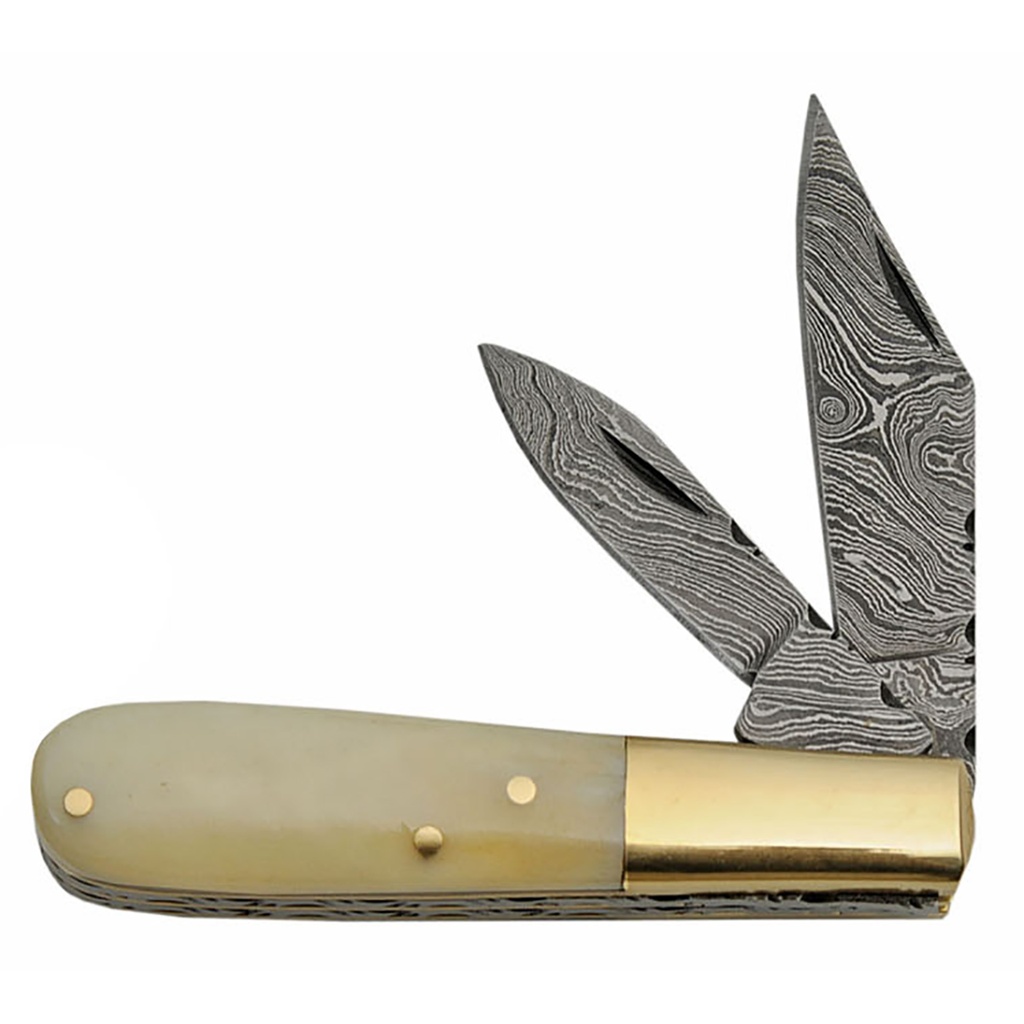
This Heritage Twin-Blade Gentleman’s Pocket Knife pairs two hand-finished Damascus blades with smooth white bone scales and brass hardware in a compact 3.5" slipjoint. The clip point gives you a primary working edge; the pen blade handles finer cuts. Brass liners with filework elevate it from simple pocket knife to collectible piece. If you appreciate traditional patterns, real Damascus, and pocketable size that still feels substantial in hand, this is the kind of knife you carry because you respect the craft.
Heritage Twin-Blade Gentleman’s Automatic Knife for Sale – Damascus and Bone, Old-World Craft
If you’re the kind of buyer who still respects a traditional slipjoint, this twin-blade Damascus pocket knife will feel like it came out of a display case, not a bargain bin. Compact at 3.5" closed and 6" overall, it rides like a classic gentleman’s folder, but the real story is in the steel, the twin-blade layout, and the brass filework along the spine.
Yes, we’re an automatic knife dealer. Yes, our shelves are full of click-and-fire OTFs and coil-spring side-openers. But pieces like this remind you where all of that started: simple, reliable mechanics and materials that age with you in the pocket.
Why This Feels Like a Custom Piece, Not Just Another Automatic Knife for Sale
The first thing that hits you is the Damascus pattern. Both blades – a primary clip point and a secondary pen blade – wear a bold, etched pattern that doesn’t pretend to be anything but layered steel. This isn’t a laser-printed fake. You see the organic, inconsistent flow in the lines, the kind of character collectors look for when they turn a blade in the light.
The second detail: those brass liners and the filework. On most pocket knives in this price bracket, the liners are anonymous – flat, functional, and forgotten. Here, they’re part of the visual story. The brass catches the light at the spine, and the hand-style filework adds that custom-knife-show energy. It’s the difference between something that just cuts, and something you’re actually proud to lay on a table with other collectors.
Mechanics That Matter: Slipjoint Action, Twin Blades, and Real-World Use
This is not an automatic, not an OTF, and not a switchblade. It’s a traditional slipjoint folder with nail-nick opening on both blades. And for all the love we give to double-action automatics, there’s a reason slipjoints still live in serious collections: control, predictability, and zero drama on the legal front.
Slipjoint Tension and Nail-Nick Deployment
The action is classic: you catch the nail nick, roll the blade out against spring tension, and feel that familiar walk and talk – the controlled resistance opening, the firm arrival at full extension, and the reassuring snap into position. There’s no lock; instead, a backspring provides enough tension to keep the blade honest in use while still closing easily with deliberate pressure.
Collectors pay attention to that tension balance. Too weak and it feels cheap; too stiff and it’s a fight. This knife lands in that usable middle ground where you can open either blade with one steady pull, even after a day of pocket grit.
Clip Point and Pen Blade: Two Edges, Two Jobs
The larger clip-point blade gives you your primary working edge – think opening packages, trimming cord, light camp or workbench tasks. The tip geometry lends itself to controlled piercing and detailed cuts, while the belly handles slicing.
The smaller pen blade is pure utility: a backup edge, a cleaner tip for detailed work, or the one you reserve for "nice" tasks while you beat on the main blade. Twin-blade slipjoints have been a working person’s solution for over a century, and this layout still makes sense if you actually use your knives.
Materials: Damascus Steel, White Bone, and Brass Done Right
The steel is Damascus – layered, patterned, and visually loud in the best way. Damascus isn’t just about looks; properly done, you get a blend of toughness and edge performance suited to real pocket use. You’re not buying a lab-spec stainless super-steel here; you’re buying character and history that will still cut your way through a week’s worth of cardboard.
The handle scales are smooth white bone, polished to a soft sheen. Bone has a different kind of appeal than G10 or aluminum: it warms in the hand, picks up micro-marks over time, and quietly records the years you’ve carried it. Paired with the brass bolster and brass pins, it reads as a proper gentleman’s knife, not a tactical cosplay prop.
Brass liners and bolster tie the whole build together visually and structurally. The bolster reinforces the pivot end, while the liners support the scales and house that filework. You get that warm gold tone against the cool Damascus pattern and the neutral bone – a color palette that looks intentional, not accidental.
Where This Fits Next to Every Automatic Knife for Sale on Your Bench
If your drawer is full of side-opening automatics and OTF switchblades, this knife plays a different role. It’s your low-profile, no-nonsense pocket companion: no button, no actuator, no double-action rattle. Just a compact 3.5" closed slipjoint that disappears in a fifth pocket or dress slacks and still looks completely appropriate when you pull it out at a dinner table.
Collectors understand that not every carry day calls for a coil spring and a firing button. Sometimes you want something that nods to tradition but still scratches that enthusiast itch – Damascus, bone, brass, and enough detail work to feel like you didn’t settle.
Legal Reality: Where a Traditional Folder Beats a Switchblade Every Time
Automatic knife laws are a mess of federal guidelines and state-level exceptions. Under U.S. federal law, interstate shipment of true switchblades – knives that open automatically by a button, spring, or similar device – is tightly controlled, with carve-outs for military, law enforcement, and certain occupational use. Then every state piles on its own rules about what you can own, what you can carry, and where.
This knife sidesteps that mess. It is a manual slipjoint folder: no spring assist, no automatic button, no OTF track. That distinction matters. In most jurisdictions, a traditional folding pocket knife like this is treated very differently – and far more favorably – than an automatic or switchblade. You still need to know your local blade length and carry laws, but from a mechanism perspective, this is about as low-drama as it gets.
If you’re already navigating which automatic knife is legal to carry in your state, a classic slipjoint like this becomes the easy answer when you want zero questions and zero side-eye.
What Buyers Ask Before Purchasing an Automatic Knife
Are automatic knives legal?
At the federal level in the U.S., automatic knives and true switchblades are regulated under the Federal Switchblade Act. It restricts interstate commerce and shipping of knives that open automatically with a button, spring, or gravity, with specific exemptions. Actual day-to-day carry, though, is defined by state and sometimes local law. Some states allow automatic knives with few limits; others ban them outright or restrict blade length and carry method.
This knife is not automatic, not an OTF, and not a switchblade; it’s a manual slipjoint folder. That typically places it in the same category as a standard pocket knife, which is far more broadly legal to own and carry. Still, laws change, and you’re responsible for knowing current regulations where you live and where you travel.
What’s the difference between an automatic knife, OTF, and a switchblade?
Automatic knives use a spring or stored energy to open the blade when you hit a button or lever. Most side-opening automatics swing the blade out from the handle like a standard folder, just powered. OTF (out-the-front) knives send the blade straight out the front of the handle along a track, using either a single-action (fires out, manually retracted) or double-action (fires out and retracts) mechanism.
“Switchblade” is the legal and cultural term usually applied to automatic knives that open at the press of a button or similar device. This Damascus twin-blade is none of those: it’s a manual slipjoint pocket knife that relies on your hand and a backspring, with nail nicks for opening. No springs, no buttons, no OTF track.
What makes this automatic knife worth buying?
Strictly speaking, this isn’t an automatic knife – and that’s part of the value. You’re getting a twin-blade Damascus slipjoint with genuine collector cues: patterned steel on both blades, brass fileworked liners, a brass bolster, and polished white bone scales in a compact, pocketable size. It feels like something that belongs in a leather slip next to your higher-end customs, but it’s built to be carried and used.
If your collection already covers the automatic and OTF side of the spectrum, this is the knife that rounds out the story – the traditional gentleman’s folder that still shows you care about steel, detail, and heritage mechanics.
For the Enthusiast Who Owns Automatics but Still Respects a Classic Pocket Knife
If you’re here to buy automatic knives, you’re already our kind of buyer: you care about action, steel, and fit and finish. This Heritage Twin-Blade Gentleman’s Pocket Knife gives you a different gear – a Damascus slipjoint that stands on its own alongside any automatic knife for sale, precisely because it doesn’t need a spring to earn its place in your pocket.