Market Cut Cleaver Assisted EDC Knife - Red Wood
8 sold in last 24 hours
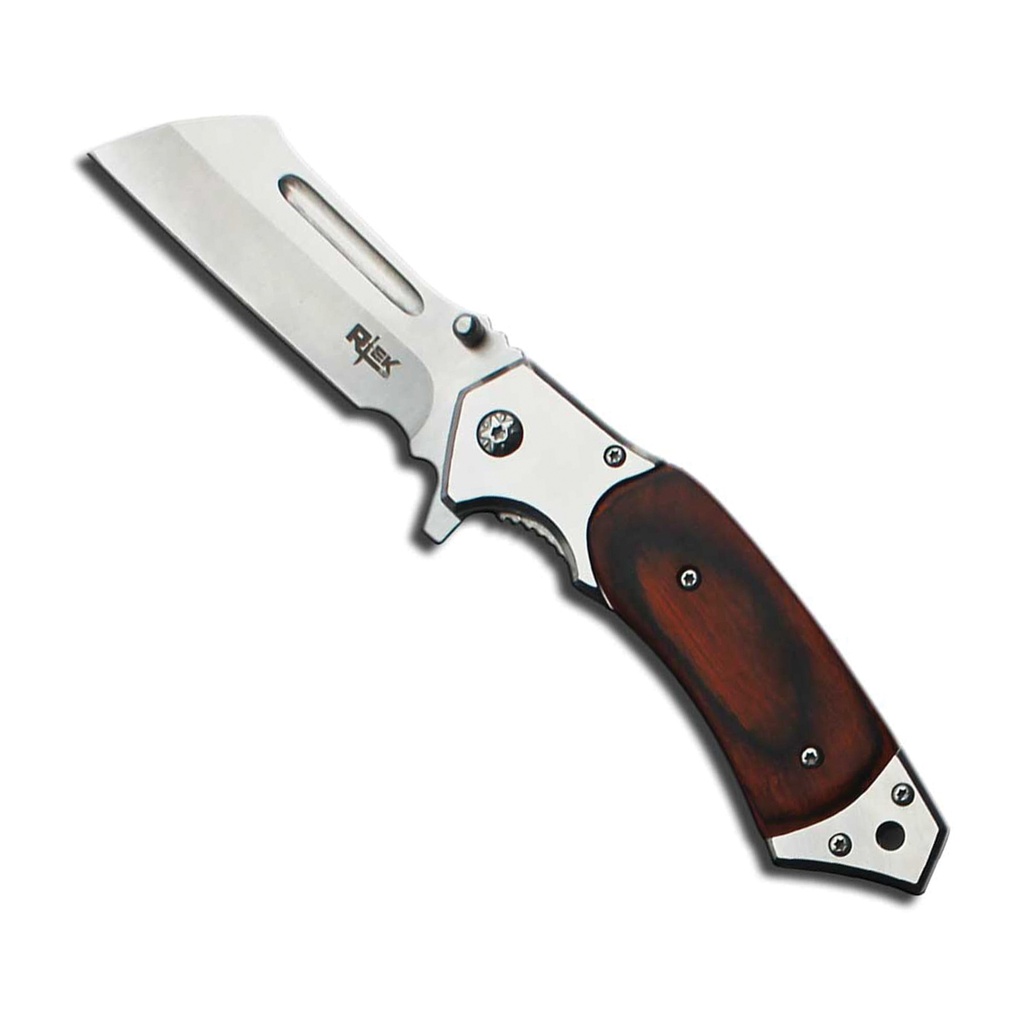
This assisted-opening cleaver folder is for the EDC user who actually cares how a knife opens and carries. The spring-assisted action snaps the broad cleaver blade into place with authority, then locks down via a solid frame lock. At 8" overall with a 2.75" satin blade and wood-inlaid handle, it rides comfortably thanks to the pocket clip but still gives you real cutting surface. If you like your everyday knife with a bit of kitchen-cleaver attitude, this one earns its pocket space.
Assisted EDC Cleaver Knife for Sale with Real Working Attitude
If you’re going to carry a budget-friendly assisted knife, it should at least feel like a tool you chose on purpose, not something you grabbed at a gas station. This assisted-opening cleaver folder brings a broad, kitchen-style blade into a slim pocket profile, with a spring-assisted action and frame lock that actually make mechanical sense for everyday carry.
Why This Isn’t Just Another Cheap Assisted Knife for Sale
Most knives in this price band blur together: anonymous drop points, gritty actions, mystery metal. This one stands out for three reasons: the cleaver blade geometry, the assisted deployment, and the wood-and-steel handle build that looks like someone cared when they drew it.
The 2.75" cleaver blade gives you a long, straight edge relative to its length. That means more edge in contact with whatever you’re cutting—cardboard, food packets, zip ties—without needing a big, ungainly knife. The blade’s broad profile also stabilizes cuts; once you start a line, the flat edge wants to track true instead of wandering.
Action and Deployment: How the Assisted Mechanism Really Feels
This is not an automatic knife; it’s a spring-assisted folder. That distinction matters. An automatic knife uses a button or switch to fire the blade from a fully closed position. Here, you manually start the blade with the thumb stud—once you clear a short distance, the internal spring takes over and drives the blade to lockup.
The upside for an enthusiast is control. You get a quick, one-handed deployment without the legal and mechanical baggage that can come with a true automatic or OTF switchblade. The assist kicks in decisively, with a defined handoff from your thumb to the spring. It’s tuned for a clean snap, not a lazy swing—enough authority to feel purposeful, without the jarring slap you get on badly tuned budget folders.
Frame Lock That Does Its Job
The integrated frame lock is cut from the handle frame itself, not a separate liner. When the blade opens, the frame lock steps in behind the tang, giving you a simple, robust lockup. There’s no secondary safety to fiddle with and no vague lock bar flex—the geometry here is straightforward: open, lock, work.
Thumb Stud and Jimping for Real Grip
The single thumb stud is positioned for a natural push from a standard right-handed grip. Spine jimping near the handle gives your thumb something to bite into when you’re bearing down on a cut, a small detail that separates a knife designed to be used from one designed just to look sharp in photos.
Steel, Edge, and the Cleaver Geometry Advantage
The satin-finished steel blade is built around utility, not bragging rights about exotic alloys. What matters here is how the straight-edge cleaver profile pairs with the steel’s hardness: it sharpens easily on basic stones or pull-through sharpeners and gives predictable performance on everyday materials—cardboard, clamshell packaging, tape, cord.
Unlike a deep belly drop point, the cleaver profile keeps more of the edge in a single plane. That means when you resharpen, you’re working a simpler, linear bevel instead of trying to follow a heavy curve. For an EDC knife that’s going to see real use, that simplicity pays off every time you hit the stones.
Handle, Carry, and EDC Reality: A Pocket Cleaver That Actually Rides Well
Closed, this assisted opening knife sits at 4.75", with an overall open length of 8". That puts it in the sweet spot for EDC: long enough to feel like a real tool in hand, short enough to disappear along a pocket seam.
The handle is where the design earns a second look. A polished metal frame forms the structure, with reddish-brown wood inlays giving you warmth and grip. That modern-classic pairing—metal and wood—leans more "gentleman’s EDC" than hard tactical, but it still means business when you open the blade.
Pocket Clip and Lanyard Options
The pocket clip is mounted on the wood scale side, set for tip-down carry. It’s not some overbuilt billboard; it’s a functional clip that keeps the cleaver profile tight to your pocket. At the butt, a lanyard hole integrated into a triangular metal pommel gives you an anchor point if you like a fob or just want easier retrieval from deep pockets.
Legal Context: Assisted Opening vs Automatic Knife for Sale
This knife is spring-assisted, not an automatic knife or OTF switchblade. That matters for law and for how you carry it. Under U.S. federal law (the Switchblade Knife Act), true automatics and switchblades are regulated in interstate commerce, especially when they open via a button or switch in the handle. Assisted opening knives like this require manual pressure on a blade-mounted stud before the spring engages, which generally keeps them outside those federal switchblade restrictions.
State and local laws are a different story. Some states group assisted openers with automatic knives; others treat them as standard folding knives. Before you buy or carry, you’re responsible for checking your local knife laws—length limits, assisted vs automatic distinctions, and where you can legally carry.
What Buyers Ask Before Purchasing an Automatic Knife
Are automatic knives legal?
In the U.S., federal law (the Switchblade Knife Act) restricts manufacturing, sale, and interstate shipment of switchblades and automatic knives—defined as blades that open by a button, spring, or other device in the handle. States then layer their own rules on top. Some allow automatic knives and OTF switchblades for everyday carry, some restrict them to law enforcement or limit blade length, and others ban them outright.
This particular knife is an assisted opening folder, not a true automatic. You must start the blade manually with the thumb stud before the spring takes over. That design is legal in many more jurisdictions than a button-release automatic knife, but you still need to confirm your local and state regulations before carrying it.
What’s the difference between an automatic knife, OTF, and a switchblade?
Collectors and serious users draw clear lines:
- Automatic knife / switchblade: The terms overlap. A switchblade or automatic opens from fully closed to locked with a button, switch, or lever in the handle, powered by an internal spring.
- OTF (out-the-front): A specific type of automatic where the blade travels straight out the front of the handle, either single-action (fires out, manually retracted) or double-action (fires and retracts via the mechanism).
- Assisted opening knife: A folding knife like this one, where you manually start opening the blade with a stud or flipper. Once you pass a certain point, a spring assists and completes the opening. No handle button, no fully automatic fire.
This cleaver is firmly in the assisted opening category, giving you fast deployment without being a true automatic or OTF switchblade.
What makes this assisted cleaver knife worth buying?
At this price, mechanics and design are what matter. You’re getting a spring-assisted action that actually snaps cleanly into a solid frame lock, a cleaver blade profile that cuts like a much larger knife, and a handle that doesn’t look like every black plastic tactical clone on the rack. The wood inlays and polished frame give it a modern-classic identity, while the pocket clip, jimping, and lanyard hole keep it grounded as a working EDC tool.
If you want a dedicated automatic knife for sale, you’re shopping in a different mechanism category. If you want an affordable, assisted opening cleaver that feels thought-through instead of generic, this one earns a place in your rotation.
For the Enthusiast Who Chooses Mechanism First
This knife is for the buyer who knows the difference between an automatic, an OTF, a switchblade, and an assisted opener—and picks the right tool for the legal and practical realities of daily carry. As an assisted cleaver EDC, it brings a satisfying snap, straightforward frame lock, and distinct wood-and-steel look into a package you won’t mind beating up on real tasks. If that’s how you buy your gear—mechanics first, hype last—this pocket cleaver belongs in your lineup.
| Blade Length (inches) | 2.75 |
| Overall Length (inches) | 8 |
| Closed Length (inches) | 4.75 |
| Blade Color | Silver |
| Blade Finish | Satin |
| Blade Style | Cleaver |
| Blade Edge | Plain |
| Blade Material | Steel |
| Handle Finish | Gloss |
| Handle Material | Wood |
| Theme | None |
| Safety | Frame lock |
| Pocket Clip | Yes |
| Deployment Method | Spring-assisted |
| Lock Type | Frame lock |