
Metro Ready Rapid-Access EDC Backpack - Signal Red
5 sold in last 24 hours
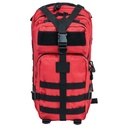
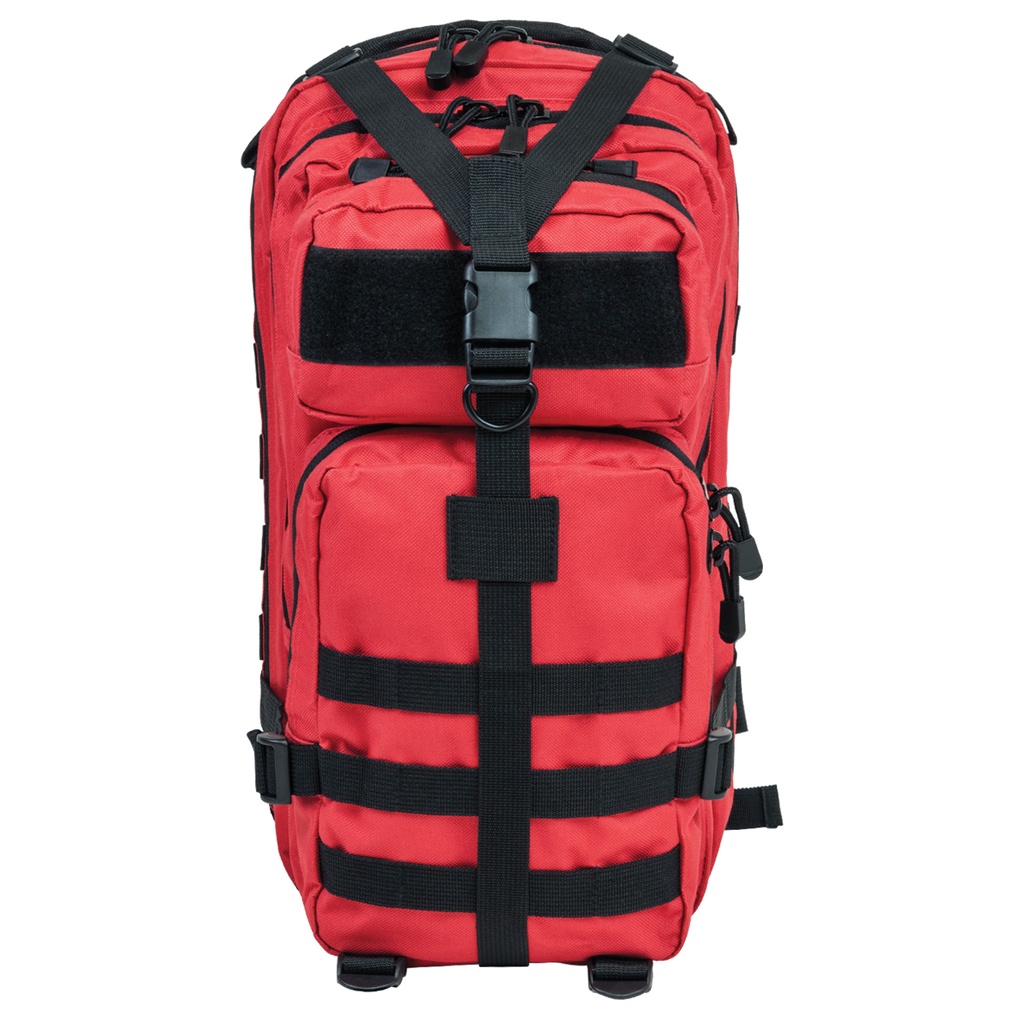
A small tactical backpack that actually understands urban EDC. The Metro Ready Rapid-Access EDC Backpack in Signal Red pairs MOLLE-compatible webbing, compression straps, and a 17 x 8.75 x 4.5 main compartment with fast-access zippers and a patch-ready hook-and-loop panel. Adjustable sternum and waist straps keep the load locked in whether you’re pushing through a commute or running weekend trails. High-visibility red means you and your gear are easy to spot when it matters.
Automatic Knives For Sale Belong Next To Serious Gear
If you’re the kind of buyer who compares lockup, spring tuning, and deployment timing on every automatic knife for sale, you already know the knife is only half the system. The other half is how you carry it, access it, and support the rest of your kit. That’s where a purpose-built small tactical backpack like the Metro Ready Rapid-Access EDC Backpack - Signal Red earns its place in your loadout.
This isn’t a fashion-daypack painted red. It’s a compact, high-visibility urban tactical platform built to keep your EDC — including your automatic, OTF, or classic side-opening switchblade — stable, separated, and immediately accessible.
Small Tactical Backpack Built For Real EDC Use
Think of this pack the way you think about a well-designed automatic: everything starts with the mechanism and the frame. Here, the frame is a 17 x 8.75 x 4.5 inch main compartment wrapped in a durable, tactical-grade shell. That size class hits a sweet spot — large enough for a full day’s carry, compact enough to move through crowds, vehicles, and tight stairwells without becoming a liability.
The shell runs signal red with black webbing and hardware, so it reads immediately as high-visibility tactical. On the front, stacked zip compartments, MOLLE-style webbing, and a vertical compression strap organize and lock down your gear the way a solid pocket clip and frame geometry control a good automatic knife in the pocket.
Compression and Control: Load Management That Mirrors Good Knife Ergonomics
Side compression straps and the central front strap work like the detent and spring pre-load in a quality auto: they keep everything tight until you need it. Cinch them down and the pack slims up, hugging your spine and chest instead of swinging like dead weight. That controlled carry matters when you’re moving fast and still expect to be able to reach your tools — including your primary folder or automatic — in one smooth motion.
MOLLE, D-Ring, and Patch Real Estate
The front MOLLE-style webbing gives you expansion options for med kits, tool pouches, or a dedicated knife sheath. A D-ring attachment below the main front buckle and a hook-and-loop panel on the upper front pocket add tie-in points and patch ID. That hook-and-loop real estate isn’t just cosmetic; in a team setting or emergency environment, it’s how you mark role, blood type, or bag function — the same way a collector distinguishes between a double-action OTF and a side-opening automatic by more than just the blade.
Why This Pack Belongs With Your Next Automatic Knife For Sale
When you buy an automatic knife, you’re buying deployment speed paired with control. This small tactical backpack is built around that same philosophy of rapid access without chaos. Dual zipper pulls on the main compartments let you stage your preferred opening point, so whether you carry right-hand, left-hand, or cross-draw from the bag, you’re not fighting the hardware to get at your tools.
Multiple external zip compartments stack vertically down the front. That lets you separate admin — wallet, keys, small tools — from dedicated gear like a folding automatic, multitool, or small medical kit. The reinforced bottom with lashing loops gives you an anchor point for bulkier items, keeping the agile, frequently used gear higher and closer at hand.
Carry Geometry: Sternum and Waist Straps That Actually Matter
Knife people obsess over balance — blade-to-handle ratio, pivot placement, how an OTF sits in the hand when the thumb rides the slider. Load-bearing gear uses the same logic. The adjustable shoulder straps on this pack are supported by both a sternum strap and a waist strap, which means the weight transfers off your shoulders and into your torso and hips.
The result: when you reach for the front of your belt, waistband, or bag strap to access an automatic, the pack isn’t sliding off one shoulder or swinging forward. It stays planted, the way a well-designed frame lock stays planted under torque. That stability is the overlooked difference between gear that photographs well and gear that works in reality.
Rapid-Access Design For Urban and Trail Transitions
From an urban EDC standpoint, the top grab handle and compact footprint let you move it quickly from back to hand or seat to lap — trains, rideshares, office transitions. On weekend trails, the same geometry means you can shrug a strap, swing the pack forward, and get a water bottle or tool out of a front pocket without unloading the whole rig.
High-Visibility Tactical: Why Signal Red Works
Signal red isn’t subtle, and that’s the point. In a sea of black and coyote packs, this signal red tactical daypack stands out when you drop it in a vehicle, stash it under a desk, or set it down at a trailhead. If you run your automatic knife as part of a broader emergency or preparedness setup — seatbelt cutter, glass breaker, trauma shears, the usual — visibility is a feature, not a flaw.
Red coupled with black webbing sends the right message: this isn’t a fashion accessory; it’s a deliberate choice for fast ID and fast access. In low-light or high-stress situations, grabbing the right pack as quickly as you’d fire a double-action automatic matters more than blending in.
What Buyers Ask Before Purchasing an Automatic Knife
You’re here because you care about mechanisms and legality as much as aesthetics. Even though this product is a small tactical backpack, not a blade, the same questions that come up when you buy an automatic knife for sale belong in the conversation.
Are automatic knives legal?
In the United States, automatic knives (including most side-opening autos and many OTF designs) are regulated under a mix of federal and state law. Federal law primarily restricts interstate commerce and mailing of switchblades and automatics, with certain exceptions for military, law enforcement, and one-armed individuals. That means sellers and shippers need to know the rules when offering an automatic knife for sale across state lines.
Day-to-day carry, however, is almost entirely governed at the state and local level. Some states allow automatic knives with blade length limits; others restrict carry but permit ownership at home; a few still prohibit autos entirely or limit them to specific professions. If you’re wondering whether an automatic knife is legal to carry where you live, you need to check your state statutes and, ideally, city or county ordinances. Laws change, and what’s sold online doesn’t guarantee it’s legal to carry in your pocket or on this pack.
What’s the difference between an automatic knife, OTF, and a switchblade?
Automatic knife is the broad mechanical category: a knife that opens by pressing a button, lever, or switch, with a spring or stored energy completing the deployment. Most enthusiasts use it to describe side-opening autos and OTFs.
Switchblade is often used in U.S. law and pop culture to mean an automatic knife in general, especially side-openers. Legally, the term usually overlaps with automatic, but serious buyers prefer more precise language.
OTF (Out-The-Front) is a specific subset of automatic knives where the blade travels out the front of the handle instead of pivoting from the side. Many OTFs are double-action — the same sliding control deploys and retracts the blade — while most side-opening automatics are single-action (spring-assisted open, manual close). When you buy automatic knife models online, knowing whether you’re looking at a side-opener, single-action OTF, or double-action OTF matters for both function and legal classification.
What makes this backpack worth buying?
If you already own or are shopping automatic knives for sale, you’re used to separating commodity pieces from real tools. This pack falls in the second category for a few specific reasons:
- Purpose-built size class: A genuinely small tactical backpack with a 17 x 8.75 x 4.5 main compartment — not an overbuilt rucksack pretending to be EDC.
- True load control: Side and front compression straps, plus sternum and waist support, keep your gear from sloshing the way a sloppy detent makes a knife feel cheap.
- Expansion architecture: MOLLE-compatible webbing, D-ring, and hook-and-loop panel give you attachment points for pouches, tools, and ID — the gear equivalent of modular scales and hardware.
- High-visibility shell: Signal red is intentional: grab the right pack quickly, locate it under stress, and avoid losing it in a pile of dark nylon.
- Rapid-access design: Dual zippers and logical compartment layout mean you can stage knives, tools, and essentials where your hands naturally go.
In short, it’s a compact tactical daypack that respects how enthusiasts actually carry.
Build Your Kit Like An Enthusiast, Not A Tourist
Anyone can scroll an automatic knife for sale and click buy. Enthusiasts build systems: the right blade, the right sheath or pocket orientation, and the right small tactical backpack to carry the rest of the load without slowing the draw. The Metro Ready Rapid-Access EDC Backpack - Signal Red is designed for that mindset — high-visibility tactical architecture, real load control, and fast access that matches the way you already think about your knives.
If you choose your gear the way you choose your autos — on mechanism, not marketing — this pack earns its spot in your rotation.