Shadow Court Elegant Dueling Rapier Sword - Black
12 sold in last 24 hours
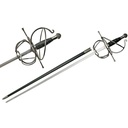
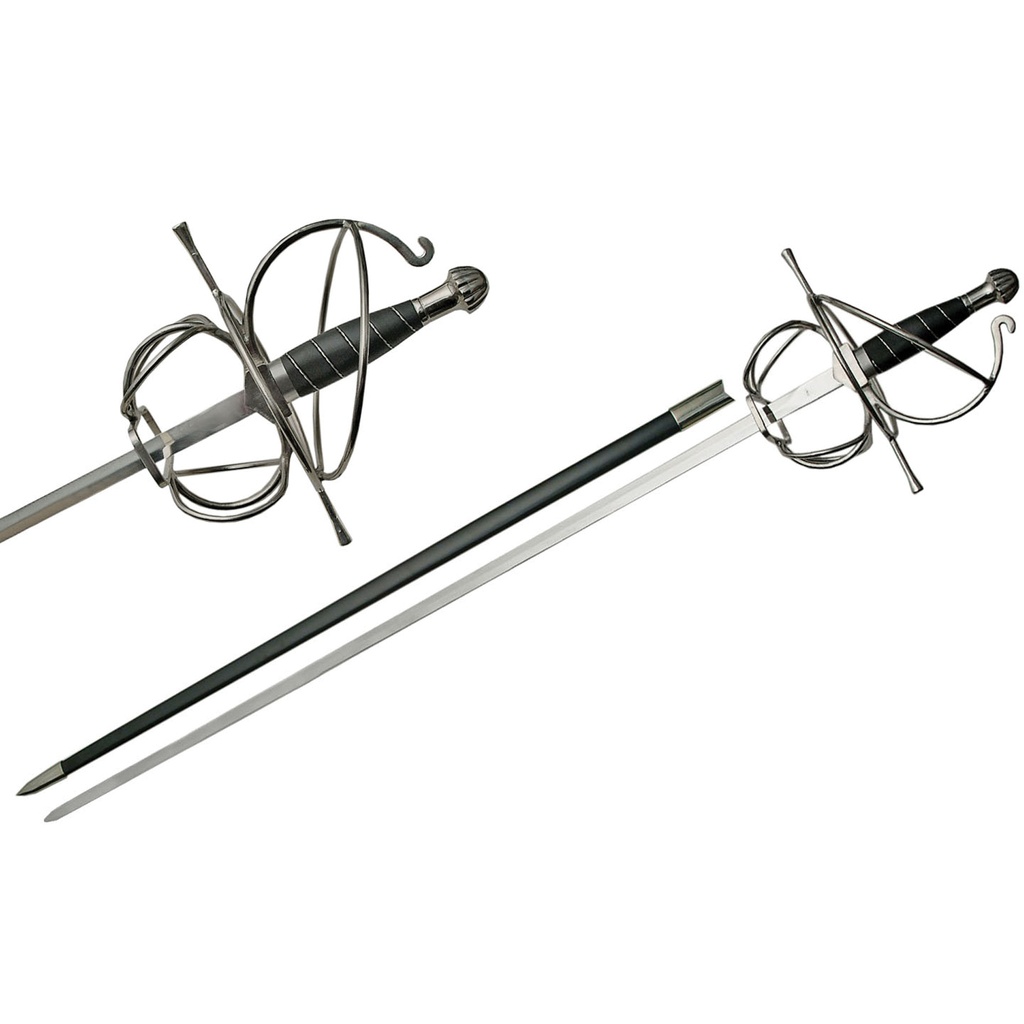
This rapier sword is built to look like a duelist’s first choice: long, narrow blade, swept-hilt guard, and a black wire-wrapped grip that locks into the hand. The polished silver guard and pommel contrast cleanly against the black scabbard, giving it a stage-ready, display-worthy profile. It’s ideal for costuming, theatrical work, or as a centerpiece on the wall for anyone who prefers precision and finesse over brute steel.
Rapier Sword for Sale with True Duelist Lines
The Midnight Duelist Wire-Wrapped Rapier Sword - Black is what happens when a decorative piece actually respects the classic rapier form. Long, narrow thrusting blade, swept-hilt guard, and a wire-wrapped grip that looks like it belongs in a Renaissance salle instead of a toy rack. If you’re looking for a rapier sword for sale that gets the silhouette and balance right, this one earns its wall space and stage time.
Why This Isn’t Just Another "Costume" Rapier Sword for Sale
Most budget rapiers miss the point: the real thing is about reach, control, and a hand that’s fully protected without being buried in bulk. Here, the swept-hilt guard flows around the hand with curved bars and a straight crosspiece, giving that unmistakable duelist profile. The blade runs long and slim with a polished silver finish, clearly built around the thrusting style that defines a rapier instead of a generic broad sword shape.
The wire-wrapped grip matters. Instead of fake leather or slick plastic, the black handle is wrapped in spiral wire bands. That pattern does two things: it visually locks the hilt into the historical rapier family, and it gives your palm and fingers defined indexing points. Whether you’re on stage, in cosplay, or just moving through guard positions in the living room, the grip naturally orients the blade without needing to stare at it.
Hilt, Guard, and Balance: The Real Mechanics Behind the Look
A proper rapier lives or dies by its hilt. The swept-hilt guard on this piece uses multiple curved bars and an integrated straight crossbar to create a cage around the fingers without turning into an unwieldy steel knot. That design gives clear visual lines from every angle—perfect for display and for audiences who need to read the sword’s silhouette from a distance.
Wire-Wrapped Grip That Actually Works in Hand
The black wire-wrapped grip isn’t just decorative. Wire wrapping tightens around a core and stays put; it doesn’t stretch and sag over time like cheap faux leather. The spiral bands create micro-ridges under the hand, improving control when you’re rehearsing stage choreography or holding a fencing stance. Paired with the fluted cone pommel, the grip gives you a natural reference point for consistent edge alignment—even on a thrust-centric blade.
Slim Blade, Display-Ready Edge
The blade is narrow and straight with a polished silver finish, tuned visually for a thrusting weapon. It presents correctly for a rapier: fast visual taper, long fuller-free profile, and a point-forward presence that reads immediately as a duelist’s tool. The edge is unsharpened or lightly edged, which is exactly what you want for most stage, costume, or display use—aggressive in appearance without turning casual handling into a liability.
Finding the Right Rapier Sword for Sale for Stage, Cosplay, and Display
If you’re buying a rapier sword for sale for anything beyond a one-night costume, you’re looking for three things: silhouette, durability for handling, and the complete visual package. This piece checks all three.
- Silhouette: Long, straight blade with a historically inspired swept-hilt guard that instantly reads as Renaissance duelist, not generic fantasy.
- Durability for Handling: Wire-wrapped grip and solid metal guard/pommel designed to tolerate repeated draws, poses, and controlled stage work.
- Complete Package: The included black scabbard with silver throat and tip finishes the look, so you’re not stuck hiding a bare blade off-stage or in photos.
On a wall, the contrasting black-and-silver palette hits the right note: refined, not gaudy. In costume, the sword and scabbard combination sells the character before you say a word.
Scabbard and Carry: The Details Collectors Actually Notice
The scabbard is slim and matches the blade’s elegant proportions instead of overwhelming it. Black with silver fittings at the throat and tip, it mirrors the guard and pommel, tying the entire presentation together.
For reenactors, cosplayers, or stage fighters, that matters. A rapier that looks correct in the hand but awkward once sheathed misses half the impression. Here, the sword and scabbard track as a single piece: long, lean, and consistent in style from pommel to chape.
What Buyers Ask Before Purchasing an Automatic Knife
Are automatic knives legal?
Under U.S. federal law, automatic knives (often called switchblades in legal language) are restricted mainly in interstate commerce and certain federal jurisdictions, but federal law does not outright ban simple possession for most civilians. The real complexity is at the state and local level: some states fully allow automatic knives, some allow them with blade-length limits or specific carry rules, and others restrict sale, carry, or both. Before you buy or carry any automatic knife, check your current state and local statutes—not just a nationwide summary—and remember that what’s legal to own is not always legal to carry concealed or across state lines.
What’s the difference between an automatic knife, OTF, and a switchblade?
Mechanically, an automatic knife is any knife where the blade is deployed by a spring or stored energy after you press a button, push a lever, or act on a defined release; your hand doesn’t drive the blade open, the mechanism does. A classic side-opening automatic swings the blade out from the handle like a folding knife, only powered. An OTF knife (out-the-front) is a subtype of automatic where the blade moves straight out of the front of the handle instead of pivoting from the side. Many OTFs are double-action: the same control both deploys and retracts the blade. A switchblade is largely a legal and cultural term—most U.S. statutes use “switchblade” to describe what enthusiasts call automatic knives, whether side-opening or OTF. Among collectors, we usually talk in terms of automatic vs. OTF to describe the mechanism precisely.
What makes this automatic knife worth buying?
When you evaluate an automatic knife, you look at three mechanical pillars: the consistency of the spring action, the lockup when the blade is open, and the practical geometry of the blade steel. A worthwhile auto will fire with the same authority every time without short-stroking, lock up with minimal play at the pivot and tang, and use a steel that balances hardness with toughness so the edge holds without chipping under real cutting. Add in a handle design that gives you controlled indexing under recoil from the opening strike, and you have an automatic that earns a permanent spot in your rotation instead of being a one-time novelty flick.
Why This Rapier Belongs in a Collector’s Lineup
Collectors who already own modern automatic knives, OTFs, and tactical blades often add a rapier like this as their nod to European dueling heritage. The Midnight Duelist Wire-Wrapped Rapier Sword - Black brings that look with a clean, coherent design: swept-hilt guard, wire-wrapped grip, fluted pommel, and a long polished blade, all anchored by a matching black scabbard.
If your collection already covers modern deployment mechanisms and steels, this piece rounds out the story visually—showing where the culture of blades and disciplined combat presentation came from. It’s a sword you choose not because it’s the loudest, but because it hits the exact historical and aesthetic notes a serious enthusiast recognizes on sight.
For the buyer who knows the difference between a working automatic knife and a wall-hanger, this rapier sword for sale scratches a different itch: the satisfaction of owning a well-balanced, visually accurate duelist’s silhouette in black and silver.