Midnight Talon Assisted Karambit Knife - Black Steel
15 sold in last 24 hours
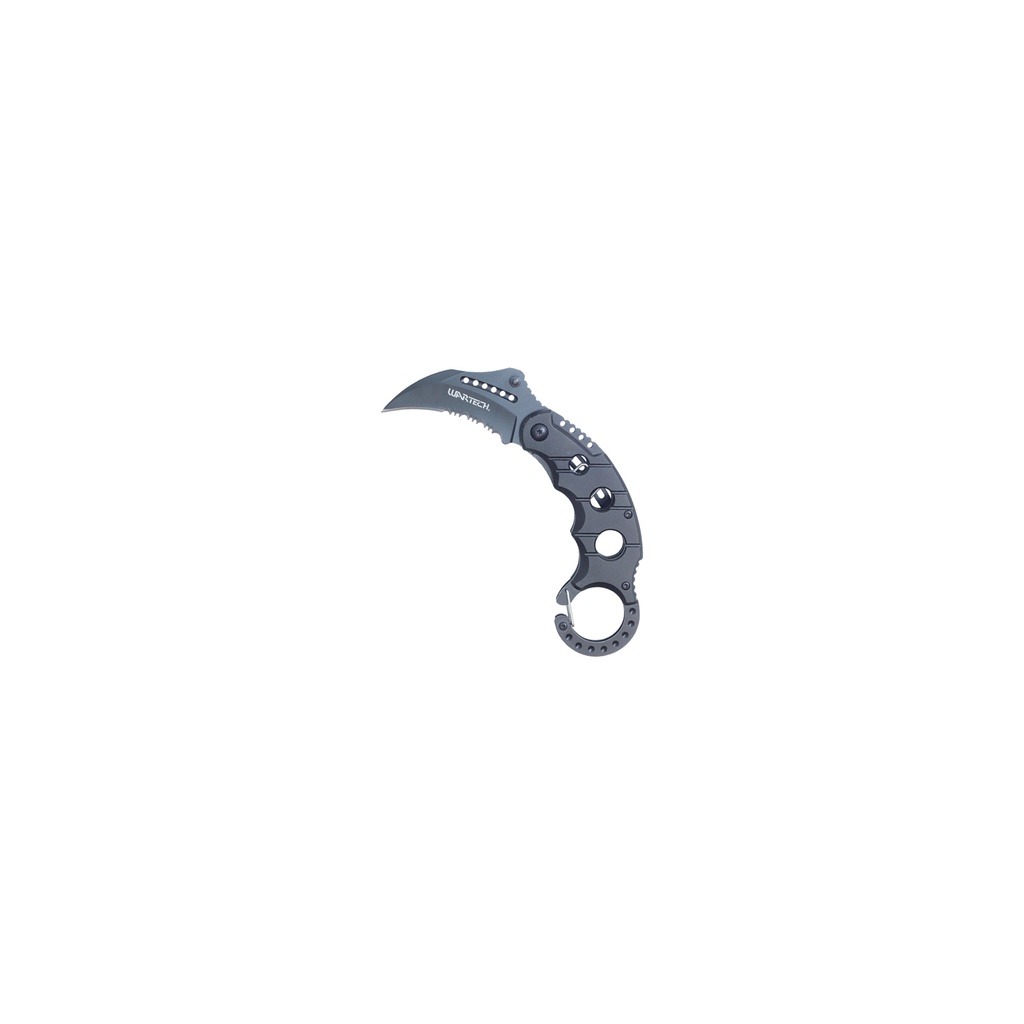
If you’re looking to buy an automatic-style tactical folder with real attitude, this spring-assisted karambit delivers. The Midnight Talon packs a curved, black talon blade with partial serrations into a compact, liner-lock frame that snaps open with a decisive assisted action. The finger ring and ergonomic curves give you locked-in retention for close-quarters control, while the blackout steel build looks ready for work, not the display case. It’s the kind of karambit you pick because you actually understand how this geometry is meant to be used.
Automatic Knives for Sale vs Assisted Karambits: Know What You’re Really Buying
If you’re hunting for an automatic knife for sale and your eye catches this aggressive claw profile, let’s start with the truth: the Midnight Talon isn’t a button-fired automatic or an OTF. It’s a spring-assisted folding karambit — meaning the blade starts by your hand and finishes under spring tension. That matters, both for how it feels in the hand and how it sits under the law.
Where a true automatic knife deploys with a button or switch and does all the work from closed to locked, this assisted karambit uses your initial thumb or finger pressure to clear a detent, then the internal spring takes over and snaps the talon blade into battery. The experience is automatic-adjacent — fast, positive, and mechanically satisfying — but without a dedicated firing button.
Spring-Assisted Karambit Knife for Sale: Built Around the Talon
This knife is built around a simple premise: put a curved, talon-style blade and a ring into a folding chassis that deploys as fast as your reflexes. The strongly arced blade gives you pulling power and controlled slashes, which is exactly what the karambit geometry was born to do in Southeast Asian martial systems.
The matte black finish on both blade and handle telegraphs its intent — this isn’t a gentleman’s folder, it’s a compact tactical tool. Partial serrations at the base of the edge give you bite on fibrous material, while the plain tip section handles controlled cuts and point work. It’s not pretending to be a slicey kitchen knife; it’s optimized for close-quarters, utility, and self-defense tasks where edge engagement and control matter more than Instagram polish.
Action and Lock: Why This Assisted Mechanism Works
The deployment is classic spring-assisted: you nudge the blade via the thumb ramp or flipper-style protrusion, and once it passes the detent, the internal spring snaps it open. Done right, this feels almost like a small automatic knife — no hesitant half-opens, just a firm, audible lock-up. That’s exactly what you want when your grip is already committed around a ring and curved handle.
A liner lock secures the blade. Enthusiasts know the drill: a steel liner inside the handle moves behind the tang when opened, providing a solid mechanical stop. Liner locks are lighter and faster to disengage than many back locks, and on a karambit where your hand is already wrapped tightly around contours and ring, that ease of closing matters.
Collector Detail: The Ring, the Curve, the Blackout
What separates this from commodity folders is the combination of elements: the full finger ring at the butt, the aggressive S-curve from ring to tip, and the fully blacked-out hardware and steel. The ring isn’t a style gimmick; it’s there for retention and rapid indexing. Once your finger is in, you’re not losing this knife by accident, and you always know blade orientation, even in low light.
The handle’s contoured cutouts reduce weight and give visual depth, but they also provide reference points for grip transitions — forward, reverse, or ring-led. Collectors who appreciate karambit lineage will recognize the design nods, while EDC users get a tool that’s unmistakably tactical without being a wall piece.
Steel, Edge, and Real-World Use: Not Just Another Switchblade Lookalike
Let’s talk about the steel and edge in real terms. This is a stainless steel blade with a matte black finish and partial serrations. You’re not buying a boutique super steel here — you’re buying a work-ready claw that will take an edge easily, shrug off normal EDC abuse, and not require a microscope and diamond plates to maintain.
The partial serrated section near the handle is the workhorse: ropes, webbing, straps, and rough material go here. The plain edge out toward the tip gives you more control for opening boxes, precision cuts, and point-driven tasks. On a curved blade, that front section behaves almost like a scalpel when you control your wrist angle.
Carry and Deployment: Assisted EDC with Tactical Leanings
This is a pocket-sized tactical karambit, not a belt-heavy monster. The folding format and assisted mechanism make it viable as an everyday carry companion for anyone who understands the karambit’s strengths. With the blade tucked into the handle and the ring indexing your grip, you get a package that’s compact, hand-filling, and fast to orient.
If you’re used to straight-blade autos or switchblades, the learning curve is in the angle: you don’t cut with this like a chef knife. You pull, hook, and control. Once you get that, the geometry stops being a novelty and starts being a purpose-built tool.
Legal Context: Automatic Knife vs Assisted Karambit Reality
Any time you see a fast-deploying tactical knife for sale, the question comes up: is this an automatic knife, and is it legal to carry? Under U.S. federal law, a true automatic (what many people call a switchblade) is a knife that opens automatically by a button, pressure on the handle, or similar mechanism, with the blade stored in the handle.
This piece is a spring-assisted folding knife, not a button-fired automatic. You must start the opening manually; the spring only assists once you’ve moved the blade past its detent. That distinction matters because many states treat assisted openers differently (and more leniently) than automatic knives or OTF switchblades.
However, knife law is state and even city specific. Some jurisdictions restrict blade length, locking mechanisms, or any knife perceived as a “dangerous weapon.” Before you clip or pocket this assisted karambit, check your local and state regulations — not just federal law — and remember that how you carry and use it can matter as much legally as what the mechanism is.
What Buyers Ask Before Purchasing an Automatic Knife
Are automatic knives legal?
On the federal level in the U.S., automatic knives (switchblades) are regulated primarily by the Federal Switchblade Act. It restricts interstate commerce and mailing of true automatics but doesn’t outright ban ownership nationwide. States and localities layer their own laws on top of that, and those can range from fully permissive to outright prohibitions on carry or even possession.
Because this karambit is spring-assisted and not a push-button automatic knife, it often falls under different rules than OTF or switchblade-style autos. But do not assume it’s automatically legal to carry. Always confirm your state and local knife laws, pay attention to blade length limits, and be aware that schools, government buildings, and similar locations often have separate weapon rules regardless of mechanism.
What’s the difference between an automatic knife, OTF, and a switchblade?
In enthusiast and legal language, a switchblade is a type of automatic knife — a blade that opens from the handle automatically via a button, switch, or similar control. An OTF (out-the-front) automatic knife is a specific form of switchblade where the blade travels linearly out of the front of the handle, usually single- or double-action via a thumb slide.
A standard side-opening automatic knife swings the blade out from the side like a conventional folder, but the button or switch drives it from closed to locked on its own. This knife, by contrast, is a spring-assisted side-opening karambit: you initiate the opening manually, and a spring helps finish the arc. It gives you a similar speed and feel without being a true automatic.
What makes this automatic-style knife worth buying?
For an enthusiast or first-time tactical buyer, this knife earns its keep on three fronts: geometry, retention, and deployment. The curved talon blade and partial serrations aren’t cosmetic — they prioritize pulling cuts and aggressive bite on tough material. The ring and ergonomic handle give you serious retention in wet, gloved, or high-stress conditions, something straight folders can’t always match.
And the assisted action gives you near-automatic speed with simpler mechanics and, in many places, a friendlier legal profile than a full switchblade or OTF automatic knife for sale. You’re getting a purpose-built folding karambit that behaves like the tool it visually promises to be, at a price point that encourages you to actually carry and train with it instead of leaving it in a display case.
For Enthusiasts Who Choose Mechanism First
If you’re the type who reads knife specs before you ever look at color options, this assisted karambit belongs in your rotation. It won’t replace a high-end double-action automatic knife for sale in a collector’s case, and it’s not trying to. What it does do is bring fast, spring-assisted deployment, real karambit geometry, and blackout tactical aesthetics into an EDC-ready package.
You’re not just buying another black folder — you’re choosing a mechanically honest, ringed karambit that rewards anyone who actually understands how these blades are meant to be used.
| Blade Color | Black |
| Blade Finish | Matte |
| Blade Style | Talon |
| Blade Edge | Partial-Serrated |
| Blade Material | Steel |
| Handle Finish | Matte |
| Handle Material | Steel |
| Theme | Tactical |
| Pocket Clip | No |
| Deployment Method | Spring-assisted |
| Lock Type | Liner lock |