Official Army Sniper Training Doctrine Manual - Teal Reprint
3 sold in last 24 hours
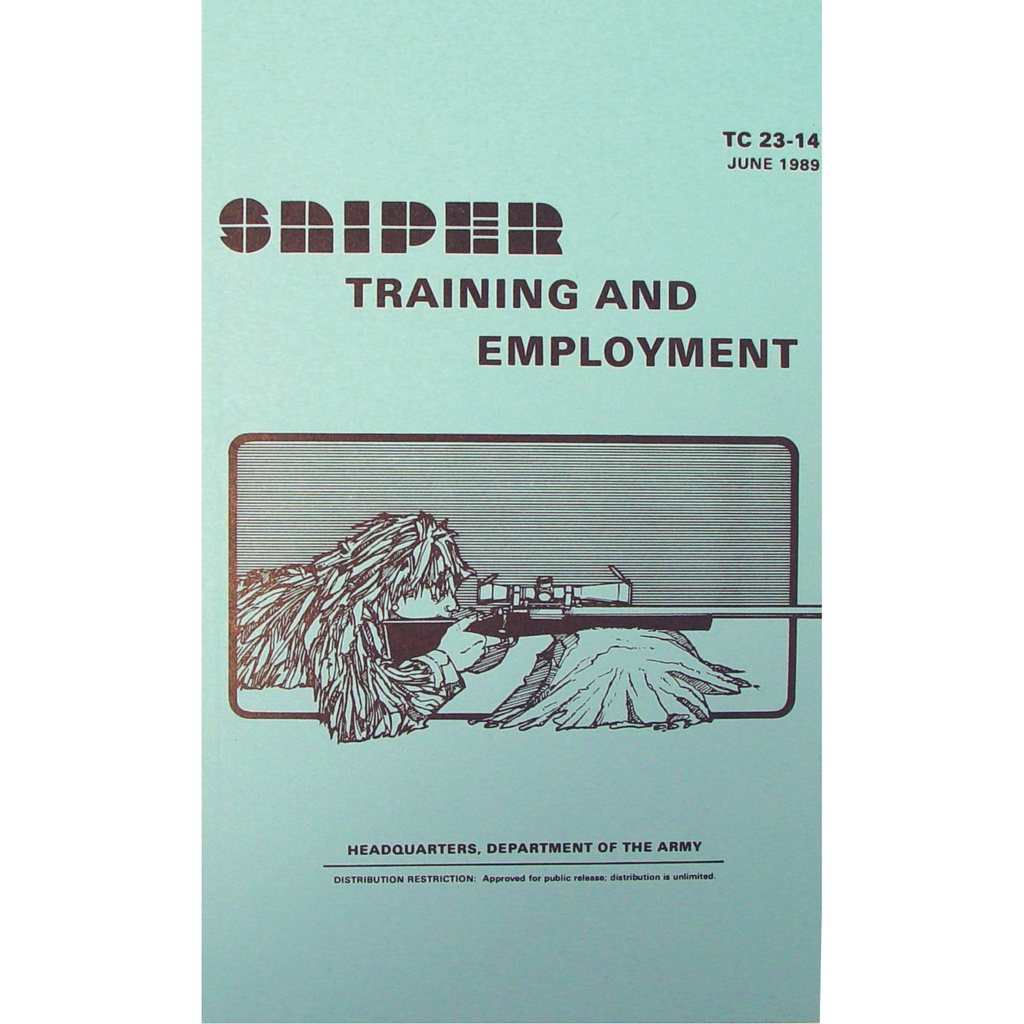
This isn’t a coffee-table sniper book; it’s the 1989 U.S. Army TC 23-14 Sniper Training and Employment manual, reprinted for shooters, instructors, and collectors who want real doctrine, not YouTube theory. Inside you get structured guidance on infantry sniper employment, mission planning, team roles, and training standards as the Army wrote them. If you care about how precision shooters are actually trained and deployed, this is the reference you keep within arm’s reach.
Sniper Training And Employment: The Manual Behind Real Precision Shooting
Every serious rifleman eventually hits the same wall: you’ve read the blogs, watched the videos, and you still feel like you’re getting fragments, not a system. Sniper Training And Employment (TC 23-14) is that system. This is the U.S. Army’s 1989 sniper doctrine — the way they trained, structured, and employed infantry snipers when lives, not likes, were on the line.
This isn’t an automatic knife for sale, an OTF showpiece, or a switchblade novelty. It’s the kind of doctrine manual the best tactical minds keep on the same shelf as their favorite blades: dry, precise, and brutally practical. If you collect gear and manuals that actually shaped real-world combat skills, this belongs in that collection.
Why This Army Sniper Manual Matters More Than Another Tacticool Book
Most sniper "guides" are personality-driven. This one is doctrine-driven. Because it’s a U.S. Army training circular, Sniper Training And Employment doesn’t care about selling you on a brand or a personality — it cares about standardizing how snipers are trained and used on the battlefield.
Structured Doctrine, Not Random Tips
The circular walks through the sniper’s role inside the infantry framework: how teams are organized, how they’re tasked, and how commanders are supposed to employ them. It covers mission planning, observation and reporting, engagement criteria, coordination with maneuver elements, and the training pipeline required to get a shooter from decent marksman to dependable sniper.
Training and Employment in One Volume
Most commercial books split “how to shoot” from “how to use shooters.” TC 23-14 combines them. You get the foundational training concepts and the tactical employment guidance commanders use to plug snipers into real operations. That dual perspective is exactly what serious students and instructors are usually missing.
Collector Appeal: Authentic U.S. Army Sniper Doctrine Reprint
If you already have a safe full of blades and a shelf of manuals, you know the difference between somebody’s opinion and official doctrine. This is the latter — a faithful reprint of the 1989 Department of the Army TC 23-14 manual.
Why Collectors Care About This Manual
- Authenticity: The cover carries the original "TC 23-14 June 1989" designation, U.S. Army header, and distribution statement styling. It looks and reads like the manuals troops actually used.
- Historical context: Late–Cold War doctrine, pre-GWOT, where long-range precision and fieldcraft were designed for peer and near-peer threats. That makes it a snapshot of how snipers were expected to think and operate in that era.
- Training lineage: A lot of later sniper programs and civilian precision courses trace their structure back to manuals like this. Owning it lets you see the DNA of modern training.
Mechanics of the Craft: What This Manual Actually Teaches
Where a knife enthusiast obsesses over lock geometry and spring timing, the sniper community obsesses over fundamentals just as technical: firing position stability, range estimation, target detection, and communication. Sniper Training And Employment breaks those mechanics down in the same methodical way.
Fieldcraft, Observation, and Target Engagement
You’ll find doctrine-level guidance on concealment (including ghillie concepts, as the cover suggests), movement, observation techniques, and how snipers are supposed to choose when and how to engage. It’s not a glossy picture book of rifles; it’s about the workflow of a sniper team in the field and the communication expectations that make them an asset instead of a liability.
Team Roles and Mission Planning
The circular details how sniper teams integrate with the larger unit: task organization, reporting chains, coordination with fire support, and how missions should be planned, briefed, and debriefed. That level of institutional thinking is what most commercial manuals gloss over, and it’s exactly what instructors, leaders, and serious students want to see.
Who This Manual Is Really For
This reprint isn’t aimed at casual readers. It was written for commanders, staffs, instructors, and soldiers at training posts, Army schools, and operational units. If you live in the overlap between serious shooting, tactical thinking, and collecting real doctrine, you’re the target audience now.
- Law enforcement and military trainers who want to reference legacy doctrine when building or auditing their own programs.
- Precision rifle shooters who care as much about employment concepts as they do about group size.
- Manual collectors who prefer original-style military circulars over watered-down commercial rewrites.
What Buyers Ask Before Purchasing an Automatic Knife
You’re here for a sniper manual, not an automatic knife for sale — but if you run precision rifles, odds are you also run good edged tools. So let’s clear up the questions that come up constantly in the same circles.
Are automatic knives legal?
Under U.S. federal law, automatic knives (often called switchblades in statutes) are regulated by the Federal Switchblade Act. That law primarily restricts interstate commerce and shipment of automatic knives, with exemptions for military, law enforcement, and certain one-armed users. The real deciding factor for carry is state and local law. Some states allow automatic knife carry with few restrictions, others limit blade length, opening mechanism, or who can carry them, and a handful still ban civilian possession outright. Before you buy automatic knife models for EDC or duty, you need to check your specific state and municipal codes — and remember that “automatic knife legal to carry” is a question that can have very different answers across state lines.
What's the difference between an automatic knife, OTF, and a switchblade?
Mechanically, an automatic knife is any knife where the blade is deployed by a button, switch, or other device in the handle, powered by a spring or stored energy — you press, it snaps open. A switchblade is essentially the legal term that most statutes use for the same thing, and in enthusiast circles it’s usually shorthand for side-opening automatics. An OTF (out-the-front) knife is a specific subtype of automatic where the blade travels linearly out of the handle’s front. Double-action OTF knives deploy and retract using the same control; single-action OTFs fire automatically but must be manually reset. In other words: all OTF knives are automatic, many automatic knives are called switchblades in law, but not all switchblades are OTF.
What makes this automatic knife worth buying?
If you’re applying that same hard-nosed standard to your gear that this sniper manual applies to doctrine, the answer is always mechanical honesty. A serious automatic knife for sale earns its keep with a reliable firing mechanism, secure lockup, and materials that match the intended use — not just marketing copy. Look for proven spring systems, tight tolerances, and steels with known heat treats instead of buzzwords. The same way TC 23-14 strips the romance out of the sniper role and replaces it with process, a good automatic keeps the flash and ditches the gimmicks.
Why This Manual Belongs Next to Your Best Gear
Owning Sniper Training And Employment is like owning the factory service manual for a platform you actually run. It gives you the doctrinal blueprint behind the mystique: how snipers are supposed to be selected, trained, tasked, and evaluated. Pair it with your go-to precision rifle, your most trusted automatic knife, and the rest of the tools you actually rely on.
If you see yourself as more than a casual shooter — as someone who cares about doctrine, not just hardware — this manual fits your identity. It’s a serious reference for people who treat their craft with the same respect they give a finely tuned action or a perfectly tuned automatic knife for sale: no gimmicks, just the real thing.