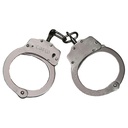
Patrol-Grade Double Lock Duty Handcuffs - Nickel Plated
3 sold in last 24 hours
These Patrol-Grade Double Lock Duty Handcuffs are built for real shifts, not costume racks. Nickel-plated steel housings, welded chain links, and a crisp, positive ratchet give you confident control. The double-lock mechanism prevents over-tightening once engaged, and the standard police key compatibility keeps them in step with major brands. If you work patrol, security, or training, these cuffs deliver that familiar duty feel—solid, predictable, and ready for nightly abuse.
Duty-Ready Restraints for Professionals Who Actually Use Them
The Patrol-Grade Double Lock Duty Handcuffs - Nickel Plated are exactly what they look like: field gear meant for real work. Nickel-plated steel, welded chain, and a proven double-lock system built around the same standard police key you already carry. No gimmicks, no cosplay designs—just solid, functional restraint hardware for patrol, security, corrections, and training environments.
Why These Handcuffs Feel "Right" in the Hand
If you’ve ever snapped cheap cuffs on a trainer and felt the mushy ratchet and sloppy tolerance, you know the difference immediately. These handcuffs run a classic swing-arm, pawl-and-ratchet mechanism tuned for predictable engagement. Each tooth of the ratchet indexes with a crisp click, so you can feel exactly where you’re at without needing to look. That tactile feedback is what lets you cuff quickly, safely, and without second-guessing under stress.
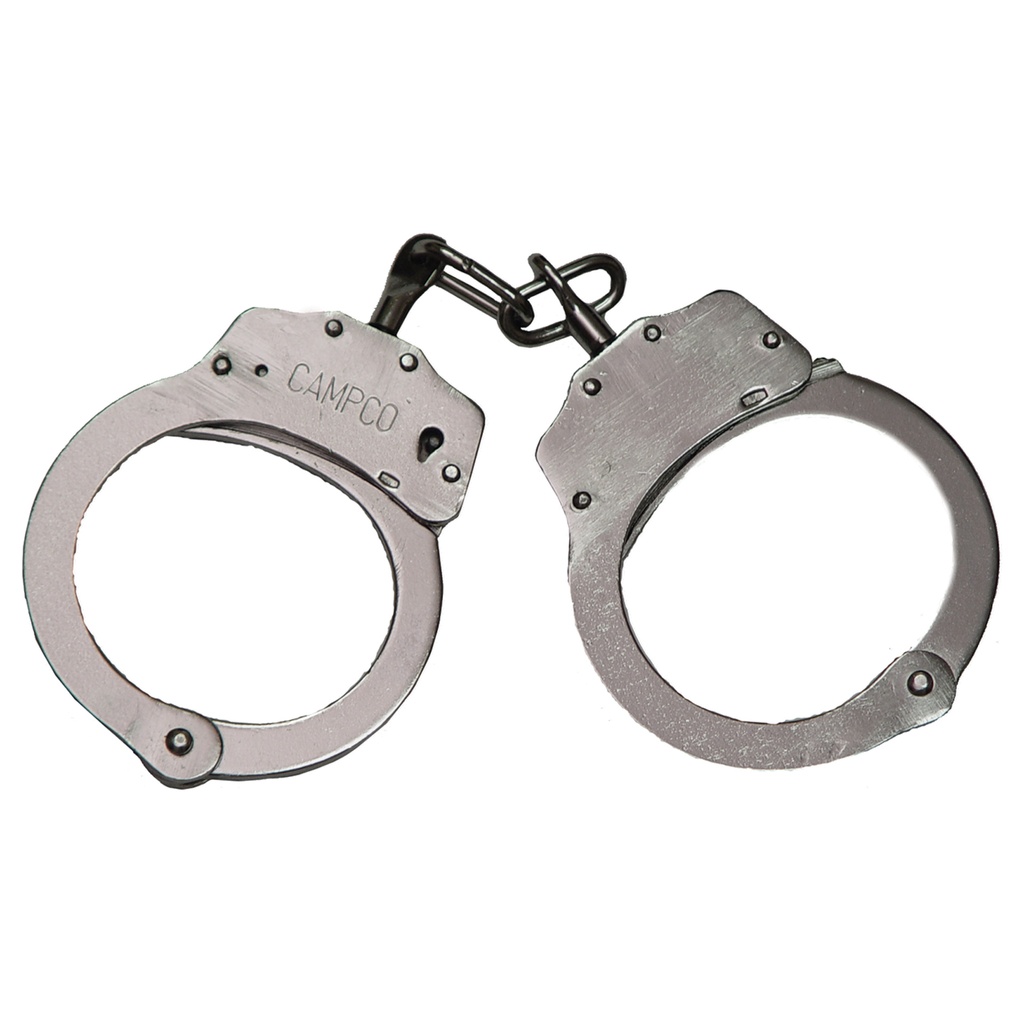
The housings are rounded at all key contact edges—enough to reduce hotspots and unintended scraping, but not so softened that they feel toy-like. The nickel plating isn’t just for shine; it adds a corrosion-resistant layer that helps the steel shrug off sweat, rain, and constant holster use. The darker, contrasting chain and pivot hardware give you a visual read on connection points at a glance.
Double Lock That Works the Way the Field Demands
The defining feature here is the double-lock mechanism. Once you snug the cuffs to the wrist, a quick pin-press at the clearly marked double-lock hole locks the swing arm in place. That stops further tightening from movement or pressure—critical for preventing nerve damage and for keeping you in line with modern restraint policies. Unlock sequence is familiar: key in, twist to release the double lock, then continue to rotate to free the swing arm. No learning curve if you’ve used major-brand law enforcement cuffs before.
Welded Chain Links for Real-World Abuse
Between the cuffs, you get welded chain links built to survive torque, pulls, and the usual fight of an uncooperative subject. This is classic chain-link cuff architecture: enough play for positioning, little enough slack to maintain control. That welded connection is one of those details pros look for—it’s the difference between gear that’s built for training scenarios and gear you trust on a Friday night shift.
Standard Police Key Compatibility and Professional Layout
These patrol handcuffs use a standard police-style keyway that matches major brands. That matters more than most new buyers realize. In duty environments, compatibility means anyone on your team can safely remove the cuffs, transfer custody, or clear equipment—even if they aren’t holding the original key. Training centers and security firms get the same benefit: your existing key inventory keeps working, and your muscle memory for unlocking stays the same.
The overall layout is the familiar professional-duty pattern: symmetrical cuffs, central chain, exposed rivets and screws for robust pivot and pawl mounting. It’s the profile you see on law enforcement belts nationwide for a reason—it balances control, comfort, and durability better than most experimental layouts that come and go.
Mechanics, Materials, and Field Reality
These are steel handcuffs with a bright nickel-plated finish. Steel gives you the rigidity you need for control and resistance to bending; nickel plating provides a hard, corrosion-resistant exterior that also minimizes surface friction during application. The swing arms track smoothly into the housings, with enough tolerance to avoid binding under contamination but tight enough to avoid rattle and misalignment.
The ratchet teeth are cut for consistent spacing, meaning each "click" represents a predictable increment of closure. For experienced users, that feedback is a quiet language: you can feel if you’re one click too tight or too loose before you even visually confirm fit. Combined with the double-lock, that precision is what keeps these cuffs in the professional category, not the novelty bin.
Comfort vs. Control: The Real Balance
No set of duty handcuffs is designed to be comfortable in the way a padded restraint is, but these are shaped with smooth internal radiuses at the wrist openings. That reduces sharp pressure points and reduces the risk of superficial damage while still doing exactly what they’re meant to do: stop movement and maintain control. The double-lock is the key safety feature—once engaged, you’re not slowly ratcheting down on nerves as a subject flexes or shifts.
Who These Handcuffs Are Built For
The Field-Pro concept is simple: make cuffs that work like the gear officers and guards already know, at a build level that earns trust on actual shifts. The Patrol-Grade Double Lock Duty Handcuffs - Nickel Plated are aimed at:
- Law enforcement officers needing a reliable spare or training set
- Private security professionals wanting real-duty restraint, not flimsy props
- Academies and training facilities equipping students with realistic duty gear
- Collectors of law-enforcement style equipment who want functional, field-ready examples
In all of those roles, predictable mechanics beat flash. The standard chain-link style, welded links, and double-lock mechanism check the boxes professionals actually care about.
What Buyers Ask Before Purchasing an Automatic Knife
Are automatic knives legal?
Under U.S. federal law, automatic knives (often called switchblades) are restricted mainly in interstate commerce by the Federal Switchblade Act, which limits importation and shipment across state lines, with some exemptions for military and certain government use. Actual possession and carry, though, are governed by state and sometimes local law. Some states allow automatic knives with few restrictions; others limit blade length, carry method (open vs. concealed), or who may possess them; a few still prohibit them almost entirely. If you plan to buy an automatic knife, check your specific state and local statutes before carrying, and don’t assume what’s legal in one jurisdiction carries over to another.
What's the difference between an automatic knife, OTF, and a switchblade?
"Automatic knife" is the broad mechanical category: a knife whose blade opens by pressing a button, switch, or similar actuator, with spring or stored-energy assistance doing the work. "Switchblade" is the older legal and cultural term for the same category, and in many laws it’s the word you’ll see. "OTF" (out-the-front) refers to the blade path: instead of folding from the side like a typical automatic, the blade travels linearly out the front of the handle. Many OTF knives are double-action automatics, meaning the same control deploys and retracts the blade under spring power. All OTFs that open via a switch and spring are automatic knives, but not all automatic knives are OTF; most are side-opening folders.
What makes this automatic knife worth buying?
When evaluating an automatic knife worth owning, look beyond marketing and focus on mechanics. A good automatic has a tuned spring and lock geometry that produce a decisive, wobble-free deployment with minimal handle shock. The pivot and lock surfaces should show consistent fit and finish, eliminating side play and bounce when locked. Blade steel matters—heat-treated modern steels with good hardness and toughness will hold an edge and resist chipping under real use. Finally, solid ergonomics, a reliable safety (if present), and a track record from either maker or mechanism pattern separate collectible, carry-worthy automatics from the forgettable clutter of bargain-bin switchblades.
Why These Patrol Handcuffs Earn a Spot on Your Belt
For all the talk about exotic blades and precision-machined automatic knives for sale, control gear like these handcuffs is judged on simpler, stricter terms: does it work every time, under stress, without surprises? The Patrol-Grade Double Lock Duty Handcuffs - Nickel Plated answer that with solid steel, a clean ratcheting action, a reliable double-lock, and standard police key compatibility. If your identity leans toward the professional—officer, guard, trainer, or serious collector of duty equipment—these cuffs fit that mindset: quiet reliability over flash, function over theater.