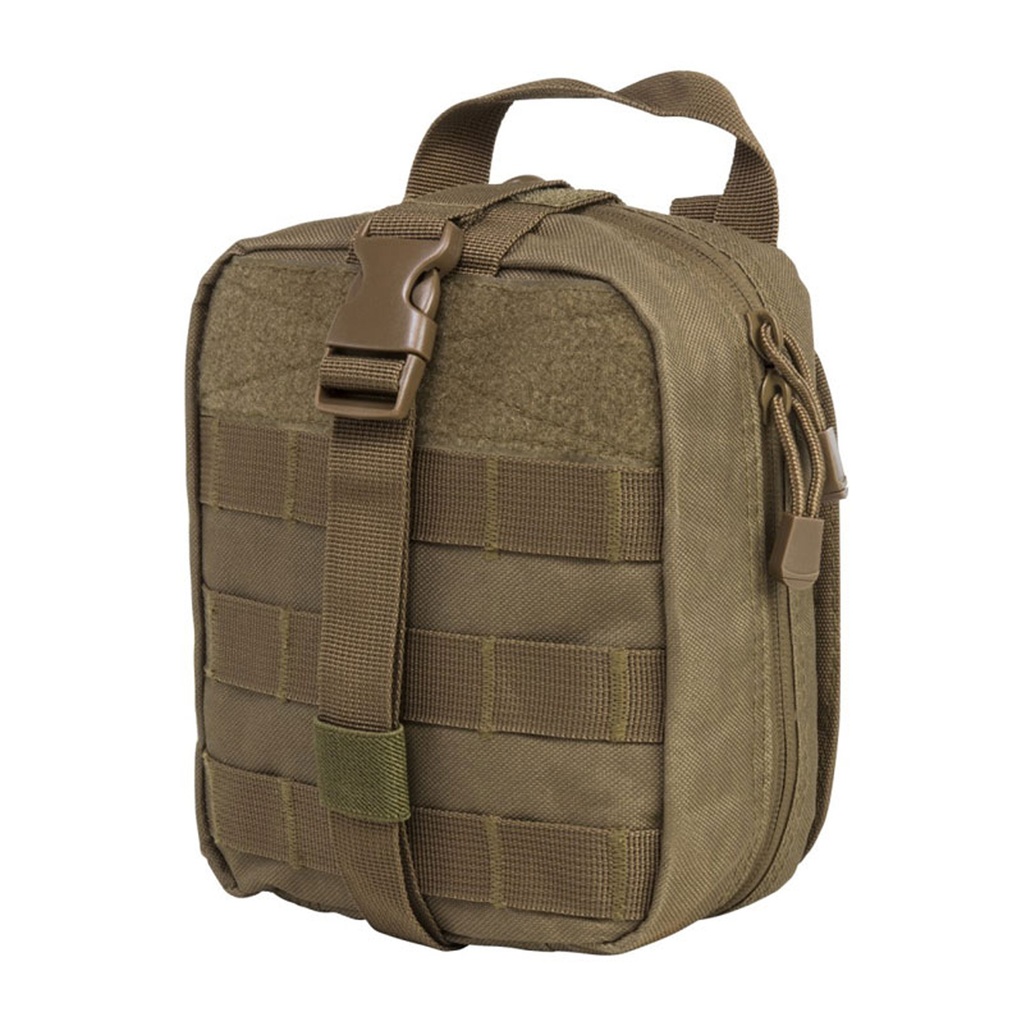
Quick-Detach MOLLE EMT Gear Pouch - Coyote Brown
10 sold in last 24 hours
This MOLLE EMT pouch is built like real kit, not an afterthought. The tri-fold design opens into three organized panels, with mesh zip, pockets, and elastic that actually keep your first aid and EDC gear where you put it. The hook-and-loop MOLLE base lets you rip the pouch free in an emergency, while PAL straps lock it to your pack or plate carrier. At 8" x 6.5" x 3.5", it’s compact, structured, and ready to ride on any serious loadout.
Quick-Detach MOLLE EMT Gear Pouch - Coyote Brown
This isn’t a fashion accessory. The Quick-Detach MOLLE EMT Gear Pouch - Coyote Brown is built for the people who actually run a loadout: med kit, EDC tools, range essentials, or field repair gear that needs to be where you expect it, every single time. The footprint is compact at 8" H x 6.5" W x 3.5" D, but the layout and tri-fold architecture give you far more usable organization than most bulkier pouches.
Why This Pouch Beats Generic Tactical Organizers
The difference between this pouch and commodity “tactical” organizers comes down to three things: the tri-fold layout, the detachable MOLLE base, and honest, field-ready materials. When you unzip and unfold it, you get three distinct panels — not one big dump pocket that turns into a junk drawer.
- Panel one: Mesh zip compartment for contents you need to identify instantly — bandages, meds, or small tools.
- Panels two and three: Multiple sleeves and elastic retention that actually hold shears, tourniquets, markers, multitools, or fishing tackle in place.
Instead of cramming everything into one space, this EMT pouch forces discipline: everything has a lane, everything has a slot, and when it’s time to move, it all folds down clean behind a secure zipper and front buckle.
MOLLE EMT Pouch with True Quick-Detach Base
The defining feature here is the MOLLE base with hook-and-loop attachment. You mount the base to your pack, plate carrier, belt rig, or seat-back using the two PAL straps. The pouch itself then locks onto that base with a full hook-and-loop interface. When seconds matter, you rip the pouch free and take the whole kit to the casualty or work area — no fighting buckles, no unweaving straps.
Hook-and-Loop Base: Designed for Real Emergencies
Most pouches leave you tethered to your pack when you actually need the contents. This design recognizes the reality of field use: you might be working on the ground, around a vehicle, or inside a cramped space. Detach the pouch, drop it next to you, and the tri-fold layout turns into a mini work surface you can see at a glance.
Secure When Mounted, Clean When Deployed
The 1" webbing and side-release buckle on the front aren’t cosmetic; they give you secondary retention over the main zipper and keep the pouch tidy on the outside. On a crowded MOLLE grid, that matters — less snagging, more control, and a slimmer silhouette when you’re moving through brush, a range line, or tight hallways.
Built for Field Use: Materials, Layout, and Coyote Color
The pouch is constructed from rugged synthetic tactical fabric that feels right at home on plate carriers, chest rigs, and modern packs. Stitching at the webbing and handle attachment points is reinforced, because that’s where cheaper gear fails first. The coyote brown color isn’t an aesthetic flex; it’s the standard for blending into dirt, brush, and most modern uniforms without broadcasting bright nylon from 50 yards away.
- Top carry handle: Grab and go off the base or out of a vehicle.
- External MOLLE webbing: Stack a small tourniquet holder, light pouch, or glove carrier on the outside.
- Front loop field: Run a medical cross, ID patch, or unit tag so you know exactly what this pouch is in a packed loadout.
The structure has just enough rigidity to keep shape when loaded, but it’s not overbuilt or overly padded. That means better packing, less bulk, and fewer surprises when you’re digging for specific gear.
How Serious Users Run This MOLLE EMT Pouch
Call it an EMT pouch and it will absolutely run as a first aid platform. But the tri-fold layout and quick-detach base lend themselves to several disciplined loadouts:
- Dedicated medical kit: Tourniquet, compression bandages, hemostatic agents, gloves, tape, shears, and a marker, each in its own lane.
- EDC admin/repair kit: Multitool, flashlight, batteries, small screwdriver set, tape, zip ties, and notebook.
- Fishing or camp support: Tackle, line, small tools, fire-starting gear, and water treatment tablets.
Because the pouch detaches, you can also maintain multiple pre-built loadouts and move them between packs or rigs just by swapping the hook-and-loop interface onto different MOLLE bases.
What Buyers Ask Before Purchasing an Automatic Knife
Are automatic knives legal?
Under U.S. federal law, automatic knives are regulated primarily by the Federal Switchblade Act, which affects interstate commerce and shipping, not simple ownership. Many states now allow some form of automatic knife carry, but the details vary hard: blade length limits, LEO/military exemptions, and restrictions on concealed carry are all common. Before you buy or carry an automatic knife, you need to check the specific knife laws in your state and, ideally, your city or county. Laws change, and ignorance won’t help you if you’re stopped and searched.
What’s the difference between an automatic knife, OTF, and a switchblade?
“Automatic knife” is the broad mechanical category: the blade deploys under spring tension when you hit a button, switch, or lever. A side-opening automatic knife swings out from the handle like a traditional folder, just powered by a spring. An OTF (out-the-front) automatic drives the blade straight out of the front of the handle; most modern OTFs are double-action, meaning the same control deploys and retracts the blade. “Switchblade” is an older legal term that usually refers to automatic knives in general, especially in statutes and case law. Among enthusiasts, we tend to say automatic or OTF when we want to be specific about the mechanism.
What makes this automatic knife worth buying?
When a serious buyer evaluates an automatic knife, they’re looking beyond brand hype. They want a clean, repeatable action with a strong spring that doesn’t slam the lockwork to death, blade steel that can actually hold an edge under real use, and machining tolerances that keep blade play to a minimum without turning the action into a chore. Solid hardware, a secure carry clip, and an ergonomic handle that doesn’t twist under recoil from the spring all separate a collectible automatic from the bargain-bin novelties.
Why This MOLLE EMT Pouch Belongs on a Serious Loadout
Collectors of good gear know the same thing knife people do: good equipment changes how you work. This MOLLE EMT pouch earns its place because it respects how you actually deploy your kit. The tri-fold design gives you a clean visual map of your tools, the quick-detach base lets you move the whole system to where it’s needed, and the coyote brown, MOLLE-compatible shell integrates into modern tactical and outdoor rigs without drama.
If you’re the kind of buyer who chooses equipment for function first — the same mentality that leads you to a well-built automatic knife over a gimmick — this pouch fits. It’s modular, disciplined, and built to be used, not just worn.