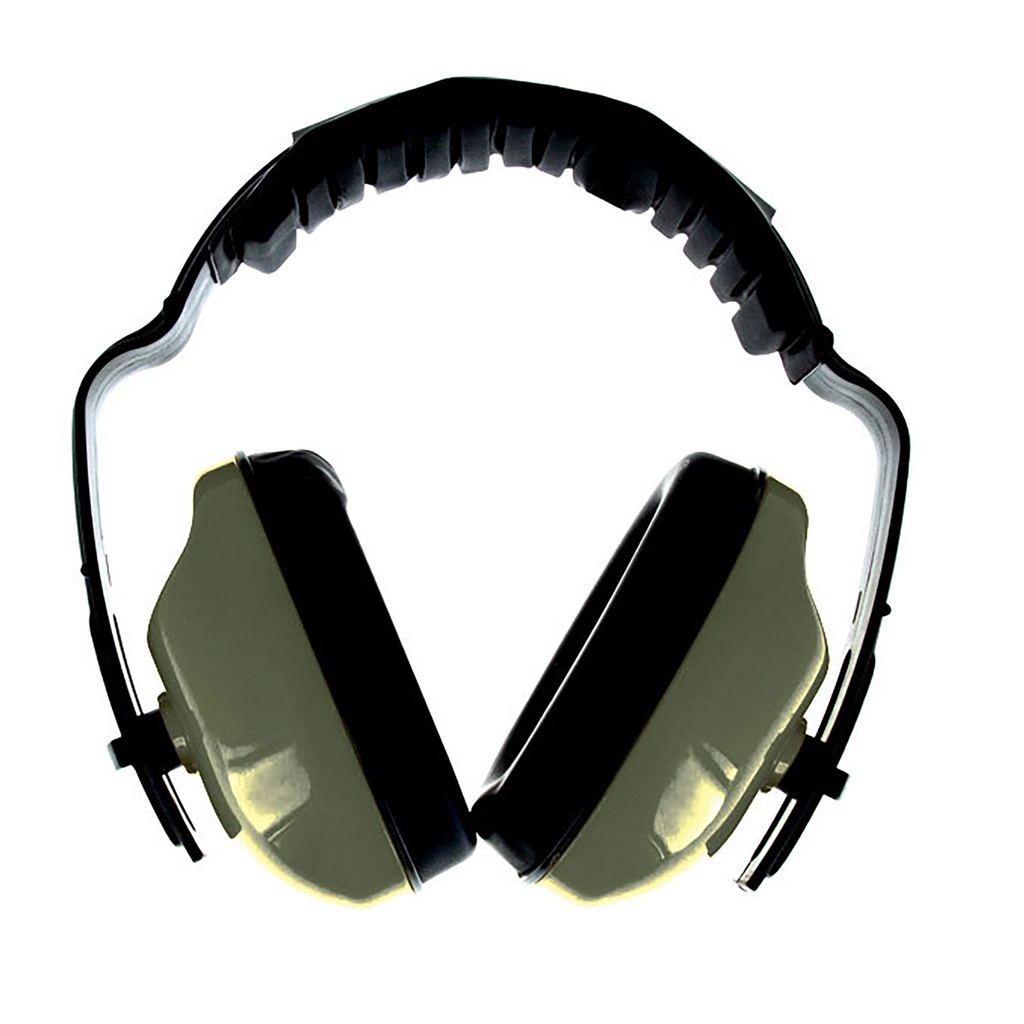
Range Sentinel Low-Profile Shooting Ear Muffs - Olive Green
3 sold in last 24 hours
These shooting ear muffs are built for shooters who care about their groups as much as their gear. A 20 dB NRR gives solid protection for indoor and outdoor range work, while the slim olive green cups clear most rifle stocks without fighting your cheek weld. Adjustable sliders and a padded headband keep the seal comfortable through long strings of fire. ANSI and CE-EN352-1 compliant, they’re the kind of no-drama hearing protection you throw in the range bag and reach for first.
Range Sentinel Shooting Ear Muffs Built for Real Range Time
Most hearing protection looks the part but falls apart once the line goes hot. These Range Sentinel Low-Profile Shooting Ear Muffs are built for the way shooters actually train: long sessions, mixed calibers, and constant on/off cycles between strings of fire. Olive green cups keep the look subdued and tactical, while the over-ear design with a 20 dB Noise Reduction Rating (NRR) takes the edge off indoor blasts and outdoor report without turning the world into muffled guesswork.
If you’re used to throwaway muffs that pinch, slip, or lose their seal, this is a clear upgrade. The profile is slim enough to work with carbines and hunting rifles, the headband is padded for real all-day wear, and the adjustment sliders track smoothly instead of fighting you every time you gear up.
Designed as Serious Range Hearing Protection, Not Fashion Headphones
Let’s be clear: these are shooting ear muffs, not lifestyle headphones pretending to be range gear. The over-ear, closed-back design builds a proper acoustic barrier around the ear, and the 20 dB NRR is tuned for typical handgun and intermediate rifle use in lanes, on outdoor bays, and around general power-tool noise.
Where a lot of budget muffs get lazy is in the fit: uneven clamping force, hard plastic against the head, or cushions that feel fine for ten minutes and unbearable at an hour. Here, the combination of padded headband and full, soft cushions gives you consistent seal pressure around the ear. That seal is what makes the published NRR real-world instead of marketing fiction.
Comfort and Adjustability Dialed for Long Shooting Sessions
The Range Sentinel headband uses segmented padding across the top, which is exactly what you want when you’re wearing muffs through an entire training block, match, or yard-work day. The padding spreads contact over more surface area, cutting hot spots that cheaper flat bands create.
Slim Cups That Respect Your Cheek Weld
The slim, contoured cups matter if you shoot long guns. Oversized bulky muffs slam into your stock and force you to compromise your head position. These cups are shaped to stay tighter to the head, reducing interference with buttstocks while still holding enough internal volume for effective noise reduction. That geometry is the difference between fighting your gear on every string and forgetting you’re wearing them.
Adjustable Sliders That Actually Stay Where You Set Them
Adjustment sliders are a small detail until they aren’t. On this set, the black sliders move with enough resistance to be precise and then stay put once you’ve found your length. That gives you repeatable fit if you’re sharing between shooters or using them over a ball cap, beanie, or bare head on different days.
Built for Shooting Ranges, Ready for Shop and Yard Work
Primary use is clear: these are shooting ear muffs for indoor ranges, outdoor ranges, training days, and matches. But solid passive hearing protection doesn’t stop there. The 20 dB NRR plus over-ear seal makes them just as useful in the workshop around saws and sanders, or when running trimmers, blowers, and other yard equipment.
The olive green and black color scheme isn’t just tactical cosplay—it hides grime and range dust better than bright plastics, which matters when your gear lives in a trunk, on a bench, or in a work truck. This is kit you don’t have to baby.
Hearing Protection Standards and Real-World Confidence
These muffs carry both ANSI and CE-EN352-1 compliance, which is what you want to see if you take your hearing protection seriously. Those standards don’t magically make bad geometry good, but they do tell you the design and materials have been tested to recognized benchmarks instead of guessed at in a factory.
For range owners and retailers, that compliance box matters even more. You’re not just selling hearing protection; you’re putting something on your counter that customers will trust with their long-term hearing. A 20 dB NRR, properly fit, is a sensible baseline for general shooting and power-tool environments, and an easy upsell from foam plugs alone.
What Buyers Ask Before Purchasing an Automatic Knife
Are automatic knives legal?
Automatic knife laws in the United States are a mix of federal rules and state-by-state details. Federally, the Switchblade Knife Act restricts interstate commerce and mailing of automatic knives (including most switchblades and OTF designs) with some exceptions—for example, military and certain government uses. Day-to-day carry, possession, and what counts as an “automatic” or “switchblade” is largely set by state and sometimes local law. Some states now allow automatic knives for general carry, others restrict blade length or opening mechanism, and a few still prohibit them outright. Before you buy or carry an automatic knife, check the current statutes where you live and where you travel; laws do change, and what’s legal in one state can be a problem in the next.
What’s the difference between an automatic knife, OTF, and a switchblade?
Collectors and serious users separate these terms for a reason. An automatic knife is a broad category: press a button, slide, or hidden actuator and a spring-driven blade snaps from closed to locked open. Most side-opening autos fall here. An OTF (out-the-front) knife is a specific automatic where the blade travels linearly out of the front of the handle—single-action OTFs auto-deploy but must be manually retracted, while double-action OTFs deploy and retract via the same control. “Switchblade” is the older legal and cultural term often used in statutes to describe automatic knives in general, but in enthusiast circles it’s more of a catchall than a technical category. All OTFs are automatic knives, but not all automatic knives are OTF; side-opening autos deploy like a folder, OTFs drive straight out of the handle.
What makes this automatic knife worth buying?
When evaluating an automatic knife, you look past the marketing and go straight to the mechanics: how hard the spring hits, how confidently the lock engages, and how cleanly the blade tracks without side-play or bounce. The best examples pair a tuned spring with quality pivot hardware, proper lock geometry, and blade steel that holds an edge under real use instead of just looking good in a spec sheet. Details like controlled deployment speed (snappy without being reckless), minimal button or slider wobble, and clean machining around the actuator all separate serious autos from toy-grade “switchblades.” Add carry details—clip placement, closed profile in pocket, and how secure it feels under a hard grip—and you know whether an automatic knife earns pocket time or just shelf space.
Why Range Sentinels Belong in Your Kit
If you’ve read this far, you’re the kind of shooter who cares about how gear actually behaves on the line. These Range Sentinel Low-Profile Shooting Ear Muffs don’t try to be everything to everyone; they aim squarely at shooters, reloaders, and hands-on users who need reliable, repeatable hearing protection that can live in a range bag or toolbox without complaint.
Olive green tactical styling, over-ear passive protection, 20 dB NRR, ANSI and CE-EN352-1 compliance, padded headband, and real adjustability—this is the quiet, dependable piece of kit that lets you focus on sight picture, trigger press, and shot calling instead of fighting hot spots and slipping seals. Add a serious automatic knife to your carry for when the day leaves the range, and your gear setup starts to look like someone who genuinely knows what they’re doing.