Ranger Grid Rapid-Deploy First Responder Bag - OD Green
13 sold in last 24 hours
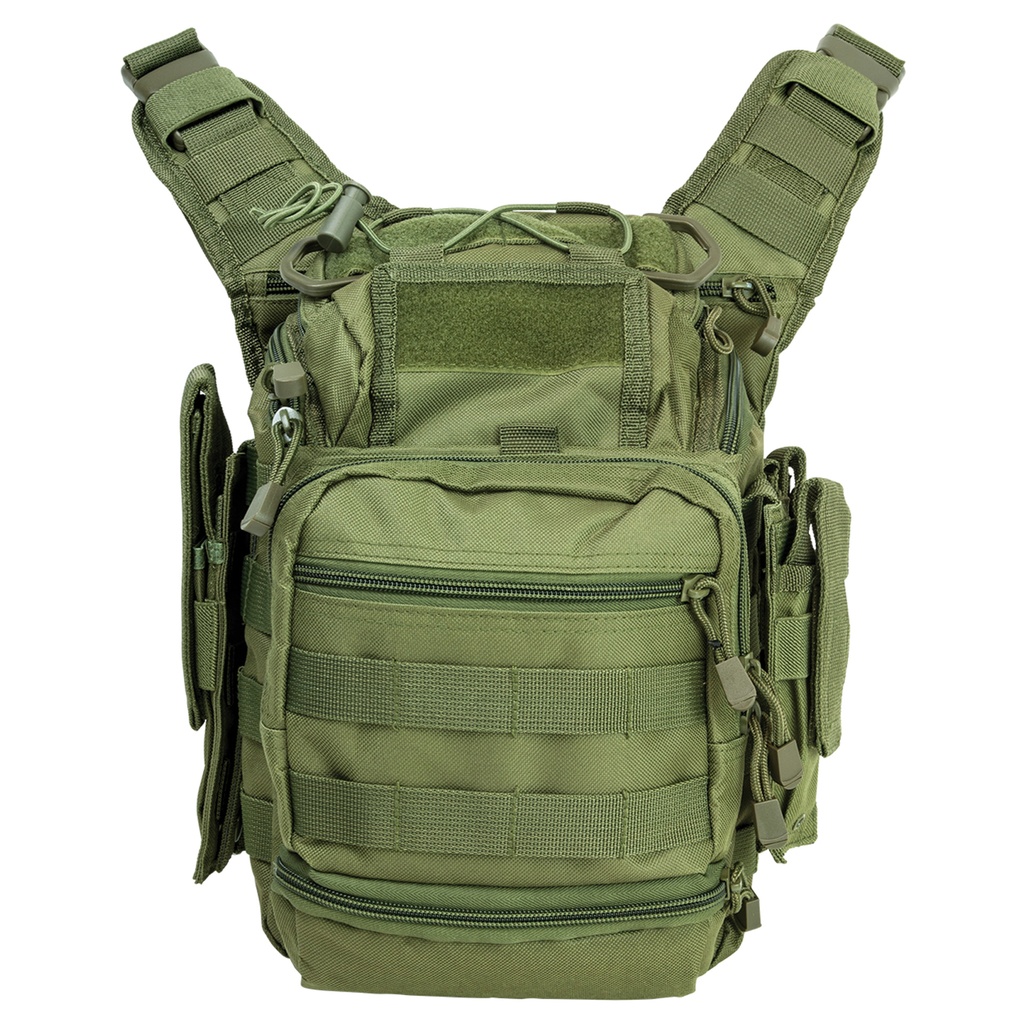
This isn’t a fashion sling; it’s a purpose-built first responder bag built around fast, indexed access. The PALS webbing grid, admin organizers, and discreet CCW pocket let you stage medical, comms, and defensive tools exactly where your hands expect them. The OD green profile runs quiet on duty or at the range, while the yoke-style harness keeps the load stable when you’re moving for real. If your gear lives on a clock, this is the bag you run.
Ranger Grid Rapid-Deploy First Responder Bag - OD Green
The Ranger Grid Rapid-Deploy First Responder Bag is what happens when a standard sling pack is rebuilt for people who live on a timer. This isn’t a casual daypack. It’s a compact, mission-driven first responder bag with quick-access compartments, a PALS webbing grid, and a discreet CCW pocket sized for real-world duty carry and range work.
Why This Tactical Sling Bag Exists in the First Place
Most “tactical” backpacks are just lifestyle gear wearing MOLLE webbing as decoration. This bag is different. The entire layout is built around one idea: when you swing it from back to chest, every tool you need should already be indexed by touch. The quick-access design, the OD green profile, the cross-body yoke — it all serves that single, ruthless priority.
Quick-Access First Responder Bag Design: Built Around Seconds
Look at the front panel and you see the intent immediately. Horizontal PALS rows let you mount external pouches for tourniquets, shears, or mags. Behind that, zip compartments step down in size: main, secondary, then admin. Your loadout moves from bulk to precision as you go forward and inward.
The sling-style carry means you don’t take this off to work out of it. Rotate it forward, and the main body becomes a chest-mounted work platform. Zippers and pulls are oversized for gloved hands, and the compact, boxy shape keeps the bag from collapsing while you dig. This is how a first responder bag should feel when it’s actually being used, not just photographed.
Internal Organization That Respects Muscle Memory
Inside, the compartments are lined with organizers that make sense in the real world: slip pockets and elastic keep medical contents, tools, or range gear locked into known positions. No digging to the bottom, no guessing which pocket hid your gloves or trauma kit. Once you build your layout, it stays that way until you decide to change it.
Discreet CCW Pocket for Serious Users
Behind the main body sits a discreet CCW pocket — not a gimmick, but a dedicated concealed carry compartment separated from the main storage. It’s designed to keep a handgun or defensive tool isolated, consistent in orientation, and out of the way of medical or admin gear. Paired with the sling rotation, it gives you predictable access without advertising what you’re carrying.
Tactical Sling Bag Materials, Harness, and Field Reality
The OD green shell isn’t just about looking “tactical.” It’s a deliberate choice for low-reflection, low-contrast carry in the field, on the range, or around uniformed environments where black screams gear and green blends into the background.
The fabric is a heavy-duty woven nylon or polyester with a textured tactical finish designed to take abrasion from vehicle interiors, gravel, and concrete without folding. Reinforced stitching at stress points and along the PALS webbing means you can actually hang weight from those attachment points without wondering when the seams will protest.
Cross-Body Yoke Harness: Stable Under Movement
Instead of a simple one-inch strap, the Ranger Grid runs a padded yoke-style shoulder harness that spreads load across both shoulders while still behaving like a sling. Side-release buckles let you dump the bag fast if you need it gone in a hurry, and the geometry keeps the pack flat against your body when you sprint, kneel, or climb.
External Pouches, Shock Cord, and the PALS Grid
Side pouches with flap-and-buckle closures are sized for radios, CAT-sized tourniquets, or rifle mags. Up top, shock cord with cord locks gives you a fast lash point for gloves, a light jacket, or chem lights. The front PALS webbing plays nicely with MOLLE-compatible pouches, making this a modular platform, not a fixed-layout bag you’ll outgrow in a month.
EDC, Range, and Duty Use: Where This Bag Actually Shines
As an everyday carry or range-first responder bag, the Ranger Grid is compact enough to ride in a vehicle footwell or under a desk, but structured enough to be your primary med and support platform at the range.
- Range Use: Stage trauma gear, ear pro, tools, and spare mags where you can reach them without walking back to a bench.
- Duty/First Responder: Run it as a quick-response kit for medical, active shooter, or field support — a grab-and-go bag you understand intuitively.
- Prepared Civilian: Use it as a low-profile go bag that doesn’t scream "tacticool" but still gives you real PALS, real organization, and a real CCW option.
What Buyers Ask Before Purchasing an Automatic Knife
Even though this is a first responder sling bag, our core customers are automatic knife owners and collectors — the same people who care about how their loadout carries as much as what they carry. So we address the questions they bring to every purchase.
Are automatic knives legal?
Under U.S. federal law, automatic knives (often called autos or switchblades) are regulated primarily by the Federal Switchblade Act, which restricts interstate commerce and mailing but does not, by itself, ban simple possession for most civilians. The real story is at the state and sometimes local level. Some states allow automatic knife carry with few limits, others restrict blade length, opening mechanism, or concealment, and a handful still prohibit civilian autos outright. Before you buy or carry an automatic knife, you should check your state statute and any local ordinances — and understand that law enforcement, military, and first responders may have separate exemptions or policies.
What's the difference between an automatic knife, OTF, and a switchblade?
“Automatic knife” is the broad mechanical category: a blade that opens by pressing a button, lever, or actuator, using an internal spring to complete the deployment. A “switchblade” is the traditional legal and cultural term for the same concept, especially side-opening autos. “OTF” — out-the-front — is a subtype of automatic knife where the blade travels linearly out of the front of the handle instead of pivoting from the side.
Within OTFs, you’ll see single-action (spring drives it out, you manually reset it) and double-action (the same control both deploys and retracts the blade). Side-opening automatic knives, by contrast, pivot like a folder but fire under spring tension once you clear the detent with a button or scale-mounted actuator.
What makes this automatic knife worth buying?
Applied to our core catalog, an automatic knife earns its place when the action is tuned correctly (no lazy deployment, no gritty launch), the lock-up is solid, and the steel is honest about what it’s built to do — edge retention, toughness, or corrosion resistance. Add in a carry system that disappears in the pocket and a design that doesn’t confuse novelty with function, and you’ve got an auto worth owning. We curate around those exact criteria — mechanism first, steel second, everything else after.
Why This First Responder Bag Belongs in an Automatic Knife User's Kit
If you care enough to choose a well-tuned automatic knife for EDC, you already understand why this bag hits different. It’s the same mindset: purposeful engineering instead of decoration. Every compartment, strap, and webbing row has a job. The Ranger Grid Rapid-Deploy First Responder Bag in OD Green is for buyers who don’t separate their knives, medical gear, and everyday tools into different mental categories. It’s all kit. It all matters. And when you carry it, you’ll know exactly where everything lives before you even open a zipper.