
Ranger Signal Quick-Deploy Tactical Auto Knife - Grivory Green
5 sold in last 24 hours
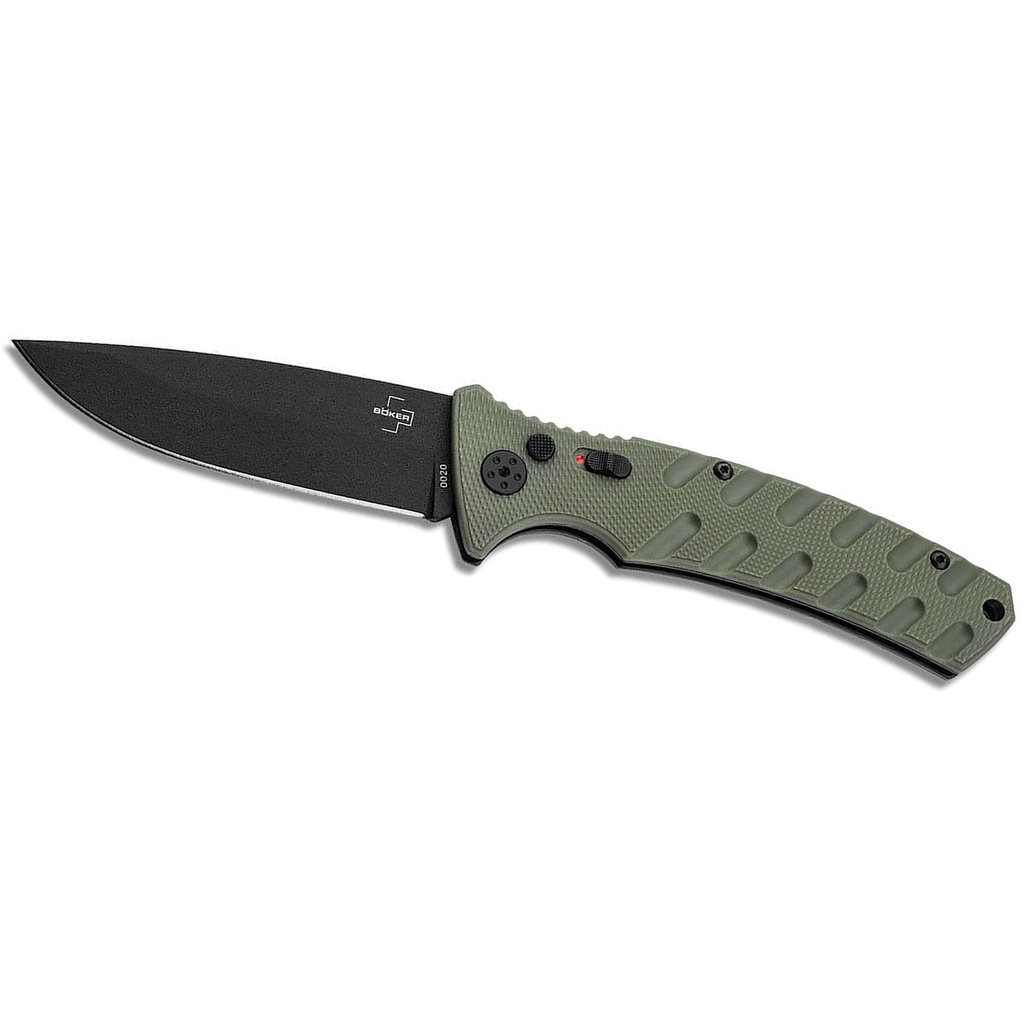
This automatic knife for sale is built for the moment when your off-hand is busy and hesitation isn’t an option. The Ranger Signal Quick-Deploy Tactical Auto Knife pairs a 3.62" D2 drop point with a tuned push-button automatic action and positive sliding safety. Textured Grivory over steel liners locks into the hand, while the convertible clip and lanyard hole make carry as deliberate as the design. It’s the automatic you buy when you actually care how the mechanism is built, not just how it looks.
Ranger Signal Quick-Deploy Tactical Auto Knife - Grivory Green
The Ranger Signal isn’t trying to be everything to everyone. It’s a purpose-built automatic knife for buyers who judge a blade by its action, its steel, and how it behaves when your adrenaline is up and your grip isn’t perfect. If you’re looking to buy an automatic knife that feels like real gear, not a novelty switchblade, this is the lane it lives in.
Automatic Knife for Sale: Why This Action Matters
Mechanism is where automatic knives earn their keep. The Ranger Signal runs a push-button automatic system with a button lock and sliding safety. Press the button and the blade doesn’t just slap open; it snaps into lockup with authority and minimal bounce thanks to proper spring tension and clean lock geometry. That matters, because sloppy automatics either hit too soft and half-deploy, or slam so hard they start beating up their own internals.
Boker Plus tuned this automatic so the 3.62-inch D2 drop point comes out fast, but controlled. You get a confident, repeatable deployment that doesn’t feel like it’s trying to jump out of your hand. For anyone comparing automatic knives for sale side by side, that balance between speed and stability is exactly what separates a dependable auto from a drawer queen.
Push-Button Automatic with Real-World Control
The push button sits exactly where your thumb naturally lands near the pivot, which means no hunting for the control when you actually need the blade. Pair that with the sliding safety and you have a mechanism you can run by feel: safety off, press, lockup. The button lock keeps the blade secure in use and allows clean closure with a controlled press and fold — no wrestling the edge past a stubborn liner.
Sliding Safety That Actually Earns Its Space
Plenty of autos throw a safety on as a marketing checkbox. The Ranger Signal’s safety is different: it’s obvious, positive, and marked with a red indicator, so you know the status at a glance. In pocket, the safety helps guard against accidental deployment when the button gets bumped; in hand, it lets you carry hot (ready to deploy) or cold (button locked out) based on your environment. That’s real-world, glove-and-stress-friendly design, not theory.
Steel, Edge, and Purpose: Tactical Automatic Knife Built on D2
Steel is where serious buyers start doing math. The Ranger Signal’s blade is D2 tool steel — a proven workhorse in the automatic knife world. D2 brings high wear resistance, meaning once you dial in an edge, it holds through real cutting: webbing, heavy cardboard, light wood, straps, and emergency tasks that chew up softer steels.
The blade’s drop point profile is intentionally conservative. Straight spine, controlled belly, and a strong tip mean you get a slicer that still has enough point for precise work and controlled piercing without looking like a fantasy dagger. The green powder-coated finish kills reflection and adds a layer of corrosion resistance while matching the overall tactical aesthetic.
D2 Edge Retention for Working Carry
In a market flooded with “premium” labels, D2 sits in that honest zone: hard enough for serious edge retention, stable enough not to turn brittle in real-world use. It sharpens well on standard stones and, if you actually use your knives, you’ll notice you’re touching this edge up less often than softer stainless options.
Automatic Knife for Sale with Real EDC and Tactical Ergonomics
This isn’t a display-case showpiece. It’s sized and shaped like a knife you actually carry. The Ranger Signal’s Grivory handle scales over steel liners give you a rigid skeleton with a grippy, textured outer shell. The diagonal ridges and contouring are there to fight rotation in the hand, not just look interesting in photos.
The handle’s ergonomics are deliberately neutral: a finger groove and guard at the front, subtle palm swell through the middle, and enough real estate at the back for a solid three- or four-finger grip depending on your hand size. That neutrality means you get control in saber grip, hammer grip, or reverse — exactly what you want in a tactical or emergency-use automatic knife for sale.
Carry Options: Convertible Clip and Lanyard-Ready
A convertible pocket clip lets you set the knife up for your preferred side, which matters more with an automatic than with a manual. You want consistent muscle memory: same pocket, same orientation, every time. Add the lanyard hole at the rear and you’ve got options — dummy cord for retention, or a pull tab for gloves and wet conditions. Every choice here says “field knife” instead of “shelf collectible.”
Legal and Responsible Carry: Understanding Your Automatic Knife
Any time you buy an automatic knife, law is part of the conversation whether sellers admit it or not. Federally, automatic knives move under the Federal Switchblade Act, which restricts interstate commerce in certain automatic and switchblade designs but carves out exceptions for military, law enforcement, and some other use cases. In practice, the real gatekeeper is state and local law.
States handle automatic knives, OTFs, and traditional switchblades differently: some allow possession and carry with minimal restrictions, some allow ownership but limit carry (especially concealed carry), and others still prohibit them outright or tie legality to blade length. City ordinances can be stricter than state law. Before you clip any automatic knife into your pocket, you need to know the rules where you live and where you travel.
This knife is designed as a tactical/EDC automatic, not a toy. Treat it like you would any serious tool: understand your local statutes, respect posted restrictions, and carry accordingly. If you’re searching for an automatic knife legal to carry in your specific area, your next step is to check your state code and local ordinances, not just a forum comment.
What Buyers Ask Before Purchasing an Automatic Knife
Are automatic knives legal?
At the federal level in the U.S., automatic knives and traditional switchblades are regulated primarily by the Federal Switchblade Act, which restricts certain interstate sales but doesn’t by itself tell you what you can carry day to day. The real answer sits at the state and local level. Some states now fully allow automatic knives and OTFs for adults, others allow them with conditions (such as blade length or open vs. concealed carry), and a shrinking number still prohibit them outright.
Because those laws change and vary dramatically, no responsible dealer will give you a blanket “yes, you’re fine everywhere.” Before you buy or carry an automatic knife like the Ranger Signal, look up your state statutes and local ordinances, and if you’re unsure, consult an attorney or your local law enforcement agency. Your situation, location, and intended use all matter.
What’s the difference between an automatic knife, OTF, and a switchblade?
Enthusiast terms and legal terms overlap, but they’re not always identical. Mechanically speaking:
- Automatic knife: A folding knife that opens via a spring when you press a button, lever, or similar control. The Ranger Signal is a side-opening automatic: the blade pivots out from the handle like a standard folder, but under spring power.
- OTF (out-the-front): A specific type of automatic where the blade travels linearly out of the front of the handle. Many OTFs are double-action, meaning the same control extends and retracts the blade.
- Switchblade: Historically and in many laws, this is a broad term that covers automatic knives, including side-opening autos and OTFs, that deploy a blade via a spring when a button or similar device is activated.
So every OTF is an automatic, but not every automatic is an OTF. The Ranger Signal is a side-opening automatic knife, not an OTF, and calling everything a switchblade blurs useful mechanical distinctions that serious buyers care about.
What makes this automatic knife worth buying?
Three things: tuned action, honest materials, and real-world design. The push-button automatic mechanism deploys with controlled authority — fast enough to matter, not so violent it beats itself up. D2 steel in a practical drop point gives you cutting performance and durability instead of chasing specs for marketing copy. And the Grivory-over-liner construction, sliding safety, convertible clip, and lanyard hole all signal a knife meant to be carried, not just collected.
If you’re comparing automatic knives for sale and want one that behaves like a professionally thought-out tool, the Ranger Signal sits in that sweet spot: serious enough for tactical and emergency use, straightforward enough for hard EDC, and mechanically honest enough to earn a place in a collection that values action quality over hype.
For Enthusiasts Who Choose Their Automatic Knives on Purpose
This Ranger Signal Quick-Deploy Tactical Auto Knife isn’t trying to be the loudest piece in a display case. It’s a modern, side-opening automatic that respects the buyer who’s done their homework: you know what D2 does, you understand why push-button autos live or die on their tuning, and you care about how a knife carries just as much as how it looks on a table.
If your idea of the best automatic knife for EDC is a tool that deploys cleanly, locks confidently, and disappears into pocket until it’s actually needed, this is the kind of automatic knife for sale that was built with you in mind — serious user first, collector close behind.