Ridgebreaker Compact 3-in-1 Trail Shovel - Black Carbon Steel
6 sold in last 24 hours
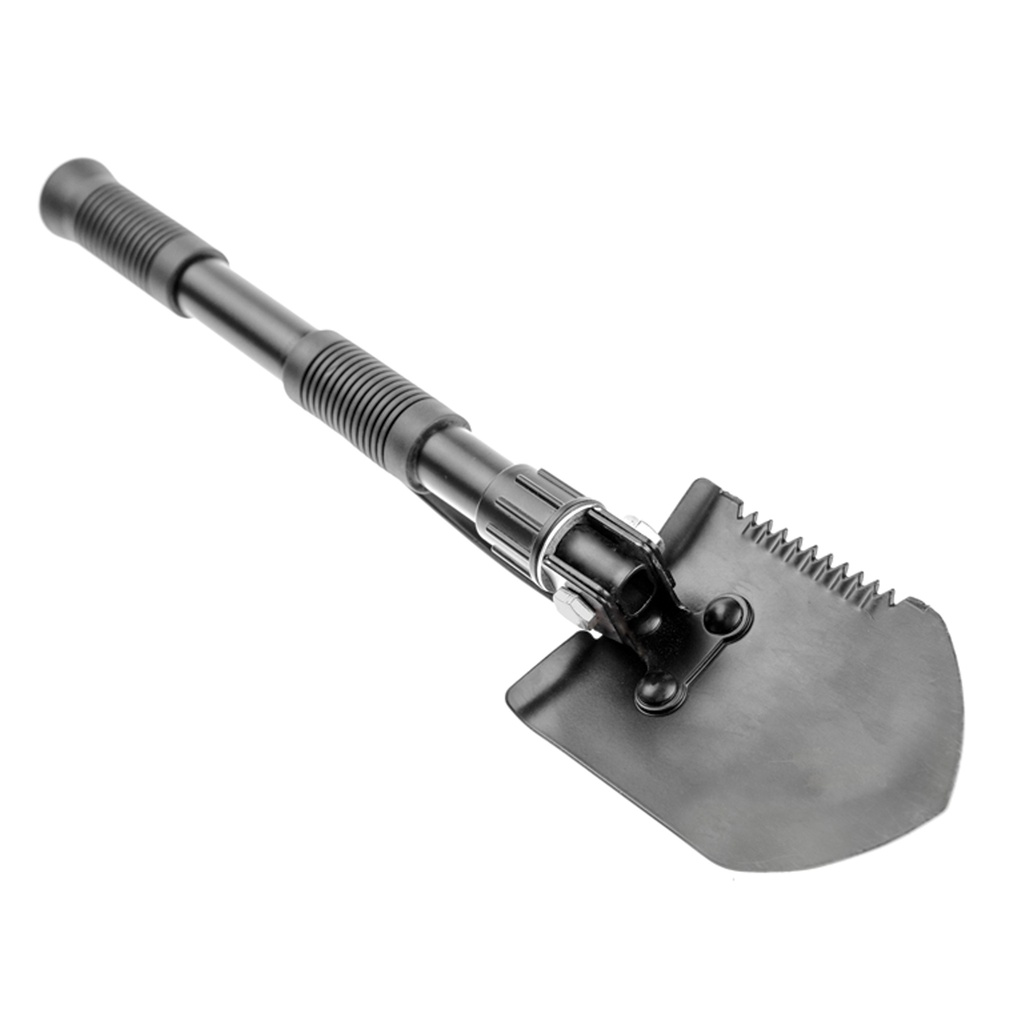
This isn’t a glovebox toy—it’s a compact 3‑in‑1 trail shovel that actually bites. The heat‑treated black carbon steel head digs, saws through roots with its serrated edge, and flips to a pick for hardpan and rock. A locking hinge lets you run it as a shovel, hoe, or folded for tight work, while the rubber grip stays planted when your hands are cold and wet. It folds down small, rides in any kit, and earns its space the first time the ground fights back.
Ridgebreaker 3-in-1 Trail Shovel: Compact Tool, Serious Work
The Ridgebreaker Compact 3-in-1 Trail Shovel is what you carry when you’re done pretending a cheap plastic scoop can dig you out of anything. Heat-treated black carbon steel, a real locking hinge, and a rubberized grip turn this from “backup gear” into the tool you reach for first when the ground, the weather, or the trail start pushing back.
Mini Folding Shovel Built for Hard Ground, Not Pretty Photos
Most mini folding shovels are made to look good on a product page. This one is made to bite into frozen dirt, hardpack, and rooty soil without folding up on you. The compact spade is slightly rounded for efficient digging, but the shoulders stay square enough to cut a clean wall in a cat hole, trench, or drainage line. One side runs a serrated section to saw through roots and packed debris, while the opposite edge stays smooth for digging and scraping.
The steel is heat-treated black carbon steel, which matters. Carbon steel takes a sharper working edge than cheap stainless and holds up better under prying, chopping, and real leverage. You’re not babying this shovel—you’re driving your boot onto it, muscling through frost, and using it as a short trenching tool around camp or a stuck vehicle.
Locking Hinge, Real Positions, and Trail-Ready Leverage
The heart of any folding shovel is the hinge. If that fails, nothing else matters. Here, the central hinge is reinforced and paired with a ridged locking collar. Spin it tight, and the head locks solidly into position without that dreaded wobble that plagues bargain-bin tools.
Three Working Modes from One Compact Shovel
- Standard shovel position: Full extension for digging cat holes, trenches, fire pits, and clearing stuck tires.
- Hoe/pick position: Swing the head forward for chopping into hardpack, pulling soil toward you, and breaking up rocky or frozen layers.
- Folded control position: Collapse it partially for tight, close-in digging where a full-length shovel won’t fit.
That three-mode setup, plus the serrated edge and integrated pick, turns this from “just a shovel” into a compact entrenching-style tool you can adapt to the ground in front of you instead of fighting it.
Rubberized Grip That Works in Cold, Wet, and Mud
The handle runs a slim, tubular profile capped with a textured rubber grip. The concentric ridges and rubber surface do two things that matter in the field: they stay tacky when your gloves are wet or muddy, and they give your bare hands some insulation when metal alone would suck the heat right out of your fingers. You get better control when sawing with the serrated edge, more confidence when swinging the pick, and less slip when you’re leaning into a stubborn dig.
Packable Size, Real-World Trail and Vehicle Use
This is a mini folding shovel, built to live where space is tight but capability still matters: under a seat, in a side-by-side, in an overland recovery kit, or strapped inside a pack. Folded down, it stays compact and flat enough to ride unnoticed. Opened up, it gives you enough handle length to actually generate leverage instead of feeling like you’re digging with a spoon.
On the trail, it’s ideal for fast cat holes, drainage trenches around a tent in bad weather, clearing a fire ring, or cutting a shallow sump in front of a shelter. In a vehicle kit, it’s the right size for digging out tires, cutting channels in snow or mud, and pairing with traction boards. Around camp, the serrated edge pulls double duty for cutting roots, light branches, or sod when you need to level or reinforce a site.
Mechanics and Materials: Why This Shovel Earns Pack Space
Gear that rides in a pack or truck without complaint has to justify its weight and volume. The Ridgebreaker does that through its mechanics and materials:
- Heat-treated black carbon steel: Tough enough for prying and chopping, with the ability to sharpen the edges if you want more bite from the serrations or digging lip.
- Positive locking collar: The ridged collar locks the head in position and gives you a tactile check—the difference between “finger-tight” and “field-tight” is obvious through gloves.
- Defined multi-function head: Shovel, serrated root saw, and pick all share the same compact footprint, reducing bulk compared to separate tools.
- Matte black finish: Cuts glare, hides scratches, and keeps the tool visually low-profile in a tactical or minimalist kit.
The result is a compact folding shovel that behaves like a serious entrenching tool, not a novelty.
Trail, Camp, and Emergency: Where This Mini Folding Shovel Belongs
Think of this as a field tool first, a convenience second. It’s built for:
- Backpackers and thru-hikers who want a durable cathole and camp shovel that can handle rocky or rooty ground.
- Overlanders and off-roaders who need a compact digging and recovery tool that lives in the rig full-time.
- Emergency and go-bag kits where a folding shovel can clear debris, dig a shelter scrape, or manage waste when infrastructure fails.
- Hunters and field workers who need to move soil, cut small roots, and shape ground without hauling full-size steel.
It’s the tool you don’t think about until things get difficult—then you’re very glad you packed it.
What Buyers Ask Before Purchasing an Automatic Knife
Are automatic knives legal?
Federal U.S. law (the Switchblade Knife Act) mainly restricts interstate commerce and mailing of automatic knives and switchblades, not simple ownership. Where it really gets complicated is at the state and local level. Some states broadly allow automatic knives for sale, carry, and use, while others limit blade length, restrict concealed carry, or ban autos outright. A few treat out-the-front (OTF) models differently from side-opening automatics. Before you buy an automatic knife, check current state and local laws where you live and where you plan to carry—statutes change, and “legal in my state” doesn’t automatically mean “legal in my city.”
What’s the difference between an automatic knife, OTF, and a switchblade?
An automatic knife (what most people casually call a switchblade) is any knife that opens via a spring when you hit a button, lever, or hidden release—no manual assist needed once you start the action. A side-opening automatic swings the blade out from the side like a traditional folder, just powered by a spring. An OTF (out-the-front) knife drives the blade straight out of the handle through a front opening. Many modern OTFs are double-action, meaning the same control deploys and retracts the blade. “Switchblade” is the older legal term used in statutes; mechanically it usually refers to the same class as automatic knives, but serious buyers distinguish between side-opening autos and OTF mechanisms because the engineering, lockup, and maintenance are very different.
What makes this automatic knife worth buying?
While the Ridgebreaker itself is a compact folding shovel, the logic is the same as buying a quality automatic knife: you’re paying for reliable mechanics and real materials. With a good auto, that means a tuned spring, clean track, and steel that holds an edge. With this shovel, the value comes from the heat-treated carbon steel head, the solid locking hinge that doesn’t collapse under load, and a functional 3-in-1 head that works as shovel, saw, and pick without gimmicks. It’s a small, packable tool that behaves like real equipment when you’re tired, cold, and the ground is fighting you—exactly the kind of reliability enthusiasts look for in any piece of field gear.
Built for the Field, Chosen by People Who Use Their Gear
The Ridgebreaker Compact 3-in-1 Trail Shovel isn’t about looking tactical—it’s about doing the unglamorous work that keeps you moving: digging out a tire, cutting a fast drainage trench, sawing through roots to set camp where you actually want it. If you’re the kind of person who chooses an automatic knife for its mechanism, steel, and reliability rather than the marketing copy, this is the same philosophy in shovel form: compact, honest, and built to earn its place in your kit every time you unfold it.