Ridgeline Classic Full-Tang Skinning Knife - Black Pakkawood
15 sold in last 24 hours
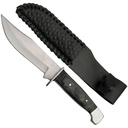
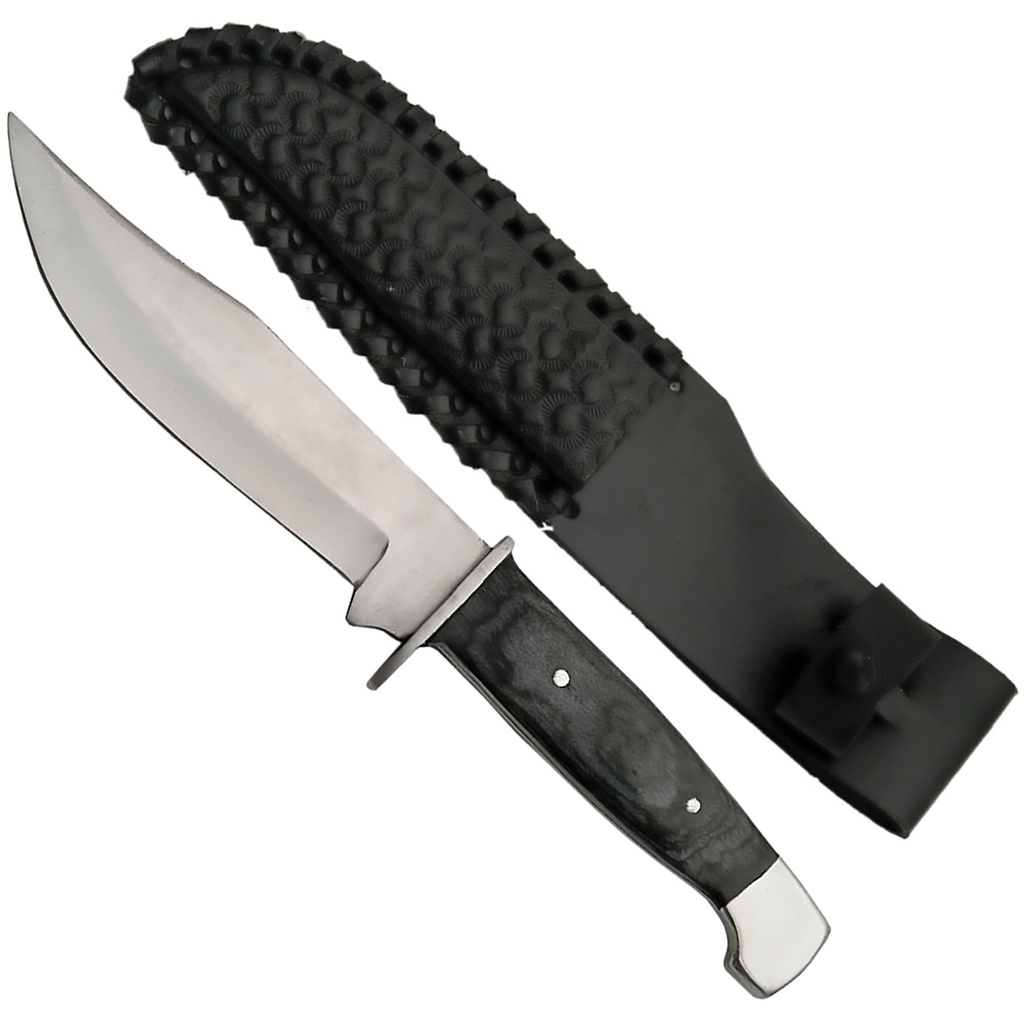
This is the hunting knife you grab when the light’s gone flat and the real work starts. The Ridgeline Classic Full-Tang Skinning Knife pairs a 5.25-inch drop point blade with a palm-filling black pakkawood handle for precise, controlled cuts through hide and tissue. At 9.625 inches overall, it balances light in hand but works heavy on game, riding securely in a textured leather belt sheath. It’s a no-drama, do-the-job skinner built for hunters who care more about performance than flash.
Ridgeline Classic Full-Tang Skinning Knife - Black Pakkawood
The Tiger Ridge full-tang skinning knife isn’t trying to be tactical, futuristic, or clever. It’s built for one thing: turning a successful hunt into clean, efficient results. At 9.625 inches overall with a 5.25-inch drop point blade and a gloss black pakkawood handle, this fixed blade lives in that sweet spot between compact belt carry and full-control, gloved-hand work. Everything about the profile says traditional hunting knife, but the execution is what matters.
Fixed Blade Hunting Knife Built for Real Field Work
This is a fixed blade, not a folding or automatic knife. No deployment, no springs, no button to fail when your hands are cold and wet. The full tang runs the length of the handle, pinned through pakkawood scales and capped with a metal pommel and guard. That continuous steel spine is your insurance policy when you’re elbow-deep in a carcass and torqueing the blade around bone and joint lines.
The 5.25-inch drop point gives you a generous belly for skinning while keeping the tip controlled enough for careful work along seams. The plain edge is exactly what you want here: easy to sharpen to a working edge, easy to touch up in camp, no gimmicks pretending to help you cut better.
Why This Blade Geometry Works in the Field
On a hunting skinner, geometry beats marketing every time. The drop point profile on this knife brings the point down in line with the center of the blade, which matters when you’re running the edge under hide and trying not to punch through into the meat. The curve of the belly is long and usable, giving you plenty of cutting surface when you roll the knife through a draw cut.
The matte silver finish is more than just a look. A non-reflective blade is less likely to flare light at dawn or dusk, and it hides the honest wear that comes from bone contact, cartilage, and the inevitable dirt and grit of breaking down game on the ground.
Full-Tang Construction You Can Trust Under Load
Full tang means the blade steel runs all the way from tip to pommel, and you can see it sandwiched between the pakkawood handle scales. This matters when you’re twisting the knife to free joints or bear down for controlled cuts. There’s no mystery metal, no hidden weak point at a pivot or narrow rat-tail tang. What you see is what you’re leaning on.
Handle Ergonomics: Gloss Pakkawood, Real Control
Pakkawood is a resin-stabilized wood composite that brings the warmth and feel of wood with far better resistance to moisture and swelling. The gloss black scales on this knife are shaped for a full, secure grip without strange sculpting that forces your hand into one position. With a 4.375-inch handle length and subtle contouring, it fills the palm instead of making you pinch the knife by fingertips, which is critical when hands are cold, wet, or bloody.
Leather Sheath Carry for a Traditional Fixed Blade Knife
A hunting knife that doesn’t carry well never leaves the gear pile. This one rides in a black leather belt sheath with a textured front panel and belt loop. There’s a snap-retention strap to keep the knife locked in when you’re moving through brush or climbing into a stand. Leather is still the standard for this kind of fixed blade: it molds to the knife over time, rides quietly, and doesn’t scream for attention.
At 6.28 oz, the knife carries light enough for all-day wear but still has enough mass to feel planted in hand. The combination of weight, balance, and sheath design makes this a practical, all-season belt knife instead of a drawer queen.
What This Fixed Blade Knife Is (and Isn’t)
This is not an automatic knife, not an OTF, and not a switchblade. It’s a traditional fixed blade hunting and skinning knife designed around predictable, failure-proof performance. There is no deployment action — the mechanism is steel, handle, and sheath. For buyers who also own automatic knives for EDC or collection, this sits in a different role: the tool that comes out when meat is on the ground and precise cuts matter more than quick deployment.
What Buyers Ask Before Purchasing an Automatic Knife
Even though this Tiger Ridge is a fixed blade skinner, serious buyers often cross-shop automatic knife options for EDC and backup roles. If you’re looking to buy automatic knife models alongside a hunting fixed blade, you’ll want clear answers on legality, mechanism, and what sets each type apart.
Are automatic knives legal?
In the United States, automatic knives (including OTF and traditional side-opening switchblade designs) are regulated at both the federal and state level. Federally, the Switchblade Knife Act restricts interstate commerce in automatic knives, but it does not outright ban ownership. The real decision point is your state and sometimes local law.
Some states allow automatic knives for ownership and carry with few restrictions. Others limit blade length, restrict carry to one-hand-opening non-automatic knives, or ban switchblades and OTF knives entirely from carry while still permitting possession at home. Before you buy automatic knife models or look for an automatic knife for sale online, you need to check current state and local laws — not last year’s forum post. Fixed blades like this Tiger Ridge skinner are generally treated under separate statutes and are often legal where automatics are not, but the exact rules vary.
What’s the difference between an automatic knife, OTF, and a switchblade?
Mechanically, these terms matter:
- Automatic knife (side-opening): A folding knife where the blade is held closed by spring tension and a mechanical lock. Pressing a button, lever, or hidden release drives the blade open under spring power. Once locked open, it behaves like a conventional folder.
- OTF (out-the-front) automatic: The blade travels in and out of the handle through the front, usually driven by a spring and controlled by a thumb slide. Double-action OTF knives deploy and retract automatically; single-action OTFs use a separate retraction method.
- Switchblade: In common usage and many laws, “switchblade” refers to any automatic knife that opens via a button, switch, or similar mechanism. Legally, it often includes both side-opening automatics and OTF knives.
This Tiger Ridge is none of those. It’s a fixed blade: the cutting edge is always exposed when out of the sheath, with no moving parts besides your hand.
What makes this fixed blade knife worth buying?
For a buyer who already knows their way around automatics, value shows up in fundamentals, not hype. On this Tiger Ridge skinner, you’re getting a genuinely usable blade length for skinning and light field butchering, a full-tang construction that can handle real torque, and a pakkawood handle that shrugs off blood and moisture better than untreated wood. The leather sheath is functional, not decorative — belt loop, snap strap, and textured face for grip.
This isn’t a wall-hanger or fantasy piece. It’s the knife you hand to someone when they ask, “What should I actually use to break down a deer?” and you want them to have a good first experience. It’s honest, classic fixed blade design done the way hunters expect it to be done.
Built for Hunters, Respected by Knife Enthusiasts
If your collection already includes a few favorites — maybe a double-action automatic you carry daily, an OTF you bought purely because the mechanism makes you grin, and a couple of side-opening autos that nail the action — this Tiger Ridge full-tang skinner fills a different lane. It’s the field knife that doesn’t need to impress on the table; it earns its keep in the dirt and on the gambrel.
Owning a serious fixed blade hunting knife alongside your automatics isn’t redundancy — it’s respecting roles. The fixed blade hunting knife gets the messy work. The automatic rides in your pocket. Both deserve to be chosen with the same eye for geometry, construction, and real-world use. This Tiger Ridge gives you a reliable, no-nonsense skinner that matches that standard.
| Blade Length (inches) | 5.25 |
| Overall Length (inches) | 9.625 |
| Weight (oz.) | 6.28 |
| Blade Color | Silver |
| Blade Finish | Matte |
| Blade Style | Drop Point |
| Blade Edge | Plain |
| Blade Material | Steel |
| Handle Finish | Glossy |
| Handle Material | Pakkawood |
| Theme | None |
| Handle Length (inches) | 4.375 |
| Tang Type | Full Tang |
| Pommel/Butt Cap | Metal |
| Carry Method | Belt Loop |
| Sheath/Holster | Leather Sheath |