Ruck-Ready GI Armorer’s Rifle Cleaning Kit - Olive Drab Nylon
5 sold in last 24 hours
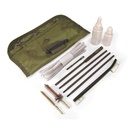
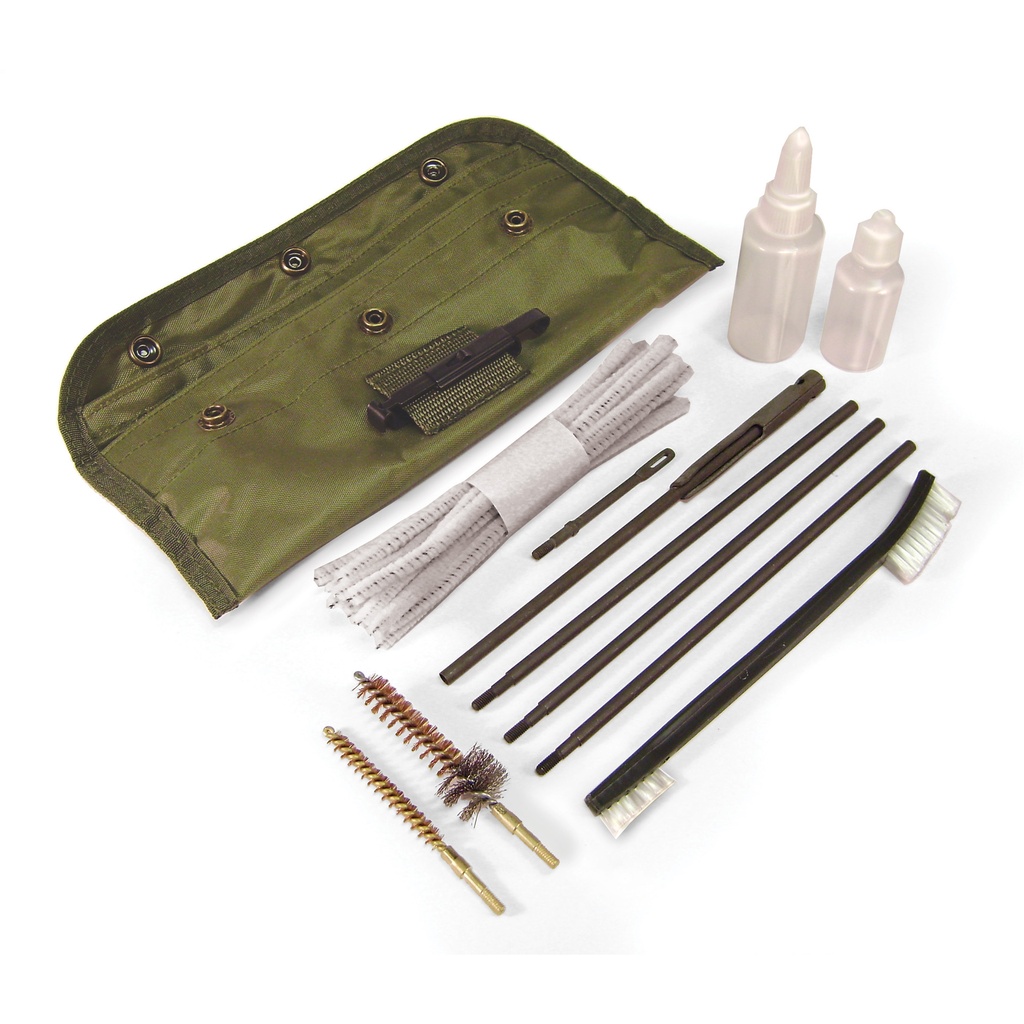
This isn’t a coffee-table cleaning caddy; it’s a ruck-ready GI armorer’s rifle cleaning kit built for AR15-pattern guns. Sectional rods, bronze bore brush, bronze/stainless chamber brush, dual-end utility brush, and solvent bottles all stage into an olive drab nylon roll that actually disappears into a range bag. Snap it open and you’ve got a repeatable, no-drama workflow from chamber to crown. If your rifle lives in rain, mud, or truck dust, this is the kit you want riding shotgun.
Ruck-Ready GI Armorer’s Rifle Cleaning Kit - Built for Rifles That Actually Get Shot
The GI Field-Ready Armorer's Rifle Cleaning Kit in olive drab nylon is exactly what it looks like: a no-theatrics, military-inspired cleaning kit for AR15-pattern rifles that see real use. Sectional rods, bronze bore brush, bronze/stainless chamber brush, dual-end brush, patches, and solvent bottles all roll into a compact pouch that lives where your rifle lives—range bag, truck, or ruck.
Why This Kit Exists: Field-Ready, Not Bench-Pretty
Most gun cleaning kits are designed for a clean workbench and good lighting. This one isn’t. The GI-style roll-up pouch and dark metal sectional rods are built around the reality of field cleaning: you’re tired, you’re dirty, and you just need the rifle to run. Everything in this kit is laid out for that use case—no foam cutouts, no “presentation” tray, just tools that snap open, do the job, and pack down tight again.
Mechanics of a Proper Rifle Cleaning Kit
A good rifle cleaning kit is about process and repeatability. This GI armorer’s kit gives you a straight-line workflow from chamber to crown:
- Sectional cleaning rods that break down small but thread together rigid for muzzle to chamber passes.
- A bronze bore brush sized for AR15-pattern barrels to cut carbon and fouling without tearing up the steel.
- A bronze/stainless combo chamber brush tuned for the extension and lugs where most carbon collects.
- A dual-end brush to chase carbon out of corners, lugs, and pins.
- Solvent/oil bottles ready for your chemistry of choice, not a fixed, gimmicky formula.
This isn’t about polishing; it’s about keeping the gas system honest and the bolt cycling when you’re hundreds of rounds deep.
Sectional Rods: Compact to Carry, Solid in Use
The five sectional rods give you full-length reach in a carbine or rifle-length AR while breaking down short enough for the pouch. Threaded metal sections mean you’re not stuck with a flimsy pull-through or a cable that twists instead of pushing fouling out. Assemble only what you need, drive the bore brush or patch straight, and break it back down to stow.
Chamber Brush: Where AR15s Actually Get Dirty
On the AR platform, the bore matters, but the chamber and extension are where reliability lives or dies. The bronze/stainless chamber brush is shaped to bite into that stepped extension and lug area. Bronze handles general carbon, while the stainless element helps disrupt the hard, baked-on fouling that causes sticky extraction and erratic cycling over time.
GI Field-Ready Design: Why the Olive Drab Nylon Pouch Works
The olive drab nylon pouch is straight out of the GI playbook for a reason. Roll-up is faster than a clamshell case when it counts, and snaps are more glove-friendly than zippers when your hands are cold or greasy. The external webbing strap and keeper let you secure it to a pack, belt, or inside a larger range bag so the kit doesn’t wander.
The visual language is purposeful: muted OD, dark rods, and bronze brushes signal tools, not toys. This kit is meant to disappear until you need it, then lay out every component in a single, readable spread in front of you.
Collector vs. Shooter: Who This Rifle Cleaning Kit Really Serves
Collectors with AR15s will appreciate that this kit respects the platform’s realities—proper chamber brush, full-length rod capability, and a GI layout that doesn’t scream “budget combo pack.” But the real target here is the shooter who burns through ammo and doesn’t baby their rifle. Truck racks, muddy ranges, dusty training bays—those are the environments this kit is built around.
Drop it into a duty bag, stash it in a range locker, or keep it in the same case your rifle travels in. If your AR is a working gun, this is the kind of kit that should live within arm’s reach of it.
What Buyers Ask Before Purchasing an Automatic Knife
Even though this product is a rifle cleaning kit, most serious gear buyers cross-shop automatic knives, OTFs, and other hard-use tools. The same mindset that buys a field-ready armorer’s kit often buys a reliable automatic knife for daily carry, so we address those core questions clearly.
Are automatic knives legal?
Under U.S. federal law, automatic knives—often called autos or switchblades—are primarily regulated by the Federal Switchblade Act. Federally, the main restrictions are on interstate commerce and shipment, especially by mail, with certain exemptions for military, law enforcement, and one-armed users. Day-to-day carry, however, is governed almost entirely at the state and sometimes local level.
Some states broadly allow automatic knives with minimal restrictions; others limit blade length, opening mechanism, or where you can carry them (for example, no government buildings or schools). A few states still heavily restrict or prohibit civilian carry of autos. Before you buy or carry an automatic knife, you should check your specific state and local statutes—many state codes are available online, and knife rights organizations maintain updated summaries. Nothing here is legal advice; it’s a reminder that the rules change with the zip code.
What’s the difference between an automatic knife, OTF, and a switchblade?
In enthusiast and legal language, “automatic knife” is the broad category: a knife where the blade deploys via a stored-energy mechanism (usually a coil or leaf spring) when you activate a button, lever, or switch on the handle. You don’t flick it open manually; you release the spring.
“Switchblade” is the traditional and legal term used in many statutes for the same concept—an automatic-opening knife. In common use, most people use “switchblade” and “automatic knife” interchangeably, though serious buyers usually say “auto.”
“OTF” (out-the-front) is a specific subtype of automatic knife where the blade travels linearly out the front of the handle. Many OTFs are double-action: the same switch both deploys and retracts the blade by loading and releasing internal springs. By contrast, most side-opening automatic knives swing the blade out from the side like a conventional folder, but under spring power.
What makes this automatic knife worth buying?
When you’re evaluating an automatic knife, the decision should come down to mechanism, materials, and execution:
- Action quality: A good auto has a decisive, consistent snap with minimal handle wiggle and a solid lockup—no lazy deployment and no gritty travel.
- Steel choice: Modern autos use steels like 154CM, S35VN, M390, or equivalent that balance edge retention with toughness and corrosion resistance.
- Build and tuning: Pivot geometry, spring strength, and lock interface all need to be dialed in—especially on double-action OTFs, where internal timing matters.
- Carry reality: Clip design, thickness in pocket, and how the safety (if present) functions all affect whether you actually carry it.
If a dealer can tell you how the action is built, what steel is used, and why the lockup is reliable, that auto is usually worth a hard look.
Gear That Respects the Rifle – and the Shooter
The GI Field-Ready Armorer’s Rifle Cleaning Kit in olive drab nylon is the cleaning equivalent of a well-sorted working gun: nothing extra, nothing missing, and designed to keep running long after prettier gear has been retired. Sectional rods, purpose-built brushes, and a tough, compact pouch make this an easy yes for anyone who actually shoots their AR15 more than they photograph it.
If you’re the kind of buyer who checks how an automatic knife deploys before you check the logo, you’ll recognize the same priorities here: function first, field credibility over flash, and a layout that makes sense when conditions are ugly. Set it next to your rifle and get used to the idea that this is the kit that goes where the rifle goes.