Rugged Heritage Field Cleaver Knife - Bone Handle
15 sold in last 24 hours
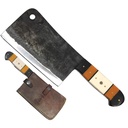
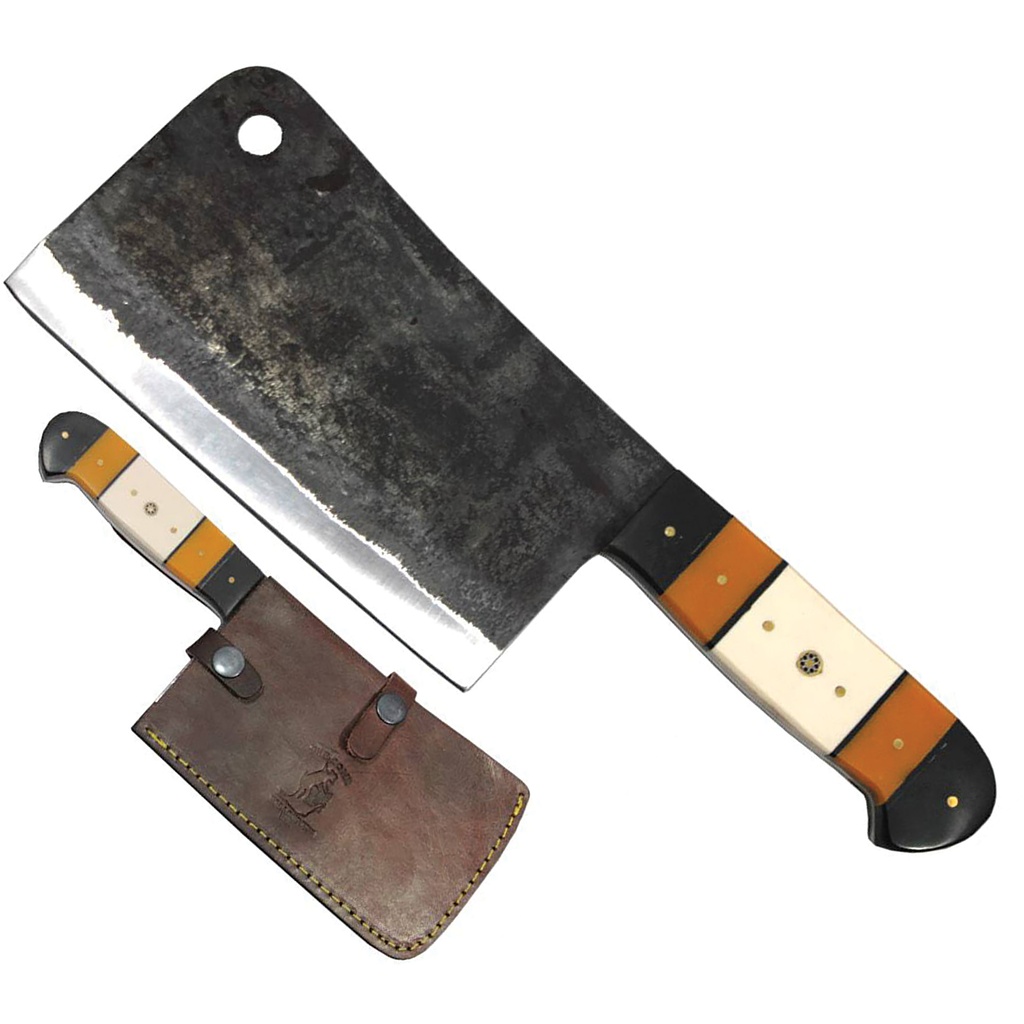
This is the cleaver you actually use, not just hang on a wall. The Rugged Heritage Field Cleaver Knife pairs a 6-inch full-tang, forged-finish blade with a polished bone handle that locks into the hand when you’re breaking down game or working over a cutting board. At 10.75 inches overall and 32 ounces, it hits with authority but still balances well at the pinch. The leather belt-loop sheath keeps this field-ready meat cleaver on your hip from campfire to backyard cook.
Rugged Heritage Field Cleaver Knife - Bone Handle
Some knives are designed for display cases. This one was built for work. The Rugged Heritage Field Cleaver Knife - Bone Handle takes the classic meat cleaver profile and turns it into a camp-to-kitchen tool you won’t baby, with a full-tang steel spine, forged-texture blade, and a polished bone handle that feels like it’s been in the family for years.
Fixed Blade Cleaver for Buyers Who Don’t Compromise on Tools
This isn’t a folding camp knife pretending it can handle heavy work. It’s a fixed blade cleaver with a 6-inch slab of steel up front and 10.75 inches overall length, built for real chopping and controlled push cuts. The full tang runs the length of the handle, so every strike transfers power straight from your hand into the cut instead of flexing or twisting.
At 32 ounces, this meat cleaver carries enough mass to do the work for you—splitting joints, portioning larger cuts, and tackling dense vegetables—while the slightly curved handle and flared butt give you a solid lock-in grip whether your hands are wet, greasy, or gloved.
Camp and Field Utility in a Meat Cleaver Knife
In the field, a dedicated meat cleaver knife like this fills the role most people try to overload a standard hunting blade with. The broad, rectangular edge makes short work of breaking down game on a tailgate or camp table. The forged matte finish shrugs off scratches and stains, and the polished cutting edge gives you the bite you want for fine slicing once the heavy work is done.
The blade hole near the spine tip is more than an aesthetic nod to traditional butcher cleavers. It lets you hang the knife at camp or in the shop, and also provides an extra index point for grip manipulation when you’re choking up or adjusting hand placement during delicate trimming.
Full-Tang Strength You Can Actually See
Collectors and serious users alike pay attention to tang construction for a reason. On this cleaver, the full tang is visible along the spine and butt of the handle, so you aren’t guessing what’s buried under the scales. For a tool this size, hidden tangs and weak transitions are where cheap knives fail. Here, steel runs continuous from blade tip to pommel, pinned through the bone and colored segments for maximum durability under repeated impact.
Bone Handle with Collector-Grade Details
The handle is where this piece steps out of pure utility and into collector territory. A polished bovine bone center section is framed by orange and black segments, all pinned with brass and finished with a decorative mosaic pin that you usually see on custom shop work, not mass-market cleavers. The shape is practical—curved for a natural wrist angle, flared at the butt to resist slipping—but the visual story is pure heritage: bone, brass, and warm tones against a steel backbone.
Carry-Ready Fixed Blade Cleaver with Leather Sheath
A heavy fixed blade is only useful if it’s where you need it. This field-ready cleaver comes with a brown leather belt-loop sheath, stitched and snapped for retention, with an embossed animal logo that fits the tool’s hunting and camp pedigree. Belt carry means the knife rides hip-level instead of getting lost in a pack, and the sheath’s snap closures keep that 6-inch blade locked down when you’re moving through brush or bouncing in a truck.
The leather will pick up marks and character over time, the way good field gear should. That patina is the difference between gear you actually use and gear that just lives in a drawer.
Steel, Balance, and Real-World Performance
On a knife this size, the steel and geometry matter as much as the handle. The broad cleaver blade with a matte finish and polished edge gives you a thick, confidence-inspiring spine up top, and a leaner, sharpened edge where the work happens. That combination is what lets it split without chattering, then transition into slicing without feeling clumsy.
Balance sits forward of the handle, as it should on a working meat cleaver knife. That forward bias turns gravity into your assistant: less wrist strain, more cut depth with each swing. On a cutting board, you’ll feel that rhythm in the way the blade falls and recovers; in the field, you’ll notice it when you’re breaking down an animal and the tool simply wants to stay on line.
Why a Dedicated Cleaver Belongs in Your Kit
Automatic knives, OTFs, and modern folders handle the light and fast work. A fixed cleaver like this exists for everything they shouldn’t do: heavy chopping, joint work, thick cuts, and serious camp cooking. Instead of abusing your EDC, you pull the right tool for the job. That’s how your gear—and your hands—last longer.
What Buyers Ask Before Purchasing an Automatic Knife
Even if you came here for a field-ready meat cleaver, chances are you’re also the sort of buyer who owns or is thinking about owning an automatic knife, an OTF, or a classic switchblade. The questions below are the ones serious users and collectors keep asking before they buy.
Are automatic knives legal?
In the United States, federal law (the Switchblade Knife Act) mainly regulates the interstate sale and shipment of automatic knives and traditional switchblades, especially across state lines and into certain federal jurisdictions. It does not create a simple nationwide ban, but it does restrict mailing and commercial transport under some circumstances.
Real-world legality is decided at the state and sometimes local level. Some states allow automatic knives and switchblades with few restrictions, others limit blade length, opening mechanism, or carry method, and a handful still ban them outright. OTF automatic knives often fall under the same statutes as side-opening switchblades. Before you buy or carry an automatic knife, you check your specific state and local laws—because “legal to own” and “legal to carry concealed” are not always the same thing.
What’s the difference between an automatic knife, OTF, and a switchblade?
Mechanically, the differences are straightforward:
- Automatic knife (side-opening): A folding knife that opens under spring tension when you press a button, lever, or similar actuator. The blade pivots out from the side of the handle.
- OTF (out-the-front) automatic: The blade travels linearly, in and out of the front of the handle, driven by an internal spring. Double-action OTFs both deploy and retract via the same sliding control; single-action OTFs spring out but require manual reset.
- Switchblade: In legal language, usually the same family as automatic knives—spring-driven, button-activated opening. Enthusiasts often use “switchblade” for the classic side-opening patterns, while “OTF” is reserved for front-deploying autos.
This Rugged Heritage Field Cleaver Knife is a fixed blade meat cleaver, not an automatic, OTF, or switchblade. No springs, no deployment mechanism—just a solid slab of steel permanently locked in the open position for maximum strength.
What makes this knife worth buying?
If you already own good folders and automatic knives, the question is simple: what does this cleaver do that they can’t? The answer comes down to three things:
- Purpose-built geometry: The broad cleaver blade, matte-forged finish, and weight-forward balance are tuned for chopping, joint work, and hard camp cooking—jobs you shouldn’t hand to your EDC.
- Full-tang, field-ready construction: Steel running the full length of the 10.75-inch profile, pinned through bone and colored scales, gives you structural integrity that folders and partial tangs can’t match under impact.
- Heritage aesthetics with working credentials: Polished bone, mosaic pin, and a leather belt sheath elevate this beyond a commodity kitchen cleaver, but every design choice still serves use in the field.
You’re not buying a novelty. You’re adding a dedicated meat cleaver knife that carries like a field tool and looks like it belongs in the hands of someone who takes their gear seriously.
Built for the Buyer Who Chooses Tools on Purpose
Whether your kit already includes automatic knives, OTFs, and modern folders, there’s a gap only a fixed blade cleaver can fill. The Rugged Heritage Field Cleaver Knife - Bone Handle closes that gap with full-tang strength, field-focused design, and the kind of heritage styling that earns its place on a hook in the camp shack and on your hip at the next hunt. This is the meat cleaver knife you reach for when the work is real and the story is worth telling afterward.
| Blade Length (inches) | 6 |
| Overall Length (inches) | 10.75 |
| Weight (oz.) | 32 |
| Blade Color | Silver |
| Blade Finish | Matte |
| Blade Style | Cleaver |
| Blade Edge | Plain |
| Blade Material | Steel |
| Handle Finish | Polished |
| Handle Material | Bovine Bone |
| Theme | None |
| Handle Length (inches) | 4.75 |
| Tang Type | Full |
| Carry Method | Belt Loop |
| Sheath/Holster | Leather Sheath |