Shadow Perimeter Always-Up Caltrops - Black Steel
10 sold in last 24 hours
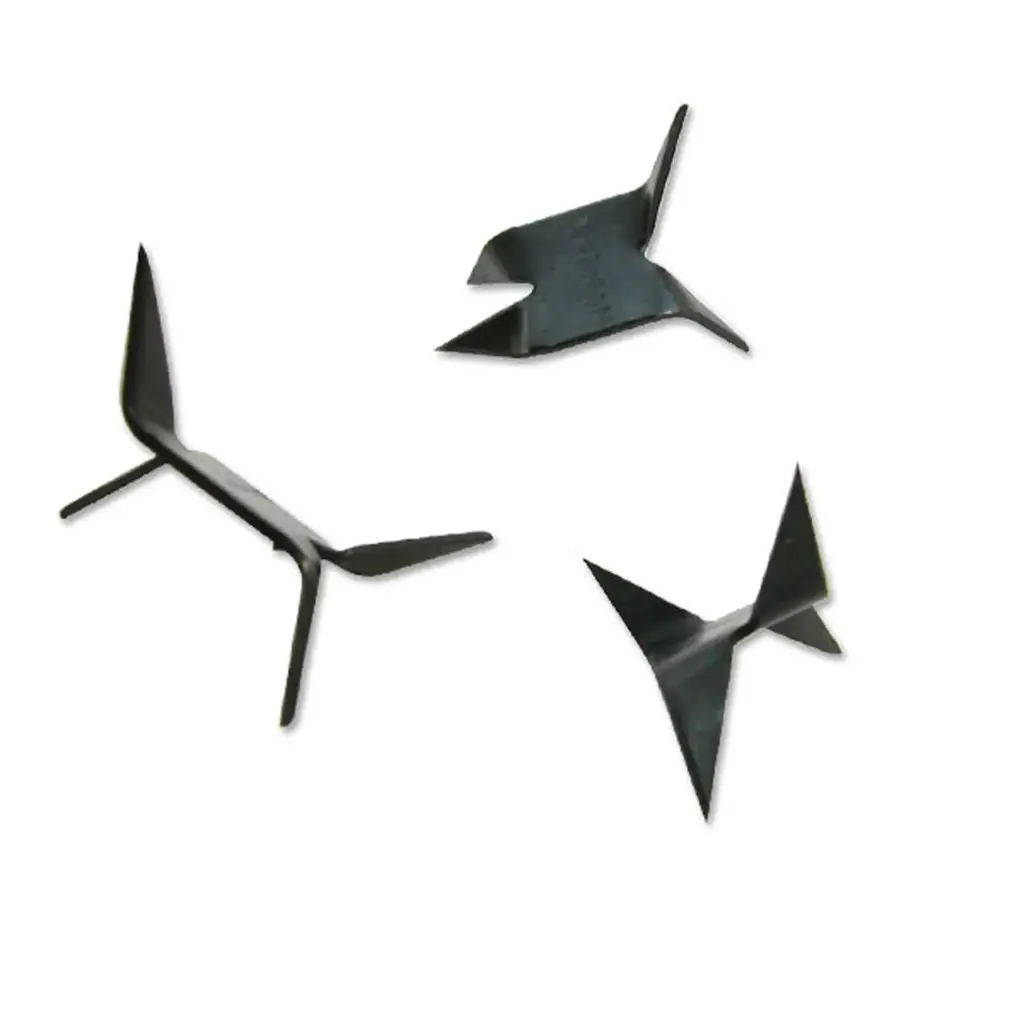
These Shadow Perimeter Always-Up Caltrops in black steel are built for one job: access control that actually behaves the way you expect. The folded four-point geometry means they land upright and stay that way, giving you predictable coverage instead of random scatter. Compact enough for discreet carry in a kit or bag, they deploy quickly, read clearly in low light thanks to the matte-black profile, and deliver classic caltrop function in a clean, modern silhouette.
Shadow Perimeter Always-Up Caltrops – For When Access Control Actually Matters
Most people buy caltrops as a novelty. The moment you look at these Shadow Perimeter Always-Up Caltrops in black steel, you know they were not built for that crowd. This is classic access denial reinterpreted with modern folded geometry: four sharp points, one always up, three always down, in a compact package that drops cleanly and lands the way you intended.
Why This Design Works: Four-Point Geometry and Predictable Upright Landings
The entire value of a caltrop lives or dies on geometry. These are cut and folded from steel sheet into a true four-point pattern. No random welded cluster, no bulky cast spike ball – just intersecting planes that guarantee at least one point is always presented upward when it hits the ground.
That matters for real-world use. When you're working access control – training scenarios, demonstrations, or display-building for a tactical lineup – consistency is the difference between a tool and a prop. The thin, blade-like edges shed momentum quickly, allowing the caltrop to rotate into a stable three-point base with the fourth point exposed. Once you’ve seen a few land, you stop checking; you know how they’re going to sit.
Always-Up Behavior: How the Folded Steel Does the Work
Each unit is essentially a cross of two bent planes, offset to create four equally spaced points in three-dimensional space. The mass distribution is tight to the center, so there’s no heavy side that forces a particular orientation. Instead, the design allows the caltrop to roll until three points find ground contact, leaving one up. The result: fast deployment with predictable coverage over a defined corridor or choke point.
Black Steel Finish: Modern Tactical Profile, Classic Silhouette
The black steel finish does two jobs at once. Visually, it keeps the profile subdued – no shiny distractions, no reflective nonsense that looks good under photography lights but wrong everywhere else. Functionally, the finish helps with corrosion resistance and reduces visual clutter in a kit or display, letting the form speak for itself.
The angular, minimalist silhouette nods to historical caltrops without dragging in medieval cosplay energy. These look at home next to modern restraints, breaching tools, and access-control hardware. For retailers and kit builders, that matters; one glance and the buyer reads them as serious tools, not costume-shop props.
Compact 10-Pack: Real-World Deployment and Storage
Ten units per pack hits the practical sweet spot. It’s enough to seed a short corridor, stair run, or narrow access lane without overloading a pouch. The folded profile stacks well, so they nest reasonably tight in a bag, drawer, or display tray. You get functional coverage without burning unnecessary space or weight.
Access-Control Tools, Not Automatic Knives – Know the Difference
This is where terminology matters. These are not an automatic knife, not an OTF, not any flavor of switchblade. There is no blade deployment, no spring, no button, no lock – just static steel geometry doing the job by how it lands. That distinction is more than pedantic; it’s legal and practical reality.
Automatic knives, OTF knives, and traditional switchblades are defined by an internal mechanism that drives a cutting edge from closed to open. Caltrops are passive. You throw, drop, or place them, and their design dictates how they stand. If you’re already deep into automatic knife collecting, this sits in a different mental drawer: the access control and area-denial drawer, next to restraints and barricade tools, not your EDC rotation.
Practical Use Cases: Training, Demonstration, and Controlled Environments
Serious buyers usually fall into one of three camps: trainers, tactical retailers, or collectors who build complete capability boards rather than just knife rolls. For each, these Shadow Perimeter caltrops make sense for specific reasons.
- Training & demonstration: The always-up geometry lets you teach access denial concepts without wasting time on inconsistent drops. Students see exactly how coverage works, how density affects movement, and how pathing changes once a lane is seeded.
- Retail & display: On a shelf or behind glass, their uniform silhouette and modern black finish read immediately as serious access-control hardware. The story is simple and true: they land upright, they’re compact, and they’re built from steel, not pot-metal castings.
- Collection completeness: For enthusiasts who already own automatic knives, OTFs, and fixed-blade breaching tools, caltrops represent the logical edge of the access-denial toolkit – a historically rooted device updated with clean industrial geometry.
What Buyers Ask Before Purchasing an Automatic Knife
Even though this product is not an automatic knife, automatic knife questions dominate the edge-tool world, so let’s address the big three clearly for context.
Are automatic knives legal?
In the United States, automatic knives sit under a mix of federal and state rules. Federally, the Switchblade Knife Act restricts interstate commerce in automatic knives (including many OTF and switchblade patterns) with specific exemptions for military, law enforcement, and certain uses. Actual carry legality, however, is defined primarily at the state level.
Some states now allow automatic knives for everyday carry with blade length limits or specific conditions (for example, concealed vs. open carry), while others still prohibit them outright or restrict them to duty use. Before you buy an automatic knife or a switchblade, verify your local and state regulations, including blade length, mechanism type, and where you plan to carry – vehicle, workplace, public areas, or private property.
Caltrops, by contrast, fall into an entirely different legal category, often treated as impact or area-denial devices rather than knives. That said, laws can class them as prohibited weapons or controlled items in some jurisdictions. Always confirm local regulations on possession and deployment of caltrops or similar access-control tools.
What’s the difference between an automatic knife, OTF, and a switchblade?
Definitions matter if you want to buy the right tool – or stay on the right side of the law.
- Automatic knife (umbrella term): A knife whose blade opens automatically via a button, switch, or similar control, driven by an internal spring or stored energy. This includes side-opening autos and most OTF autos.
- OTF (out-the-front) knife: A specific type of automatic knife where the blade travels linearly out of the front of the handle. Many OTF knives are double action, meaning the same control both deploys and retracts the blade; others are single action and require manual reset.
- Switchblade: Traditionally, a side-opening automatic with a blade that pivots out of the handle when you press a button or lever. In many laws, "switchblade" and automatic knife are used nearly interchangeably.
Caltrops are none of the above. They don’t deploy a blade; they deploy themselves, purely through gravity and geometry.
What makes this access-control tool worth buying?
With caltrops, the difference is in the details most people never ask about. These are worth your time for three reasons:
- Consistent always-up geometry: The folded four-point pattern isn’t decorative – it’s tuned so you get reliable upright landings instead of random tumble.
- Modern black steel construction: Steel sheet, folded sharp and clean, delivers a thin profile and aggressive points without bulk or gimmicks. The black finish keeps them visually quiet but serious.
- Purpose-built pack size: Ten units provide practical coverage for training lanes, demonstrations, or a focused access-control kit without wasting space or weight.
If you already care enough to distinguish between an automatic knife, an OTF, and a switchblade, you’ll appreciate a caltrop design that’s just as honest about what it does and how it does it.
For Collectors Who Build Complete Kits, Not Just Knife Rolls
Shadow Perimeter Always-Up Caltrops in black steel are the kind of tool that shows you think about more than edge geometry. You’ve already chosen your automatic knife for sale with an eye toward action quality and steel. Adding a set of purpose-built caltrops to your loadout or display says you understand the other half of control: not just what happens in your hand, but what happens in the space around you.