Shadow PivotLink Quick-Convert Rifle Sling - Black Nylon
14 sold in last 24 hours
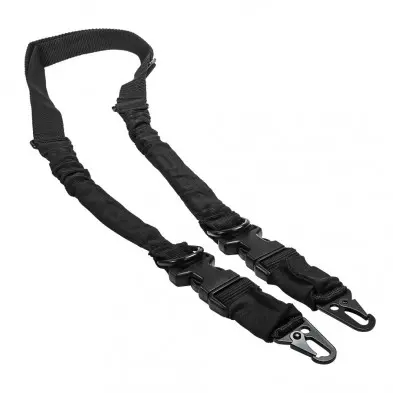
If you understand why sling setup makes or breaks a rifle, this quick-convert design is speaking your language. Built as a 2-point rifle sling first, it runs 1.25" black nylon, dual bungee shock cords, and metal spring clips for stable, muzzle-aware carry. Clip into the opposite D-ring and it becomes a single-point sling without re-rigging. It’s the same mindset as a well-tuned automatic knife action—controlled, repeatable, and fast when you need it.
When you’ve spent real time on the line, you know the rifle sling isn’t an accessory—it’s a control system. The Shadow PivotLink Quick-Convert Rifle Sling - Black Nylon is built with the same mentality as a serious automatic knife action: the mechanics come first. Every inch of webbing, every bungee section, every D-ring is there to make your transitions cleaner and your rifle more predictable.
Automatic knife for sale? No—this is the rifle sling built with that same mechanical discipline
If you’re the kind of buyer who reads about lock geometry and deployment timing before you buy automatic knife hardware, you’re the same kind of buyer who won’t tolerate a sloppy sling. This system starts as a disciplined 2-point rifle sling: 1.25-inch black nylon webbing, dual bungee shock cords under protective sleeves, and matte black metal hardware that stays quiet and low-signature.
Those dual bungees aren’t decoration. They absorb movement so the rifle doesn’t pendulum off your chest when you sprint, climb, or go hands-on. Think of it like a tuned detent and spring combo in an automatic—firm enough to control motion, forgiving enough to keep everything from beating itself to death under stress. The result is the same feeling you chase when you look at serious automatic knives for sale: controlled energy, released on demand.
From 2-point stability to single-point agility: one move, no re-rigging
The defining feature here is the pivot—literally. Run it as a 2-point sling for patrol, distance movement, and admin work. When the angles tighten or you start working rapid shoulder transitions, you pivot into single-point. One metal spring clip hooks into the opposite D-ring and the geometry of the whole system changes instantly.
No tools, no tearing your setup apart, no digging through a bin for another sling. The same way a double-action automatic changes the way you think about deployment, this 2-to-1 design changes how you think about slings: one rig, two distinct roles, zero drama.
Convertible hardware that rewards attention to detail
The conversion method is simple, but not simplistic. Metal spring clips on both ends interface cleanly with standard sling loops. Paired metal D-rings live just forward of the polymer quick-release buckles. Route the sling once, set your length between 55 and 72 inches, and from then on it’s a one-clip decision whether you’re in 2-point or single-point mode.
This kind of hardware layout appeals to the same brain that appreciates a well-executed plunge grind or a cleanly nested firing button on an OTF—placement matters because it changes how the system runs at speed.
Bungee sections tuned for movement, not gimmick appeal
Plenty of “tactical” slings tack on bungee as a visual cue. Here, the dual bungee shock cords under sleeves do real work. They take up slack when you drop hands-free, keep the muzzle more controlled in a run, and give you just enough give to mount the rifle aggressively without fighting dead webbing. It’s the same philosophy as a good automatic knife spring—energy stored, energy released, repeatably.
Why this sling belongs next to your best automatic knives for sale-level gear
Look at your kit the way you look at your favorite autos. You don’t tolerate vague claims about “premium steel”—you want Rockwell numbers, edge retention, and real-world cutting performance. Apply that same standard to your sling:
- Webbing: 1.25-inch heavy-duty black nylon, wide enough to distribute weight without folding or cutting into your shoulder.
- Adjustment: 55–72 inches of range to clear armor, outer layers, and different carry positions without re-threading the whole system.
- Hardware: Matte black metal clips and D-rings for strength and low reflection, polymer quick-release buckles for fast detach when you need to strip the sling off the rifle or body.
- Noise discipline: No jangling, no bright surfaces, no loose plastic toys hanging off your chest.
It’s the same mentality you bring when you scan automatic knives for sale: clean action, honest materials, no unnecessary flash.
Setting up the Shadow PivotLink like a serious piece of kit
A sling, like an automatic, rewards a good setup. Throw it on lazily and you’ll fight it every rep. Take five minutes to tune it and it disappears until you need it.
Start by setting length in 2-point mode. You want enough webbing to mount the rifle from low ready without hunching or overextending. Use the triglide to lock that in around the 55–72 inch window. Then check your bungees: in a relaxed carry, they should be loaded just enough to keep tension, not stretched straight.
Next, confirm your conversion path. Clip one spring hook into the opposite D-ring and feel how the rifle hangs in single-point. Work shoulder transitions. Work collapsing into a low ready and back up to a firing position. Like cycling an automatic’s action at the table before it ever sees pocket time, this is where you learn how the rig wants to move.
What Buyers Ask Before Purchasing an Automatic Knife (and why it still matters here)
Even though this is a rifle sling—not an auto-folder—the same questions that drive serious automatic knife for sale purchases apply: legality, mechanism distinctions, and what actually makes it worth owning.
Are automatic knives legal?
Under U.S. federal law, automatic knives (true autos and many OTF designs) fall under the Federal Switchblade Act, which primarily regulates interstate commerce and importation. It doesn’t automatically make your knife illegal to own, but it does shape how manufacturers and dealers move them across state lines. Actual carry and ownership laws are determined at the state and sometimes local level.
Some states allow automatic carry with few restrictions, others allow possession but restrict concealed carry, and a few still ban autos or treat them like prohibited weapons. If you’re browsing an automatic knife for sale and plan to carry it, you check your state and local code first, then confirm any blade length or opening mechanism restrictions. The same disciplined approach applies when you’re choosing a sling for duty or defensive use: know the policy, then choose the gear.
What’s the difference between an automatic knife, OTF, and a switchblade?
Mechanically, an automatic knife is any knife where the blade deploys from a closed position by pressing a button, switch, or similar control that releases a spring-driven action. Most side-opening autos fall in this category.
An OTF (out-the-front) knife is a subset of automatics where the blade travels linearly out the front of the handle. These can be single-action (button drives the blade out, manual retraction) or double-action (same control drives both deployment and retraction).
Switchblade is the legal and legacy term often used in statutes and older literature to describe automatic knives broadly. In enthusiast circles, automatic is the more precise mechanical term, while switchblade tends to show up in law and pop culture. When you see automatic knives for sale in a serious shop, they’ll distinguish between side-opening autos, OTF designs, and manual or assisted folders clearly—because mechanism matters.
What makes this automatic knife worth buying?
Applied to this sling, the same decision logic holds: specific mechanics over vague promises. The Shadow PivotLink is worth adding to your kit because:
- It gives you two distinct carry modes (2-point and single-point) in one rig with a fast, intuitive conversion instead of forcing you to buy and rig multiple slings.
- The dual bungee system is tuned for actual movement, not just marketing—less rifle whip, more control under stress.
- The hardware layout is deliberately low-profile and quiet, matching the expectations of patrol, range, and training users who care about clean lines and low signature.
- The length and adjustability range are broad enough to accommodate armor, layers, and different shooting styles without re-threading the sling every time.
That’s the same standard you use when you sort through automatic knives for sale: what, exactly, are you getting in mechanism, materials, and performance that justifies adding it to the rotation?
For the buyer who chooses gear with the same eye they bring to automatic knives for sale
If you’re the kind of shooter who can feel the difference between a lazy detent and a tuned one, or who has opinions about side-opening autos versus double-action OTFs, this sling is built with your mentality in mind. The Shadow PivotLink Quick-Convert Rifle Sling - Black Nylon doesn’t try to impress with flash. It earns its place the hard way: clean mechanics, purposeful hardware, and a conversion system that actually changes how efficiently you move with a rifle.
Pair it with whatever you carry when you’re not behind the gun—whether that’s a side-opening auto, an OTF, or a manual you’ve tuned within an inch of its life. The mindset is the same. You’re not just buying an automatic knife for sale or another “tactical” sling. You’re building a system where every piece has been chosen because the mechanics justify the slot.