Shadow Sigil Precision Throwing Star - Black/Red
8 sold in last 24 hours
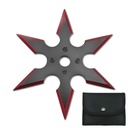
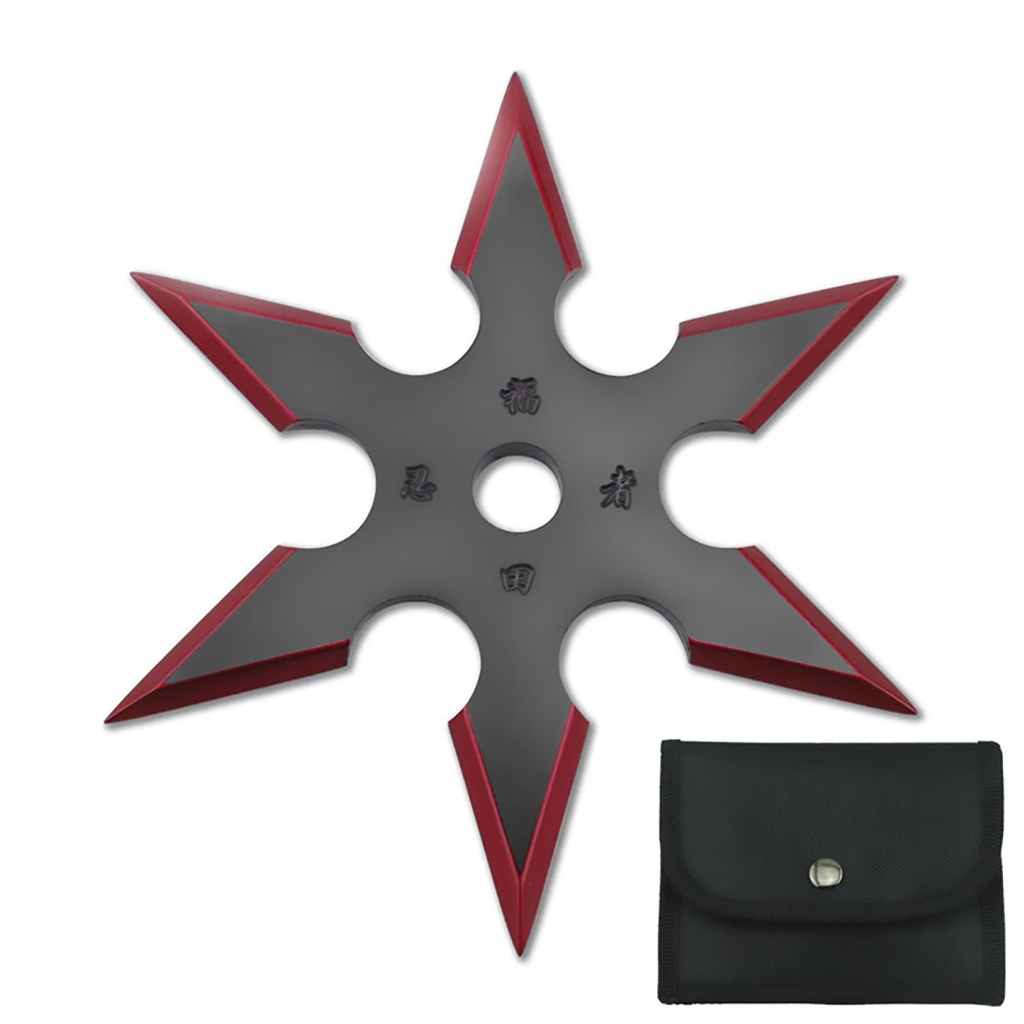
This isn’t wall-hanger junk. The Shadow Sigil Precision Throwing Star is a 6-point, 4-inch shuriken tuned for clean release and predictable rotation. The matte black body disappears in flight while the crimson-edged points track visibly through the air. Symmetrical cutouts help maintain balance, and the etched center sigil adds collector character. Pocketable and ready to train with the included nylon pouch, it’s the throwing star you actually reach for when you want consistent throws and a little theater in the spin.
Shadow Sigil Precision Throwing Star - Black/Red
The Crimson Sigil Balanced Throwing Star is what happens when someone actually thinks about how a shuriken flies, not just how it photographs. Six points, 4 inches across, matte black body, and blood-red edges that streak in rotation — this is built for the thrower who cares about balance and repeatable flight more than costume-rack flash.
Designed for True Flight, Not Just Display
Most cheap throwing stars feel like stamped sheet metal with an edge. This piece starts with symmetry and balance as the core design rules. Six evenly spaced points keep rotational inertia consistent regardless of which tip you lead with. The trio of circular cutouts around the center and the main hub hole aren’t just visual noise; they help centralize mass so the star tracks smoothly on spin instead of wobbling mid-air.
At 4 inches in diameter, it lands in the sweet spot for control: large enough to seat confidently between fingers on release, compact enough to carry in the included pouch without feeling like a plate in your pocket. The flat profile also means it leaves the hand cleanly, which is the line between a good throw and a wild flyer.
Visual Mechanics: Why the Black/Red Layout Works
The matte black body does what it should: kill glare and distraction. That finish helps with grip and makes the star fade visually once it leaves your hand. The red-coated edges do the opposite — they catch what light there is and trace the spin. When you’re learning or refining your throwing, seeing that rotation arc matters. You’ll notice quickly if it’s tracking straight, wobbling, or yawing off-axis.
The etched characters at the center feel deliberate, not cartooned. They give the piece a focal point in a display case and just enough personality that it doesn’t disappear into a sea of anonymous shuriken on a wall. Collectors care about those small details: the difference between “generic ninja star” and something with an identity.
Throwing Performance: Balance, Edges, and Control
Mechanically, what makes or breaks a throwing star is balance distribution. This star keeps material mass consistent at each of the six points, and the inner cutouts work like a crude but effective tuning system: more weight centralized, less at the very tips. In hand, you feel that as a predictable spin rather than a lurching, uneven rotation.
Balanced for Smooth Rotation
The first sign of a bad star is chatter in the air — that audible wobble when the geometry is off. Here, the symmetrically machined points and evenly spaced voids keep drag uniform. Whether you’re throwing from a two-finger pinch, three-finger fan, or a more aggressive snap, the star stabilizes quickly, which makes sticking targets less about luck and more about your technique.
Edges Tuned for Penetration, Not Fragility
The red edge coating isn’t just cosmetic. It visually defines the primary contact surfaces while giving a minimal layer of protection to the grind. The points are sharpened for penetration into wood or dense foam targets, but not so glass-fragile that a few bad throws will roll or crumble the tips. It’s built for practice sessions — dozens of throws in a row — not one toss for a photo and back to the shelf.
Carry, Storage, and Real-World Use
This throwing star ships with a nylon pouch that actually makes sense for carry. It’s flat, snapped shut with a metal button, and sized to the star so it doesn’t rattle loudly with each step. It’ll slide into a pocket, bag, or range kit without snagging on everything.
For martial arts practitioners, that means it can live in the same gear bag as your pads and gloves. For collectors, it keeps edges from nicking other pieces or getting dulled by careless contact. The overall package is discrete: when it’s in the pouch, it doesn’t scream “weapon” from across the room.
Collector Appeal: Why This Star Earns Its Spot
Collectors don’t need another anonymous chrome star. The Crimson Sigil Balanced Throwing Star earns its place with a combination of visual discipline and functional credibility. The black/red contrast, the etched central symbols, and the clean radial layout give it immediate shelf presence. But it’s the handling that keeps it from being just set dressing.
From the first throw, the balance feels intuitive. There’s no guesswork about which point leads or how it wants to leave your fingers. If you’re the kind of buyer who actually trains with your gear, this is a piece you’ll throw hard, retire to the wall, and still respect when you walk past it years later.
Legal and Responsible Ownership of Throwing Stars
Throwing stars, shuriken, and similar martial arts weapons sit in a different legal lane than an automatic knife or switchblade, but they can still be regulated. In the United States, there’s no broad federal statute that bans throwing stars outright. Instead, legality is decided at the state and often local level.
Some states treat throwing stars like general bladed tools, others classify them as prohibited weapons, and a few restrict carry but not ownership. Before you add any throwing star to your training kit or collection, you should:
- Check your state and local laws specifically for “throwing star” or “shuriken” wording
- Confirm whether restrictions apply to possession, carry, sale, or all three
- Use them only on private property where you have permission and a safe backstop
Nothing here is legal advice, and knife and weapon laws change regularly. If you’re unsure, review your state statutes or consult a qualified local source before carrying or using this piece.
What Buyers Ask Before Purchasing an Automatic Knife
Even though this product is a throwing star, automatic knife buyers and edged-weapon enthusiasts often shop the same categories and ask the same big-picture questions about legality, mechanism, and real value. Here’s how those questions typically break down.
Are automatic knives legal?
Under U.S. federal law, automatic knives and switchblades are primarily regulated by the Federal Switchblade Act, which restricts interstate commerce and shipment, especially by mail, but does not outright ban possession for most individuals. The real deciding factor is state law. Some states allow automatic knives and OTF knives broadly, some limit blade length or carry type, and others prohibit them entirely.
If you’re looking for an automatic knife for sale alongside this throwing star, you need to check your state and sometimes city or county codes. Look specifically for terms like “automatic knife,” “switchblade,” and “gravity knife.” When in doubt, confirm with up-to-date legal resources or local authorities. Do not assume that because a dealer will ship to you, it’s legal to carry where you live.
What’s the difference between an automatic knife, OTF, and a switchblade?
Mechanically, an automatic knife is any knife that opens its blade using an internal spring or stored energy source, triggered by a button, switch, or lever in the handle. Most side-opening automatics pivot the blade out from the handle like a traditional folder, just spring-driven.
An OTF (out-the-front) automatic knife is a specific subset where the blade travels linearly through a slot in the handle to deploy and often retract. Double-action OTF knives both open and close with the same control; single-action OTFs usually require manual reset.
“Switchblade” is the legal term commonly used in statutes for automatic knives in general. Enthusiasts tend to say “automatic” or “OTF” for mechanical clarity, but laws often bundle these under the switchblade label. Throwing stars like this Crimson Sigil aren’t automatic at all — no springs, no buttons — but they coexist in the same enthusiast world, so understanding the distinctions matters.
What makes this automatic knife worth buying?
Applied to a throwing star like this one, the same logic that separates a worthwhile automatic knife from a gimmick still holds: consistent mechanics, purposeful design, and credible performance. This star is worth adding to your kit or collection because it’s actually tuned for throwing — balanced geometry, sensible size, and edges that can work — instead of being a flat, badly cut disc of metal.
Visually, it hits that tactical black-and-red note without turning into parody. Functionally, it feels right in the hand and flies the way a serious practitioner expects. If you’re the type of buyer who reads steel charts and debates action types when you shop for an automatic knife for sale, this is the throwing star equivalent of gear you won’t regret owning.
For Enthusiasts Who Take Their Edged Gear Seriously
The Crimson Sigil Balanced Throwing Star - Black/Red is built for the same buyer who refuses to settle for a sloppy automatic knife, a rattling OTF, or a novelty switchblade. It’s a compact, disciplined design that respects mechanics and presentation equally. If your collection is more than costume props — if you actually throw, train, and evaluate your gear — this star belongs in the rotation.