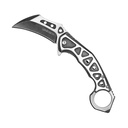
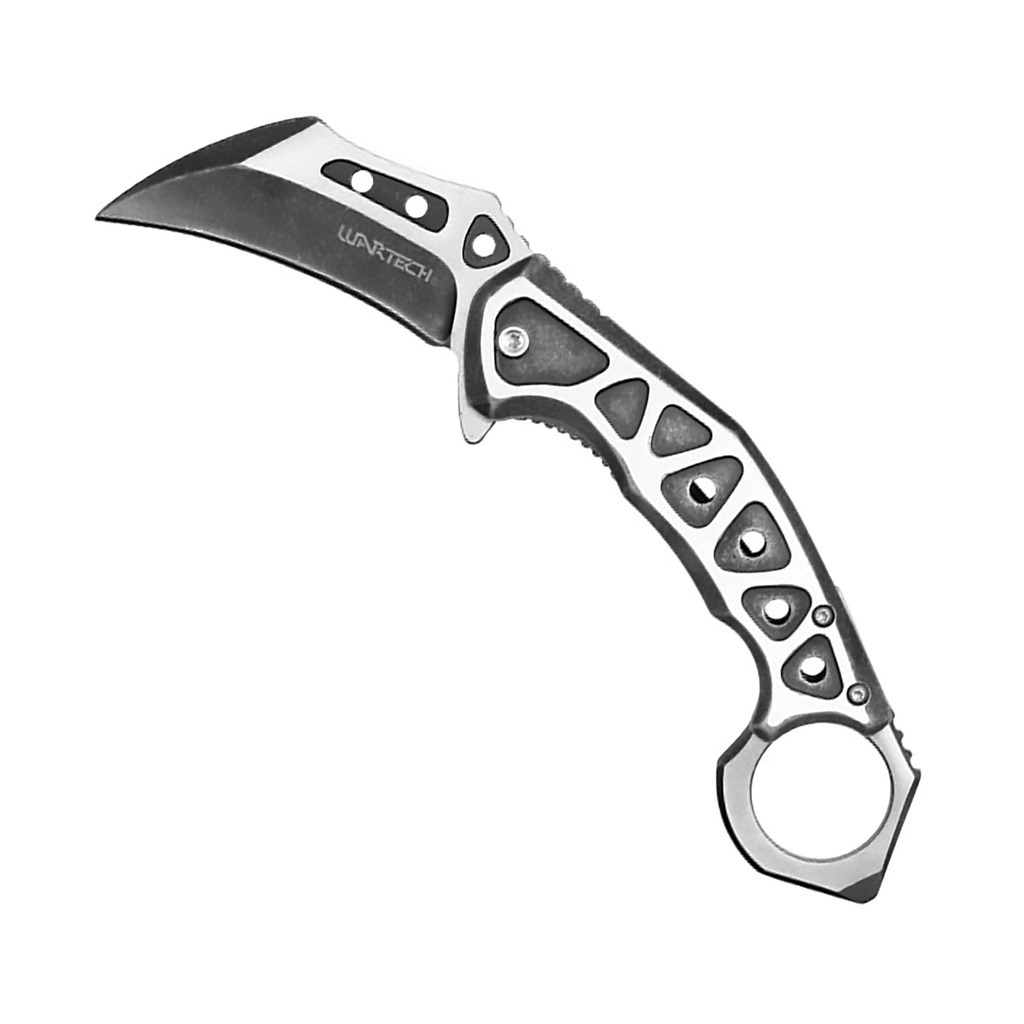
Shadow Talon Quick-Ring Assisted Karambit Knife - Stonewash Steel
8 sold in last 24 hours
An automatic knife for sale isn’t the point here—this is a purpose-built assisted karambit tuned for control. The spring-assisted talon blade snaps out with authority, locking behind a solid liner lock. 3Cr13 stonewashed steel shrugs off scratches and cleans up fast, while the skeletonized handle and ring keep the weight down and the retention high. This is the knife you buy when deployment, indexing, and grip security matter more than flash.
Automatic Knife for Sale Alternatives: Why This Assisted Karambit Earns Pocket Time
When you go to buy an automatic knife, you’re usually chasing one thing: instant, reliable deployment. This Shadow Talon Quick-Ring Assisted Karambit Knife delivers that same hit of mechanical satisfaction, but with the deliberate control of a spring-assisted folder. The curved talon blade, the finger ring, and the skeletonized stonewashed frame all point in the same direction—fast access, locked-in retention, and cuts that track exactly where you intend.
This isn’t a flashy “tacticool” toy. It’s a compact folding karambit built for people who care how a knife indexes in the hand, how the action feels every time it opens, and how the steel behaves after a week of honest use.
Buy Automatic Knife Performance in a Spring-Assisted Karambit Package
Let’s be mechanically precise: this is not a true automatic knife or switchblade. It’s a spring-assisted folding karambit. You start the blade with the flipper tab, and the internal spring takes over, snapping the stonewashed talon fully into lockup. The result feels very close to an automatic knife for sale at a good custom show table—fast, authoritative, and repeatable—without crossing the legal line that some automatic knives and OTF designs do in certain states.
The 2.75-inch curved blade gives you a lot of working edge in a compact footprint. That talon profile bites in on pull cuts, tracks cleanly through material, and offers precise tip control. You’re not buying this as a box cutter replacement; you’re buying it for the way it handles directional cuts, defensive grip, and tight maneuvering around obstacles.
Action, Steel, and Lockup: Where the Mechanism Actually Matters
The heart of this knife is the spring-assisted action riding on a liner lock chassis. Compared to a true automatic or OTF switchblade, you get:
- More deliberate deployment: You must intentionally hit the flipper tab—no accidental pocket launches.
- Cleaner mechanical path: Fewer moving parts than a double-action OTF knife, which means less to gum up with pocket lint.
- Solid lateral lockup: The liner lock engages the base of the tang directly, giving a planted, folding-knife feel rather than the slight play many OTFs live with.
3Cr13 Stonewashed Steel: Honest Utility, Easy Maintenance
The blade is 3Cr13 stainless, stonewashed. No, it’s not exotic powdered metallurgy, and it doesn’t pretend to be. What 3Cr13 gives you is toughness, high corrosion resistance, and simple resharpening. For an EDC karambit that might see rough handling, drops, or dirty environments, that’s not a bad trade. The stonewash finish does two things collectors notice:
- It visually hides micro-scratches and wear tracks.
- It fits the industrial, skeletonized look of the handle—everything looks like it’s meant to be used, not babied.
Ring and Skeletonized Frame: Collector-Worthy Control Details
The finger ring isn’t just there to tick the “karambit” box. It’s sized and positioned so you can transition between standard and reverse grip without hunting for your index point. Combined with aggressive jimping along the spine and inner handle, this knife locks into your hand when you’re pulling through heavy material or moving at speed. The skeletonized stainless frame pulls weight out without feeling flimsy; it also exposes just enough hardware and geometry to satisfy the mechanically curious.
Automatic Knives for Sale vs Assisted Karambit for EDC Reality
In the real world, you carry what you’re actually allowed to carry, and what disappears in the pocket until you need it. At 4.5 inches closed and 7.25 overall, this folding karambit rides in the same footprint as many standard folders, but gives you the control ring and curved edge that automatic knife collectors appreciate for defensive or precise work.
- Pocket clip: Keeps the knife oriented for consistent, repeatable draw—critical when a ring knife is part of your EDC system.
- Weight: The skeletonized stonewashed handle reduces bulk, so you get steel strength without anchor weight.
- Form factor: Closed, it reads like a standard assisted-opening folder with a ring; open, it’s full karambit geometry.
For buyers who usually search for an automatic knife for sale or even a compact OTF for EDC, this is the pragmatic alternative: nearly automatic-speed deployment, familiar liner lock mechanics, and less legal baggage in many jurisdictions.
Legal Context: Automatic Knife, Assisted Opener, and Where This Fits
Before you buy an automatic knife or anything that behaves like one, you need to understand how the law classifies it. Under U.S. federal law (the Federal Switchblade Act), a "switchblade" or automatic knife is one where the blade opens automatically by push-button, inertia, or gravity. Many state laws use similar language. This Shadow Talon is a spring-assisted folding knife: you must manually start the blade with a flipper or thumb, and then the spring completes the opening.
That distinction matters. In many states, assisted-opening knives are treated differently—and often more favorably—than true automatic knives, OTF switchblades, or gravity knives. Some states still lump them together; others spell out that assisted openers are legal to carry while switchblades are restricted.
Bottom line: this knife is not a federally defined automatic knife or switchblade, but you are responsible for knowing your state and local laws. If you’re asking “is an automatic knife legal to carry where I live?”, assume you need to check your state statutes, city ordinances, and any restrictions on blade length, locking mechanisms, and concealed carry before you clip anything to your pocket.
What Buyers Ask Before Purchasing an Automatic Knife
Are automatic knives legal?
Federally, automatic knives and switchblades are regulated by the Federal Switchblade Act, which mainly targets interstate commerce and shipping, not simple possession. However, individual states and even cities layer their own rules on top—some ban automatic knives outright, some limit carry to certain professions, some set blade length caps, and some treat autos just like any other folding knife.
This Shadow Talon is a spring-assisted karambit, not a true automatic knife, so it’s often legal in places where switchblades and OTF automatics are restricted. That said, assisted openers can still fall into grey areas in a few jurisdictions. Always verify your current state and local laws before you buy, carry, or ship any automatic knife, OTF, or assisted-opening folder.
What’s the difference between an automatic knife, OTF, and a switchblade?
Collectors use these terms precisely—at least the serious ones do:
- Automatic knife / switchblade: The blade opens fully by pressing a button, lever, or similar control, or by inertia/gravity. "Automatic knife" and "switchblade" are effectively the same in most laws.
- OTF (out-the-front) knife: A subtype of automatic where the blade travels straight out of the handle, usually single- or double-action. Many OTFs are switchblades under the law.
- Assisted-opening knife: A manual folder with a spring that assists once you begin opening the blade via a flipper or thumb stud. It is not a switchblade under federal law.
This Shadow Talon sits firmly in the last category: a spring-assisted folding karambit. It delivers near-automatic deployment speed, but the user initiates the motion, and the mechanism is closer to a standard liner-lock folder than a double-action OTF.
What makes this automatic knife worth buying?
If you’re shopping automatic knives for sale and end up here, the value proposition looks like this:
- Deployment: Spring-assisted action gives you fast, repeatable opens with positive lockup—no mush, no guessing.
- Geometry: The karambit ring and talon blade are built for control under tension—pull cuts, defensive grips, and tight work where a straight blade doesn’t feel as secure.
- Construction: Skeletonized stonewashed steel handle, liner lock, and jimping provide an industrial, use-me build rather than wall-hanger polish.
- Maintenance: 3Cr13 steel is easy to bring back to sharp in the field and shrugs off rust with minimal care.
- Legal posture: Assisted, not auto—often friendlier on the statute books than a true switchblade or OTF automatic.
In other words: you’re getting a knife that lives in the same mental drawer as your automatics and OTFs—fast, mechanical, and purpose-driven—but tuned for everyday carry reality.
For Enthusiasts Who Choose Their Gear on Purpose
If you’re the kind of buyer who can feel the difference between a lazy assisted action and one that slams home, who cares how a ring knife indexes out of the pocket, this Shadow Talon Quick-Ring Assisted Karambit Knife belongs in your rotation. It stands alongside your favorite automatic knife for sale not as a competitor, but as the piece you clip on when you want near-auto speed, deliberate mechanics, and a karambit form that actually earns its keep.
| Blade Length (inches) | 2.75 |
| Overall Length (inches) | 7.25 |
| Blade Color | Silver |
| Blade Finish | Stone Washed |
| Blade Style | Talon |
| Blade Edge | Plain |
| Blade Material | 3CR13 Steel |
| Handle Finish | Stonewashed |
| Handle Material | Stainless Steel |
| Theme | None |
| Pocket Clip | Yes |
| Deployment Method | Spring-assisted |