Shadow Weave Compact Defense Knuckles - Carbon Fiber
14 sold in last 24 hours
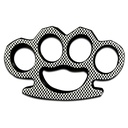
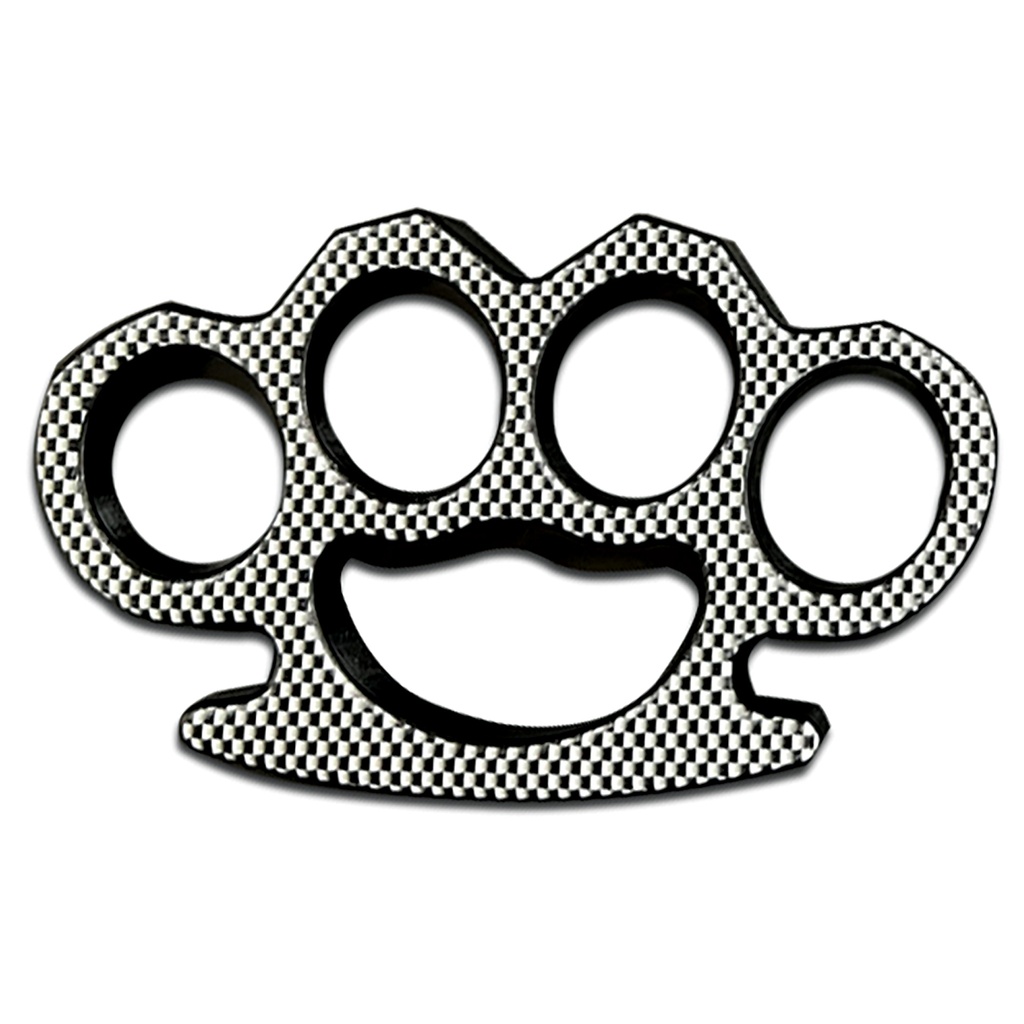
These carbon fiber brass knuckles trade bulk for precision. At 4.75" long and just under half an inch thick, they slip into a pocket and vanish until your hand finds those smooth, rounded finger holes. The carbon weave catches light with a subtle technical shimmer, while the flat strike bar and curved palm cutout keep the piece controlled in hand. It’s modern, minimalist impact gear for collectors and retailers who prefer clean lines over loud gimmicks.
Shadow Weave Compact Defense Knuckles - Carbon Fiber Presence in the Palm
The Shadow Weave Compact Defense Knuckles - Carbon Fiber are what happens when a classic street silhouette gets redesigned with modern materials and clean geometry. At 4.75 inches long, 2.75 inches wide, and under half an inch thick, these brass knuckles are built to disappear in a pocket yet feel unmistakable the second your fingers lock into position.
This isn’t a novelty casting. It’s a compact impact tool with a carbon fiber theme that looks as sharp on a collector’s shelf as it does in a tactical EDC layout.
Design That Earns Its Place in a Collection
Carbon fiber is the story here, and the piece doesn’t waste it. The tightly repeating checker weave across the face gives you that unmistakeable technical shimmer when it catches the light. It’s modern, not flashy; tactical, not toy-like. The black inner edges and finger holes pull the eye inward, framing the four-ring layout like a purpose-built instrument.
Where a lot of knuckles go heavy and crude, this design stays disciplined. The silhouette is symmetrical, the edges are clean, and the visual balance from finger holes to striking bar reads more "engineered" than "poured in a back room." Collectors will recognize the difference immediately when this sits next to generic pot-metal pieces.
Ergonomics: Four-Finger Control Without the Bulk
The four-finger design is as traditional as it gets, but the execution is what makes these knuckles feel right in hand. The finger holes are smoothly rounded, with no sharp casting lines to bite into your grip. Slide your hand through and you get that locked-in feel without hot spots or pressure points along the knuckles.
Curved Palm Cutout for Natural Grip
The curved palm cutout is a small detail that changes everything. Instead of a straight, unforgiving back, the inward curve follows the natural shape of your palm, letting the piece settle instead of fight you. That curve keeps the weight low and tight to the hand, improving control and reducing the tendency to shift under pressure.
Flat Strike Bar with Subtle Flares
The base strike bar is flat with slight flares at the ends, giving you a defined contact edge without turning it into a crude spike. Those end flares help anchor the piece laterally in the hand, so it doesn’t walk or rock when gripped. It’s the kind of subtle shaping detail that separates a thought-out design from a generic bar across the bottom.
Carbon Fiber Theme: Modern Aesthetic, Minimalist Attitude
While the construction is themed as carbon fiber, the visual language is pure modern tactical. The checkerboard weave pattern telegraphs high-tech material culture—think performance automotive, aerospace, and serious EDC gear. The black and silver interplay isn’t just decoration; it signals a design meant to sit comfortably in the same world as carbon-handled knives, modern holsters, and minimalist everyday carry layouts.
On a display wall, this is a natural focal point. The weave, the gloss, and the crisp outline draw the eye faster than another anonymous chunk of metal. Retailers get a visual anchor that moves product; collectors get a piece that lifts the entire shelf.
Carry Reality: Compact Impact Knuckles Built to Vanish
At 4.75 x 2.75 inches with a 0.47-inch thickness, these brass knuckles are compact enough to drop into a pocket or slip into a bag without printing like a brick. The slim profile and contoured cutout reduce bulk where it matters most—against the palm and inside the pocket line.
At 6.28 ounces, they have enough heft to feel serious in hand without crossing into clumsy. The weight sits low and centered; nothing about the profile fights your grip or tries to rotate out of position. It looks modern, but it still behaves like a proper impact tool.
Collector Value: Modern Knuckles for a Modern Display
Most brass knuckles on the market fall into two categories: crude castings or over-designed fantasy pieces. These sit in the third lane—modern, minimal, and deliberately understated. The carbon fiber theme and clean contouring make them a natural fit next to high-end EDC knives, tactical pens, and slim wallets.
On a collector shelf, they don’t scream for attention; they reward a second look. The weave, the precise circular cutouts, and the palm curve all add up to a piece that looks like it belongs in a curated kit, not a bargain bin.
Legal Context: What to Know Before You Carry
Brass knuckles—regardless of material or finish—are heavily regulated in many jurisdictions. Unlike a pocket knife, these are treated in a lot of places as dedicated impact weapons, and that can move them into a restricted or prohibited category under local law.
In some states and cities, brass knuckles are completely banned to possess, carry, sell, or ship. In others, they may be legal to own at home but illegal to carry concealed. A handful of jurisdictions are more permissive and treat them similarly to other defensive tools. There is no single nationwide rule that makes them universally legal or illegal.
Before you buy, ship, or carry brass knuckles, you are responsible for checking the specific laws in your state, county, and city. Statutes can change, and terms like "knuckles," "metal knuckles," "sap gloves," or "impact weapons" may all be relevant. When in doubt, consult current local law or a qualified legal source rather than relying on assumptions or outdated forum posts.
What Buyers Ask Before Purchasing an Automatic Knife
Are automatic knives legal?
Under U.S. federal law, automatic knives (often called switchblades in statutes) are regulated primarily for interstate commerce and mailing, not simple ownership. Federal rules restrict shipping automatic knives across state lines in many cases and generally prohibit sending them through the U.S. Postal Service, with limited exceptions for military and certain government uses.
Day-to-day reality is driven by state and local law. Some states allow automatic knives for ownership and carry with few restrictions; others limit blade length, require open carry, or restrict sale but not possession; a smaller group bans them outright or nearly so. The only safe approach is to check your specific state and local statutes and any recent changes before you buy, carry, or ship an automatic knife. The same logic applies to impact tools like brass knuckles—category, not marketing name, is what the law usually cares about.
What’s the difference between an automatic knife, OTF, and a switchblade?
Mechanically, an automatic knife is any knife where the blade is deployed by a spring or stored energy when you press a button, push a lever, or actuate a control that is part of the handle. The blade is held closed under spring tension, and the mechanism does the work once you release it.
An OTF knife (out-the-front) is a specific subtype of automatic where the blade exits linearly from the front of the handle instead of pivoting out from the side. Many OTF knives are double-action, meaning the same sliding control both deploys and retracts the blade under spring tension. Others are single-action, where the spring fires the blade out but you must manually reset it.
Switchblade is mostly legal language—many statutes use it to describe what enthusiasts call automatic knives. In casual use, people often say "switchblade" when they mean any automatic. Enthusiasts and serious buyers usually reserve "OTF" for front-deploy automatics and "side-opening automatic" for pivot-based designs, because the mechanics and reliability considerations are different.
What makes this automatic knife worth buying?
Even though this product is a set of carbon fiber brass knuckles rather than an automatic knife, the same buying logic applies: clean design, thoughtful ergonomics, and material choices that aren’t just cosmetic. With a good automatic, you’re looking for a decisive, repeatable action, predictable lockup, and hardware that doesn’t loosen when you actually use it. With these knuckles, you’re getting the parallel: a compact footprint that carries well, a grip that locks in without chewing your hand, and a modern carbon fiber theme that earns its spot in a serious collection instead of pretending to be something it’s not.
Built for the Enthusiast Who Chooses Gear on Purpose
The Shadow Weave Compact Defense Knuckles - Carbon Fiber aren’t trying to be everything to everyone. They’re for the buyer who curates their gear—who understands why they prefer a certain grind on an EDC blade, why deployment mechanisms matter on an automatic, and why material and fit separate tools from trinkets.
If your collection runs on purpose-built pieces instead of impulse buys, these knuckles belong in that conversation.
| Weight (oz.) | 6.28 |
| Theme | Carbon Fiber |
| Length (inches) | 4.75 |
| Width (inches) | 2.75 |
| Thickness (inches) | 0.47 |
| Material | Carbon Fiber |
| Color | Black |