Shadowline Concealed Defense Armor Panel - Black UHMWPE
14 sold in last 24 hours
This isn’t range‑toy plate; it’s real‑world armor built to disappear into your life. The Shadowline Concealed Defense Armor Panel uses flexible UHMWPE to deliver Level IIIA handgun protection in a thin, shooter’s‑cut profile that rides clean in plate carriers, backpacks, or laptop sleeves. At just 1.31 lb and sealed against liquids and daily abuse, it’s the panel you actually wear, not leave in the trunk—quiet confidence for people who take protection seriously.
Shadowline Concealed Defense: Everyday Armor Built to Actually Be Worn
Most armor dies in a closet or the back of a truck. The Shadowline Concealed Defense Armor Panel - Black UHMWPE is built for people who refuse to let that happen. This Level IIIA soft armor panel is thin, flexible, and deliberately minimalist, so it disappears into plate carriers, backpacks, and laptop sleeves without turning your kit into a boat anchor.
Born from the same mindset as a good EDC blade—carry it every day or admit you won’t—the Shadowline panel turns ordinary bags and rigs into quiet ballistic insurance you can live with.
Why a Soft Armor Panel Instead of a Hard Plate?
There’s a time for ceramic or steel plates, and there’s a time for soft armor. This panel is a soft UHMWPE shooter’s cut designed around real concealment and mobility, not Instagram posture. Where rifle-rated plates bring weight, thickness, and bulk, a Level IIIA soft armor panel like this one brings:
- Concealability: Slides into low-profile plate carriers or backpack sleeves without printing like a brick.
- Mobility: Flexes with your body and gear, making it realistic for long wear, vehicles, and daily movement.
- Handgun-focused protection: Rated to stop common handgun threats up to 1,400 FPS, which is what most people are realistically likely to face.
Think of hard plates as your rifle class gear. This panel is your daily armor—quiet, constant, and far more likely to be with you when it matters.
Inside the Build: UHMWPE, Level IIIA, and Real-World Performance
The core of this armor panel is UHMWPE—Ultra High Molecular Weight Polyethylene. That’s not marketing fluff; it’s the same class of material used in high-end ballistic applications where weight matters as much as protection.
Why UHMWPE for Soft Armor?
UHMWPE fibers are absurdly strong for their weight. Layered and oriented properly, they form a matrix that disrupts and captures handgun rounds while keeping weight way down. In this panel, that means:
- Level IIIA protection: Built to stop common handgun threats up to 1,400 FPS under the Level IIIA standard.
- Weight at just 1.31 lb: Light enough that you don’t start bargaining with yourself about whether to leave it behind.
- Flexible profile: Soft panel construction that molds into plate carriers, backpacks, and laptop sleeves instead of fighting their shape.
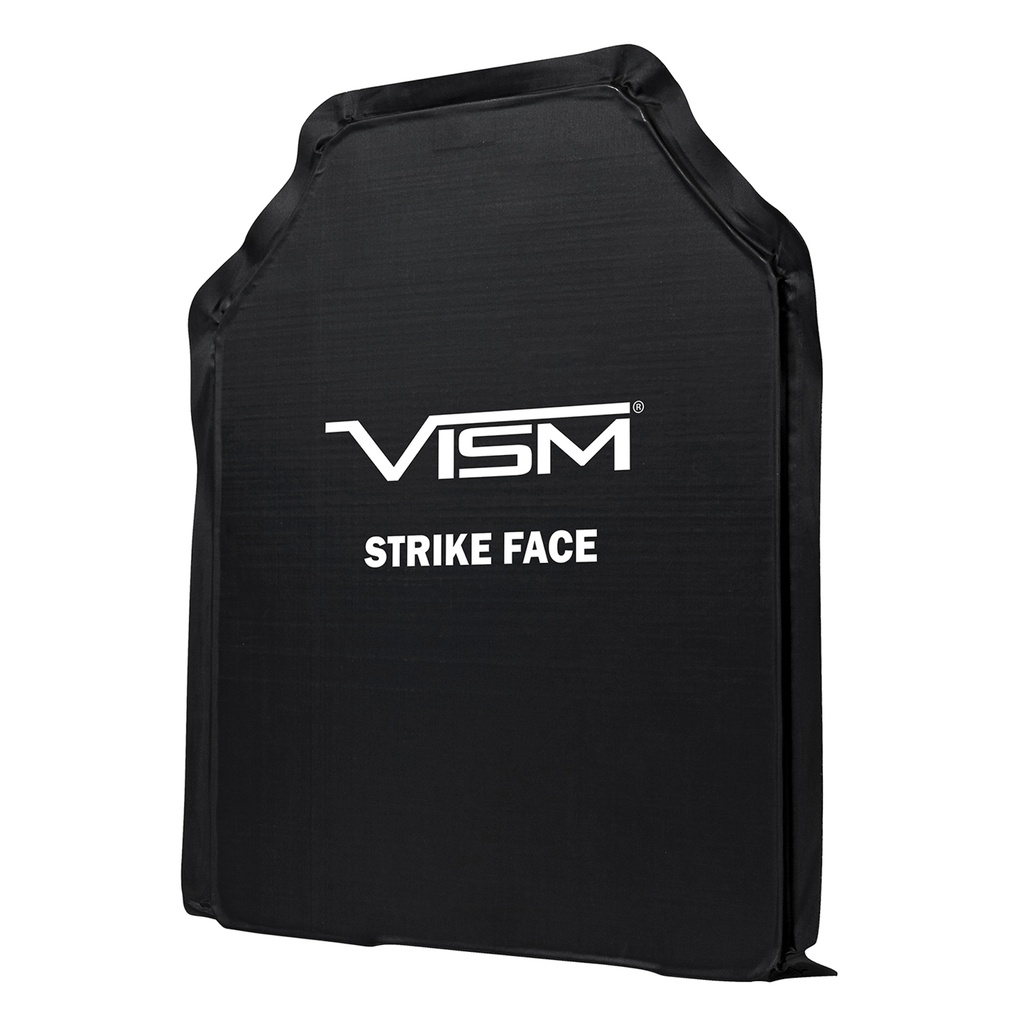
The shooter’s cut top corners aren’t cosmetic. They’re there so the panel rides correctly in a carrier, keeps out of your shoulder pocket, and sits more naturally when worn for long periods.
Sealed, Low-Profile, and Built for Abuse
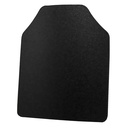
The outer shell is matte black with a sealed perimeter seam. That does two things that actually matter:
- Liquid and element resistance: The panel is sealed against liquids and harsh elements, so sweat, rain, or a spilled drink in your pack don’t start degrading the internals.
- Low visual signature: No loud patterns or gimmicks—just a simple VISM logo and STRIKE FACE text so you can orient it correctly at a glance.
Thin and rigid-looking at first glance, it’s still a soft panel—designed to flex with your kit, not fight it.
Carry Reality: Where This Soft Armor Panel Actually Belongs
This panel isn’t a safe queen. It’s meant to live in gear you use, every day or at least every week.
- Plate carriers: Drops straight into a shooter’s-cut carrier pocket for low-profile handgun-rated protection without the mass of rifle plates.
- Backpacks: Turns a normal daypack into a discreet armor solution—ideal for commuters, travelers, off-duty LEO, and anyone who lives in crowds.
- Laptop sleeves and insert pockets: Slides behind your computer in the sleeve, adding an unseen ballistic layer to something you’re already carrying.
Because it’s made in the USA and designed as true soft armor, you get repeatable quality and consistent performance instead of mystery-filler imports with vague claims.
What Buyers Ask Before Purchasing an Automatic Knife
Are automatic knives legal?
Under U.S. federal law, automatic knives (often called switchblades) are regulated mainly by the Federal Switchblade Act, which restricts interstate commerce and mailing but does not outright ban ownership. The real complexity is at the state and local level: some states allow automatic knives for general carry, some limit them to law enforcement or military, and others restrict blade length, opening mechanism, or how and where you can carry them. Before you buy or carry any automatic knife, check your specific state and municipal laws—many state legislatures and knife-rights organizations publish current summaries, but your local statutes are the final word.
What’s the difference between an automatic knife, OTF, and a switchblade?
“Automatic knife” is the broad mechanical category: a blade that opens from a closed position to locked, using a spring or stored energy, by pressing a button, lever, or similar control on the handle. “Switchblade” is the traditional legal and cultural term for most automatic knives, especially side-opening designs. An OTF—out-the-front—knife is a specific subtype of automatic where the blade travels linearly out of the front of the handle rather than pivoting from the side. Many OTF knives are double-action (the same control deploys and retracts the blade), whereas most classic switchblades and automatic folders are single-action (spring-powered open, manual close).
What makes this automatic knife worth buying?
When evaluating an automatic knife, serious buyers look past hype and focus on action consistency, lock integrity, steel choice, and real-world serviceability. A worthwhile piece will have a crisp, reliable deployment with minimal handle torque, a secure lockup with negligible blade play, and a blade steel whose hardness and heat treat match its intended role—whether that’s hard-use EDC, defensive carry, or collection. Details like tight tolerances, clean machining, and a tuning-friendly mechanism separate disposable automatics from knives you’ll actually keep, carry, and tune over time.
Legal and Use Context for Soft Armor Panels
Unlike automatic knives, soft armor panels like the Shadowline Concealed Defense Armor Panel are generally legal to purchase and own for law-abiding civilians across most of the United States. The main federal limitation concerns convicted felons and certain prohibited persons who cannot legally possess body armor. Some states and localities add their own restrictions or penalties if armor is used in the commission of a crime, and a few regulate sales in narrow circumstances. As always, check your state and local laws if you’re unsure—but for most responsible buyers, owning and using Level IIIA soft armor in plate carriers or backpacks is straightforward and lawful.
Why This Soft Armor Panel Is Worth Adding to Your Kit
This panel earns its place for the same reason a well-chosen automatic knife does: it balances performance, carry comfort, and reliability without screaming for attention. You get made-in-USA construction, Level IIIA handgun protection up to 1,400 FPS, genuinely low weight at 1.31 lb, and a flexible shooter’s-cut profile that fits how people actually carry.
If you’re the kind of buyer who knows why mechanism details matter on a blade, you’ll appreciate that this armor follows the same logic: the right material, the right cut, and the right form factor for the job. It’s quiet protection for serious people—an armor panel you choose deliberately, not by accident.