
Signal-Safe Duty Training Pistol Replica - Hi-Vis Yellow
15 sold in last 24 hours
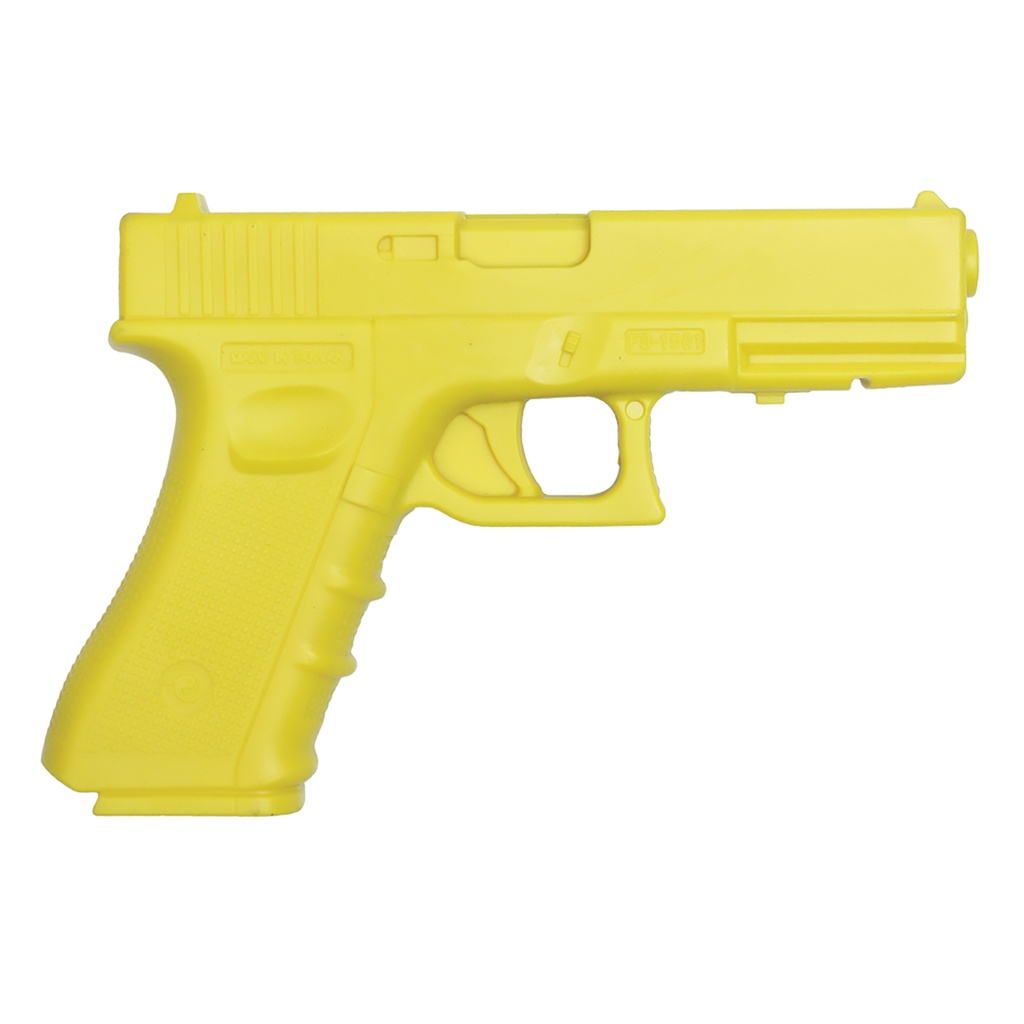
This isn’t a toy, it’s a tool. The Signal-Safe Duty Training Pistol Replica in hi-vis yellow gives instructors a full-size, realistic profile without a single moving part. Molded from tough polypropylene with a textured grip and accessory rail, it runs holster work, retention drills, and classroom demos without risk or hesitation. Students see “safe” immediately, but feel real duty-pistol geometry in hand. For ranges, academies, and shops that take training seriously, this is the clear, unambiguous stand-in for live steel.
Signal-Safe Duty Training Pistol Replica – Built for Serious Instructors
In any professional class, confusion between a live pistol and a training aid is unacceptable. The Signal-Safe Duty Training Pistol Replica – finished in unmistakable hi-vis yellow – is engineered to give you full-size duty pistol ergonomics with zero functional risk. One piece, no moving parts, no debate about its role on the line.
Why This Hi-Vis Training Pistol Belongs in Every Classroom
This inert pistol isn’t about cosplay; it’s about control. At roughly 9" overall with a modern duty-pistol silhouette, it mirrors the size, stance, and indexing points shooters expect from their real sidearm. That means students can focus on mechanics – draw stroke, grip, retention, holstering – without the mental bandwidth burn of wondering what’s live and what’s not.
The hi-vis yellow frame is the first layer of safety. At a glance, everyone in the room knows this is a non-firing replica. No black, no FDE, no confusion. In low light, on a cluttered bench, or under classroom fluorescents, it still reads "trainer," not "threat."
Mechanics Without Risk: Duty Ergonomics in an Inert Body
Good training tools mirror the feel of the real thing. This training pistol keeps the geometry that matters:
- Textured grip with finger grooves for repeatable hand placement and realistic purchase during draw and retention work.
- Squared, undercut trigger guard that lets students learn proper high grip and support-hand indexing.
- Defined sights – front post and rear notch – so instructors can demo sight picture and alignment without uncasing a live weapon.
- Accessory rail on the dust cover for fitting holsters that are built around light-bearing setups.
All of it is molded as a single-piece polypropylene construction. There’s a trigger shape and guard, but no mechanism, no moving slide, no removable magazine. That’s deliberate: nothing to cycle, nothing to negligently discharge, nothing to “check twice” because it never runs live ammo in the first place.
Polypropylene: The Right Material for Daily Abuse
Polypropylene isn’t glamorous, but it’s exactly what you want here. It shrugs off drops on concrete, repeated holster work, and hard corrections during weapon retention demos. No cracking, no sharp splinters, and no fine mechanisms to knock out of alignment. Wipe it down, toss it back in the instructor bag, and it’s ready for the next class.
Safety Signaling and Training Clarity
Training is cleaner when roles are obvious. This pistol’s solid hi-vis yellow profile does three important things:
- Visually separates inert training tools from any live firearm in the room.
- Reassures students, especially new shooters, that they’re starting with a non-lethal replica while they build fundamentals.
- Simplifies range rules – if it’s yellow and solid, it’s inert. Period.
Gun shops and ranges use this same visual language in display cases and counters where they want to demonstrate basic handling without introducing a chambered weapon into a crowded retail space.
Holster Demos and Retention Drills Done Right
If you’re teaching concealed carry, duty retention, or appendix draw mechanics, this dummy pistol is the workhorse. The realistic slide dimensions and accessory rail allow it to fit most holsters designed for similar full-size semi-auto duty pistols. That means your students are training with the same ride height, cant, and mouth reinforcement they’ll actually carry.
Retention drills – especially the hard, full-force kind – are exactly where you don’t want live steel. With this inert replica, you can safely escalate force-on-force style training around the holster without risking a negligent discharge.
Legal and Policy Context for Inert Training Pistols
Unlike live firearms, an inert polypropylene training pistol is not a functional weapon. It doesn’t chamber, fire, or store ammunition. In most jurisdictions, it’s treated similarly to a blue gun or non-firing replica: a training prop, not a firearm.
That said, policy still matters:
- Departments and academies often require inert pistols for in-class handling, especially where live firearms are prohibited in lecture rooms.
- Some venues and events limit anything that looks like a firearm, even if inert. Know the house rules before you bring it in.
- Public carry of replicas can create confusion. Treat this with the same respect you’d give a holstered live weapon in terms of visibility and behavior.
Bottom line: this is a tool designed to keep live guns off tables and out of hands when they don’t need to be there. Used correctly, it simplifies your safety plan instead of complicating it.
What Buyers Ask Before Purchasing an Automatic Knife
Are automatic knives legal?
Under U.S. federal law, automatic knives (often called switchblades) are regulated mainly by the Federal Switchblade Act, which focuses on interstate commerce and importation. Federal law doesn’t outright ban ownership, but it does restrict how automatic knives move across state lines and into federal facilities.
The catch is at the state and local level. Some states are wide open – allowing you to buy, own, and carry an automatic knife with few restrictions. Others allow ownership but limit concealed carry, blade length, or how you can carry one in a vehicle. A handful still prohibit automatic knives almost entirely. Always check your state and city laws before you buy, and understand that what’s legal to own may not be legal to carry everywhere you go.
What's the difference between an automatic knife, OTF, and a switchblade?
Mechanically, an automatic knife is any knife that opens its blade using a spring or stored energy when you press a button, switch, or similar control in the handle. A switchblade is the traditional term used in law and culture – in practice, most automatic knives are switchblades by the wording of older statutes.
An OTF (out-the-front) knife is a specific subtype of automatic where the blade travels linearly out the front of the handle. Many OTFs are double-action automatics, meaning the same control both deploys and retracts the blade under spring tension. Side-opening automatics, by contrast, swing the blade out from the side like a conventional folder, but powered by a spring once you hit the release. All three terms overlap, but "automatic" is the broad mechanical category, "switchblade" is the legal/cultural label, and "OTF" is a specific automatic format.
What makes this automatic knife worth buying?
When you’re evaluating an automatic knife, you’re looking for three things: action quality, lock integrity, and steel performance. A good automatic fires hard and clean, with minimal handle wobble and no sluggishness in the pivot. The lock – whether it’s a button lock, liner, or frame – should seat positively with no vertical play. And the blade steel matters; heat-treated stainless or tool steels with real edge-holding and toughness separate serious automatics from gas-station toys.
Collectors pay attention to how the action feels – does it thwack open with authority, or rattle its way there? Is the grind symmetrical? Are the scales fitted tightly to the frame? Those details are why some automatic knives become permanent parts of a rotation, while others get sold off after a week.
Who This Signal-Safe Training Pistol Is Really For
If you run a range, teach concealed carry, train recruits, or manage a gun counter where handling demos are part of the job, this hi-vis yellow training pistol is the quiet professional. It never fires, never needs to be cleared, and never muddies the line between live and inert. It just takes the daily grind of drills, holsters, and hands-on demonstrations – and keeps the real guns in the role they belong.
Collectors chase limited-run steel and tuned automatic actions; instructors chase consistency and safety. This Signal-Safe Duty Training Pistol Replica is built for the latter – a purpose-built, unambiguous tool for people who treat firearms handling like the serious craft it is.