Signal Weave High-Visibility Survival Bracelet - Red Yellow
11 sold in last 24 hours
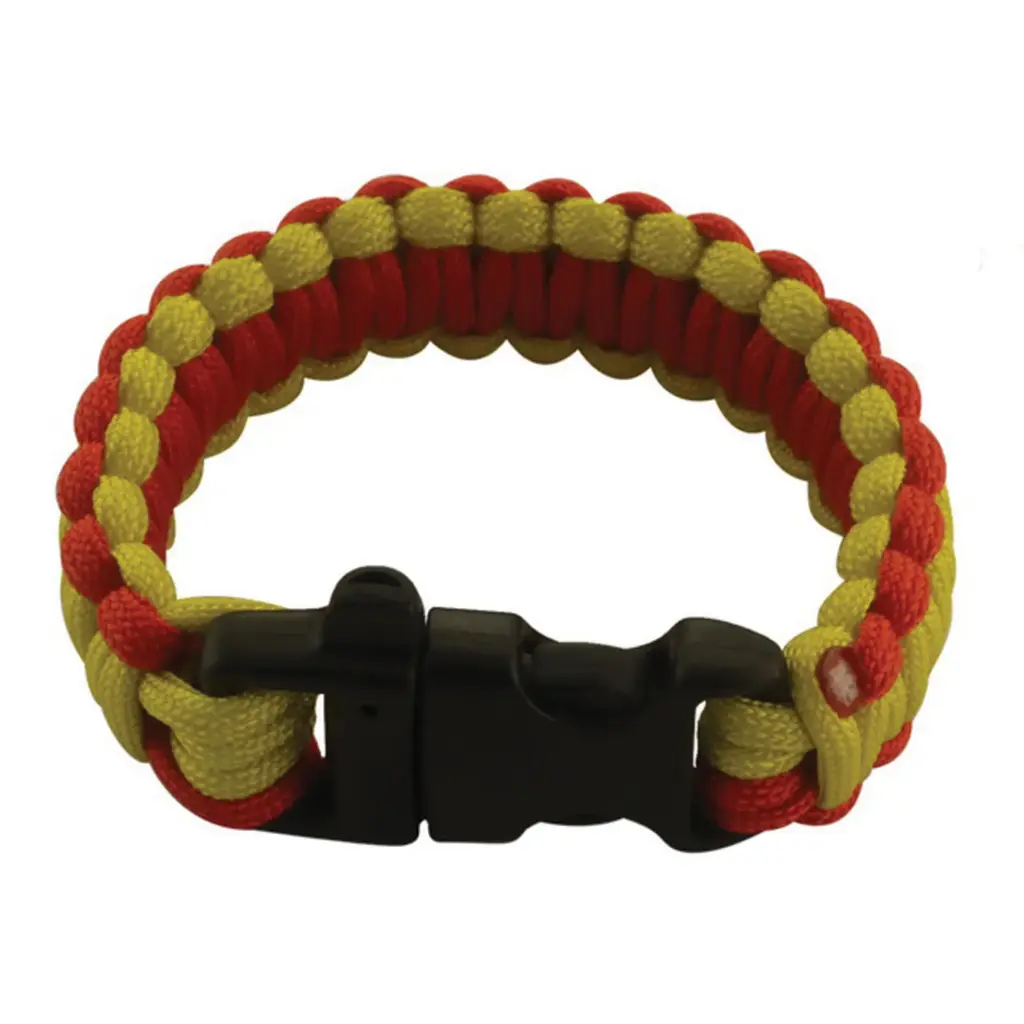
This 550LBS Type III paracord bracelet is built as real emergency kit, not decoration. Woven in a cobra pattern from true 550 cord and finished with a reliable side-release buckle, it carries usable cordage on your wrist for when straps tear, shelters need rigging, or gear needs lashing. The red and yellow high-visibility pattern makes it easy to spot in brush, low light, or the bottom of a pack—exactly where a survival tool shouldn’t disappear.
High-Visibility Survival Bracelet Built for Real Emergencies
The 550LBS Type III Paracord Bracelet isn’t trying to be jewelry. It’s a compact length of real-deal survival cord you wear on your wrist, finished in red and yellow high-visibility braid so you can actually find it when things go sideways. Type III 550 cord has been the standard for serious outdoor and emergency preparedness for a reason: it’s strong, versatile, and proven when webbing, straps, and fancy hardware fail.
Why This Paracord Bracelet Belongs in Your Emergency Preparedness Kit
When you’re building out an emergency preparedness loadout, small, dependable tools matter. This 550LBS Type III Paracord Bracelet carries usable cordage in a tight cobra weave. Unraveled, you’ve got multiple feet of cord that can handle shelter rigging, splinting, gear repair, or quick field improvisation. On your wrist, it’s out of the way, always with you, and never buried under everything else in your pack.
The contrast red/yellow pattern isn’t an aesthetic flex—it’s a visibility choice. Drop this in grass, on a forest floor, or in the back of a dark vehicle and those colors jump out instantly. The black side-release buckle keeps things simple: one-handed on, one-handed off, no metal parts to corrode or rattle.
Mechanics of the Cobra Weave and 550 Type III Cord
Survival gear either respects the material, or it doesn’t. This bracelet uses Type III 550 paracord—rated at 550 pounds tensile strength—with the familiar nylon sheath and multiple inner strands. That construction is what makes it genuinely useful when you start pulling it apart. You can use the full cord for heft and strength, or strip out inner strands for finer work like stitching, fishing line improvisation, or trip line.
Cobra Weave: Compact Storage, Real Cordage
The flat cobra-style braid is popular for one reason: it stores a surprising amount of cord in a compact, wearable form. The loops are tightly and evenly woven, so the bracelet sits comfortably on the wrist without loose bulges or hotspots. When the time comes to deploy it, you’re cutting into a clean, consistent weave—not a loose, decorative tangle.
Side-Release Buckle: Simple, Reliable Closure
The black plastic side-release buckle does exactly what it should: secure closure, quick release, no drama. No fussing with knots when your hands are cold or wet. No metal to freeze up, seize, or clang against other gear. For emergency preparedness, simplicity is a feature, not a compromise.
Emergency Use Cases: Where This Paracord Bracelet Earns Its Keep
Paracord isn’t a theory piece—it’s a field tool. This bracelet turns a length of 550 cord into something you actually carry every day, so when you need it, it’s there. Common real-world uses include:
- Rigging a quick tarp shelter against wind or rain
- Improvised guy lines when tent lines snap
- Securing loads to a pack, roof rack, or sled
- Field gear repair when straps or webbing tear
- Creating lanyards or retention lines for flashlights, tools, or keys
- Binding splints or stabilizing bandages in a first-aid scenario
Because it’s bright red and yellow, you can also use segments as high-visibility markers—trail tags, campsite identifiers, or quick visual signals in low light.
Visibility, Not Decoration: Red and Yellow That Mean Business
The red and yellow two-tone braid isn’t subtle, and that’s the point. In emergency preparedness, subtle gear is what you lose. This bracelet’s high-contrast pattern is easy to spot against dirt, rock, foliage, or snow. If you drop it, you see it. If it’s at the bottom of a dark bag, it’s the loudest thing in there.
The finish is clean and functional—the fused cord end near the buckle is tidy and low profile, so it doesn’t catch or fray under normal use. The overall profile is rounded and compact, making it comfortable for all-day wear whether you’re on a trail, at work, or running urban errands.
What Buyers Ask Before Purchasing an Automatic Knife
Even though this product is an emergency preparedness paracord bracelet and not an automatic knife, serious gear buyers who shop automatic knives, OTFs, and switchblades usually have a few recurring questions about legality and mechanism. Those same people tend to buy paracord and preparedness gear from the same source, so we answer them clearly here.
Are automatic knives legal?
Under United States federal law, automatic knives (often called switchblades) are regulated mainly in terms of interstate commerce and importation, but possession and carry are governed primarily by state and sometimes local law. Some states allow automatic knife carry with few restrictions, some limit blade length or carry method, and others heavily restrict or prohibit them. Always check your specific state and local statutes—what’s perfectly legal in one state can be illegal over the border. This 550 paracord bracelet is not a knife and is generally legal to carry as emergency gear in most jurisdictions.
What’s the difference between an automatic knife, OTF, and a switchblade?
Collectors and serious users distinguish these terms precisely:
- Automatic knife: A knife whose blade opens fully by pressing a button, lever, or other actuator in the handle. A spring drives the blade into the open, locked position.
- OTF (out-the-front) knife: A specific type of automatic where the blade travels in line with the handle, exiting and retracting through an opening at the front. Many modern OTFs are double-action—press to deploy, press to retract.
- Switchblade: Common slang for an automatic knife, but in many legal codes, “switchblade” is the term used to describe prohibited or regulated automatics.
This product is not an automatic, OTF, or switchblade—it’s a paracord bracelet for emergency preparedness. But if you’re the kind of buyer who wants an automatic knife for sale from someone who knows the difference, you’re in the right place.
What makes this paracord bracelet worth buying?
Three things separate this from throwaway novelty bracelets. First, it uses real 550LBS Type III paracord—cord you can count on, not decorative filler. Second, the cobra weave is tight, consistent, and actually comfortable to wear, so you keep it on instead of leaving it in a drawer. Third, the red/yellow high-visibility pattern isn’t just loud; it’s practical, making the bracelet—and the cordage in it—easy to locate in an emergency. For anyone who runs the same mindset they bring to choosing an automatic knife through the rest of their kit, this checks the right boxes.
Built for the Same Buyer Who Cares About Their Automatic Knife for Sale
If you’re the person who doesn’t settle for a sloppy action on an automatic, or a vague lockup on an OTF, you already understand why details matter in every piece of gear. This 550LBS Type III Paracord Bracelet rides the same philosophy: proven materials, purposeful design, no pretension. It’s emergency preparedness you can wear daily—and when you need cord, you’ll be glad you chose the piece that was built to be used, not just worn.