Silent Sentinel Concealment Mantel Clock Safe - Mahogany
7 sold in last 24 hours
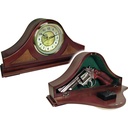
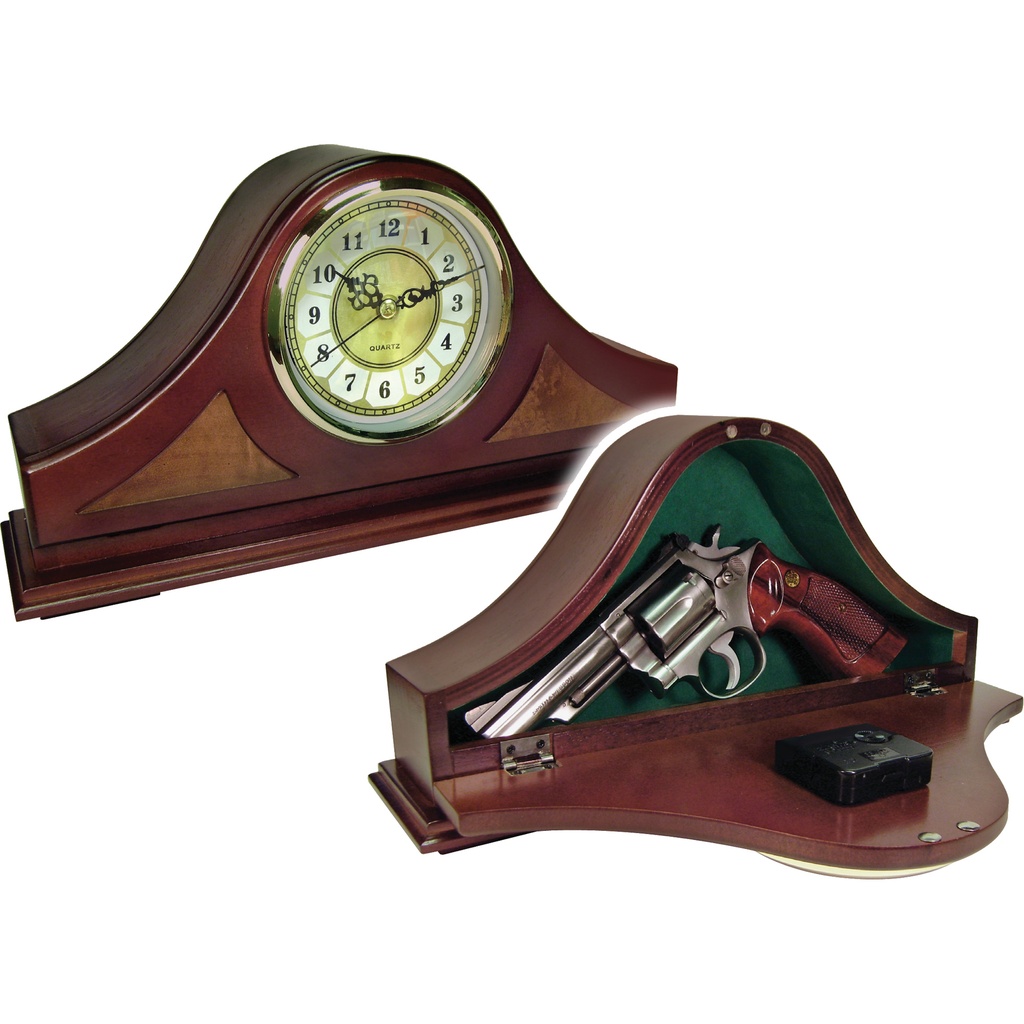
This isn’t décor pretending to be security—it’s both. The Silent Sentinel Concealment Mantel Clock Safe hides a felt-lined, quick-access compartment behind a classic mahogany-finished tambour clock. A magnetically latched, hinged front panel keeps a full-size handgun or valuables out of sight yet immediately at hand, while the quartz movement quietly does its job. On the mantel, desk, or bookshelf, it reads as heirloom, not hardware—ideal for anyone who wants discreet readiness without tactical billboards all over the room.
Heirloom-Style Concealment That Doesn’t Broadcast “Tactical”
The Silent Sentinel Concealment Mantel Clock Safe - Mahogany is built for the buyer who wants real-world readiness without turning their living room into a gear catalog. At a glance, it’s a traditional tambour-style mantel clock: rich mahogany stain, warm gold-tone bezel, classic numerals. Only when you know where to pull do you find the felt-lined compartment that quietly holds a full-size handgun or other valuables—no blinking LEDs, no biometric sci-fi aesthetic, just discreet function buried in familiar form.
Concealment Safe Design with Quick-Access Engineering
This piece is, first and foremost, a concealment clock safe engineered around speed and discretion. The access mechanism is a magnetically latched hinged front panel: light enough to open smoothly one-handed, secure enough that casual bumps and dusting won’t pop it loose. There are no keys to fumble or dials to spin under stress. You pull, the panel drops, and the interior is right where your hands expect it.
The interior is lined in green felt for two reasons: it protects finishes—blued steel, optics, jewelry, watches—from abrasion, and it deadens sound. Metal set down on bare wood clicks; metal set down on felt thuds. That muffled contact is the difference between quietly staging a handgun at night and announcing it to a quiet house.
Why This Mantel Concealment Safe Works in the Real World
Plenty of "hidden" storage pieces fall apart the second you see them in an actual living room. Cheap laminates, fake wood grain, awkward proportions—they read as props, not furniture. This concealment clock safe starts from a more honest place: it looks like something your grandparents might have put on the mantel.
Classic Tambour Profile, Modern Purpose
The curved tambour silhouette and stepped base give it a weight and presence that look normal on a mantel, shelf, or desk. The mahogany-stained wood case has visible grain and warm tone, which visually anchors it to other traditional wood furniture. The inlaid triangular panels and gold-tone bezel deliver just enough ornamentation to sell the heirloom illusion without looking gaudy.
On the face, you get clear Arabic numerals and ornate black hands around a cream dial—nothing about it says "safe" or "tactical." The quartz movement runs quietly, so the only giveaway is the soft tick of a normal household clock.
Interior Capacity for Real Defensive Tools
The interior isn’t an afterthought-sized cubby. It’s proportioned to handle a full-size handgun, not just a pocket pistol or a few loose keys. That means duty-length semi-autos, full-frame revolvers, or similarly sized items fit without feeling crammed. The rectangular geometry of the compartment also plays well with compact boxes, spare magazines, or a small valuables case if you’re using it as a general diversion safe rather than firearm storage.
Concealment Clock Safe Placement: Mantel, Desk, or Shelf
A diversion safe only works if it visually belongs where you put it. This design is tuned for common sightlines in a traditional home: fireplace mantels, sideboards, office desks, and bookcase shelves. On a mantel, it reads as centerpiece décor. On a desk, it looks like a deliberate piece in a classic office setup. On a bookshelf, it breaks up the books with a natural, expected object.
Because it’s battery-powered quartz, you’re not chasing cords or outlets. That makes placement flexible and keeps the illusion clean—no trailing power lines to undermine the whole point of concealed storage.
Not a Toy: A Real Concealment Safe with Real Responsibility
This mantel concealment clock safe is meant for fast, authorized access—primarily for adults who understand their local firearm storage and access laws. If you’re staging a handgun, treat this as a quick-access diversion safe, not as a locked gun vault. It helps keep unauthorized hands from casually discovering your firearm or valuables, but it doesn’t replace a dedicated locking safe in households with children or prohibited persons.
The magnetically latched door resists casual curiosity and accidental opening, but a determined person who knows it’s there will be able to get in. That’s by design: it’s a speed-versus-security balance optimized for fast access and low visual signature, not for defeating professional thieves.
What Buyers Ask Before Purchasing an Automatic Knife
Are automatic knives legal?
Under U.S. federal law, automatic knives—often called switchblades—are regulated primarily by the Federal Switchblade Act, which restricts interstate commerce but does not outright ban ownership. The real limitations live at the state and sometimes local level. Some states allow automatic knife ownership and carry with few restrictions; others limit blade length, concealment, or who may carry them; a handful still ban them outright. Before you buy an automatic knife for sale online, check your specific state and municipal laws, and understand the difference between owning one at home and carrying it in public. When in doubt, consult current statutes or speak with an attorney.
What’s the difference between an automatic knife, OTF, and a switchblade?
Collectors use these terms with precision. An automatic knife is any knife where the blade is deployed by pressing a button, lever, or switch in the handle, with a spring doing the work—no wrist flick required. A switchblade is the legacy term for the same category, especially in legal language, though enthusiasts often reserve it for side-opening autos. OTF—"out the front"—refers specifically to automatics whose blades travel linearly out of the front of the handle rather than pivoting from the side. A double-action OTF can extend and retract the blade using the same control; a single-action OTF is spring-driven out and manually reset. All OTFs are automatic knives, but not all automatic knives are OTFs.
What makes this automatic knife worth buying?
When serious buyers look at an automatic knife for sale, they’re evaluating three main things: action quality, steel choice, and overall execution. The best automatic knives have crisp, decisive deployment with minimal handle play, and lockup that inspires confidence rather than hesitation. Steel-wise, modern autos worth owning lean into high-performance alloys with real edge retention and corrosion resistance, not anonymous "stainless". Finally, the details—the way the button breaks, the machining around the pivot, the grind symmetry—separate a true enthusiast-grade automatic from commodity imports that merely look the part.
Why This Concealment Clock Belongs in an Enthusiast’s Home
If you’re the kind of buyer who cares about the action feel on a double-action OTF, you’re also the kind who notices when "concealment furniture" is just cheap MDF under cosplay. This mantel concealment clock safe respects your eye. The mahogany-stained wood, traditional lines, and working quartz movement are honest to the illusion; the magnetically latched, felt-lined compartment respects the reality that you might be staging something more serious than spare change.
On the surface, it’s heirloom décor. Behind the face, it’s quiet readiness. For the enthusiast who wants their automatic knives, handguns, or valuables close without putting them on display, this concealment clock safe earns its place on the mantel.