
Stormline Dynamo 4-in-1 Emergency Radio Flashlight - Black/Silver
3 sold in last 24 hours
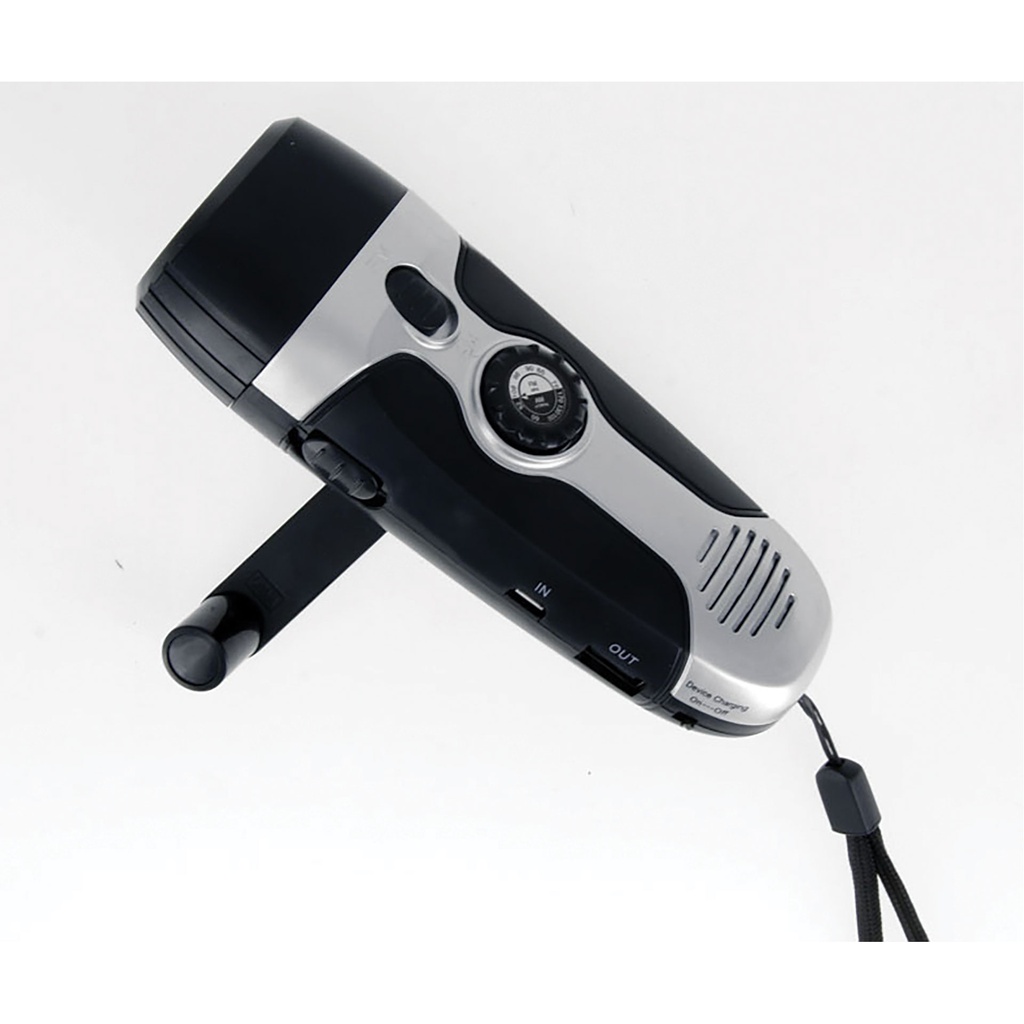
When the grid blinks off, this hand crank emergency radio keeps working. A few turns of the dynamo drive AM/FM updates, a focused LED flashlight, a piercing emergency siren, and a USB phone boost from its 400 mAh cell. At just 5.5 inches with a wrist lanyard, it rides light in a go-bag, glove box, or kitchen drawer. This isn’t a gimmick gadget; it’s a compact, self-powered backup plan you’ll actually use when the lights go out.
Stormline Dynamo 4-in-1 Emergency Radio Flashlight - Built for Real Outages
Most “emergency gadgets” are toys in survival clothing. This hand crank emergency radio is not. The Stormline Dynamo 4-in-1 Emergency Radio Flashlight - Black/Silver is a compact, self-powered blackout tool that earns its space in your go-bag, glove box, or kitchen drawer. Light, signal, alerts, and a phone boost in one 5.5-inch body, with a crank that means you’re not begging a dead outlet for help.
Self-Powered When the Grid Fails
The core of this tool is the dynamo. When the lights die and wall chargers are nothing but dead weight, the hand crank turns mechanical work into usable power. That energy feeds a 400 mAh internal battery, which in turn runs the AM/FM radio, LED flashlight, emergency siren, and USB phone output. No disposable batteries to hunt for, no hoping you charged it last week. If you can turn a crank, you can get light and signal.
400 mAh Cell With Dual Input Options
The 400 mAh battery is sized for realistic emergency use, not endless binge-watching. It’s there to keep the LED running, pull in local broadcasts, and bump a phone from dead to usable, not to replace a power bank. Between storms, you can top it off via the micro-USB input, so it sits ready. When that charge runs down in a longer outage, the crank takes over and keeps the system alive.
IN/OUT Ports That Actually Matter
You get clearly labeled IN and OUT ports. IN is your micro-USB recharge point for everyday topping off. OUT is your USB port for emergency phone boosting. The labels are simple, readable, and located where you can see them without hunting around with another flashlight.
Four Functions, One Compact Emergency Unit
This isn’t a single-purpose flashlight or a lonely little radio. It’s a 4-in-1 emergency radio flashlight system built around the realities of a blackout: information, light, noise, and a lifeline to your phone.
AM/FM Radio: Information Is Survival
The analog AM/FM tuner does the one thing a phone can’t do when the tower goes dark or the battery is gone: pull down local broadcast updates. That means weather alerts, evacuation routes, and situation reports when data networks are overloaded or down. The visible tuning dial and printed frequency markings make it easy to sweep for a usable station instead of guessing.
LED Flashlight: Directional Light On Demand
The integrated LED at the front end gives you focused, directional light for walking a dark hallway, checking a breaker panel, or digging through a gear bin. The lens sits forward like a true flashlight head, not a token “glow somewhere” LED. It’s built for practical, short- to mid-range tasks in a blackout, not trail-running at midnight.
Emergency Siren: Be Heard When You Need To Be Found
The siren is there for one reason: attention. If you’re signaling rescuers, warning nearby campers, or trying to draw a neighbor in a power outage with limited visibility, a sharp, electronic siren cuts through ambient noise better than yelling yourself hoarse.
USB Phone Boost: Just Enough to Make the Call
The USB output isn’t pretending to be a giant power bank, and that honesty is the point. It’s a phone booster—designed to give you just enough charge to place a call, send a text, or pull a map when your main battery is drained. In a real emergency, 5–10 minutes of usable phone time is enough to do what matters.
Designed to Be There When You Actually Need It
Emergency gear that’s too big, too heavy, or too fussy lives in a closet and dies unused. This hand crank emergency radio is built small and simple enough that you’ll actually stage it where it belongs: within reach.
Compact 5.5-Inch Form Factor
At roughly 5.5 inches long with a compact, oval profile, this unit disappears into a glove box, backpack pocket, or bedside drawer without taking over the space. The slightly contoured body gives you a secure grip when you’re cranking or carrying it in the dark.
Wrist Lanyard for Don’t-Drop-It Moments
The included wrist lanyard is more than a cheap afterthought. In a rainstorm, on a flooded sidewalk, or stepping over debris, being able to loop this around your wrist means your light and radio don’t bounce into the dark when you slip.
Black/Silver Housing: Function Over Fashion
The black and silver plastic housing telegraphs what this tool is about: function, not fashion. The semi-gloss body, clean frequency markings, and straight-line speaker grille keep it visually clear and readable without anything you’d be afraid to scratch in the field.
Emergency Context: Where This Tool Belongs in Your Kit
Think of this hand crank emergency radio as your baseline redundancy: the backup you reach for when your primary lights and power banks are dead or missing. It pairs perfectly with heavier-duty flashlights and larger power banks, but unlike those, it can resurrect itself from zero with nothing more than your own effort.
- Home Blackouts: Kitchen drawer, hallway shelf, or bedroom nightstand for instant light and local broadcast updates.
- Vehicle Kits: Glove box or under-seat storage as a compact backup to your main flashlight and charger.
- Go-Bags & Bug-Out Kits: Lightweight signaling, light, and phone-boost all in one slot.
- Camping & Travel: Weather checks, campsite light, and an audible siren if someone needs to find you in the dark.
What Buyers Ask Before Purchasing an Automatic Knife
This product is not an automatic knife, OTF, or switchblade—it’s an emergency radio flashlight. But automatic knife buyers tend to buy serious gear across categories, and they ask a few recurring questions whenever mechanisms and legality are on the table.
Are automatic knives legal?
Under U.S. federal law, automatic knives (often called switchblades) are regulated primarily by the Federal Switchblade Act, which restricts interstate commerce but does not outright ban ownership. The real legal landscape is state and local. Some states allow automatic knives with few or no restrictions, some allow them with blade length or carry-type limits, and others heavily restrict or prohibit them. If you’re buying an automatic knife, you need to check the specific knife laws in your state and city—especially distinctions between owning at home, open carry, and concealed carry. This emergency radio flashlight is not affected by those laws, but the same mindset applies: know your local regulations before you carry any specialized tool.
What’s the difference between an automatic knife, OTF, and a switchblade?
Mechanically, an automatic knife uses a spring-driven blade that deploys when you press a button, slide, or similar actuator. Most side-opening autos pivot the blade out from the handle like a traditional folder, but under spring power. An OTF (out-the-front) knife is a specific type of automatic where the blade travels linearly out of the front of the handle. Double-action OTFs both extend and retract under spring tension, single-action typically auto-deploy and manual-retract. Switchblade is the older, common-language term baked into the law for many automatic knives; in most legal texts it refers broadly to spring-driven automatic deployment activated by a button or similar device. Serious buyers and makers usually favor the more precise terms—automatic and OTF—when describing mechanism and action.
What makes this emergency radio flashlight worth buying?
The value here is in redundancy and realism. You get a self-powered hand crank feeding a 400 mAh cell, so the unit can recover from a dead state with no external power. You get four genuinely useful functions—AM/FM radio, LED flashlight, siren, and USB phone boost—without any gimmick padding. The compact 5.5-inch body, clear IN/OUT labeling, and wrist lanyard make it something you’ll actually stage and use, not bury in a bin and forget. As with a well-built automatic knife, the difference is in the mechanism you can trust when everything else has already failed.
For Buyers Who Take Their Gear Seriously
If you’re the kind of person who cares how an automatic knife deploys, how an OTF tracks in its rail, and why mechanism quality matters more than hype, this is the kind of emergency gear that fits your mindset. The Stormline Dynamo 4-in-1 Emergency Radio Flashlight - Black/Silver doesn’t pretend to be anything it isn’t. It gives you light, signal, alerts, and a critical phone boost, powered by your own effort when the grid is gone. The same way you choose a blade for the action you can rely on, you choose emergency tools for what they’ll do when you really need them.